Puddles that will not leave, a lawn that squishes for days after a storm, a corner by the downspout that never dries. Drainage is where homeowners waste the most money, usually because they bought a fix before they understood the problem. This guide is about the detective work that should come first.
General guidance for US homeowners. Call 811 before any digging, and never send runoff onto a neighbor’s property or into the street where it is not allowed, or into a sanitary sewer or septic system. Water at the foundation, sewage odors and deep trenches need a professional.
Check the drains you already have first; a clogged catch basin explains many wet corners · photograph via Pexels
Start here
Diagnose the problem before you pick the fix
Drainage mistakes are some of the costliest a homeowner can make, and nearly all of them happen the same way: someone chose a solution before they understood the problem. A dry well dug into clay, a French drain with no outlet, a pipe that moves water 60 feet and dumps it against the garage: all common, all expensive, and none of them would survive an afternoon of proper investigation.
This page is that investigation: telling a real, ongoing drainage problem from normal wet weather, working out which of the usual causes you actually have, and matching the fix to it. Some problems are solved with a garden fork and a free afternoon. Some need engineering. A few need a professional assessment before anyone picks up a shovel.
Two companion guides cover the rest: Waterlogged Gardens deals with rescuing a soaked yard and its plants, and Garden Drainage in the Landscaping section covers design and construction: slope, French drains, dry wells, outlets and materials.
Identify
Is this a real drainage problem?
Standing water
How long, and where
How long the water stays and where it sits are the best clues you have, and both cost nothing to collect.
Puddles gone within a few hours of rain: normal, even on clay.
Water standing 24 to 48 hours: worth investigating.
Ground soggy for weeks every winter or spring, or all year: a persistent problem.
Note whether it is one spot, one edge or the whole yard. That changes the answer completely.
Slow percolation
Putting a number on it
A test hole turns a hunch into a measurement, and every drainage decision rests on that number.
Fill a test hole, let it drain, refill it and time it.
Empty within a few hours: the soil drains well enough.
Still holding water at 12 hours: slow; a dry well is unlikely to work.
Still holding water at 24 hours: a real drainage problem.
A hole that fills back up by itself after bailing: a high water table, which drains cannot lower.
Soggy soil and compaction
What the ground itself tells you
Most home drainage problems are physical, in the top foot of soil, and far cheaper to fix than people fear.
A rod or shovel that stops dead at the same depth everywhere: a compacted layer or hardpan.
Wet ground that follows exactly where people walk, cars park or equipment drove.
Blue-gray or rust-mottled subsoil: a sign the soil has been waterlogged for long periods.
A dense, putty-like feel with no crumb structure and few earthworms.
Grading, surfaces and outlets
The built environment
A lot of “drainage problems” are really water arriving where it should not, or having no way out.
Soil regraded or built up so water now collects against the house, a walkway or the lawn.
A patio, driveway or walkway sloping toward the house or into a flower bed.
Downspouts dumping right at the foundation, or into a buried pipe that is clogged or crushed.
Catch basins full of silt, a blocked channel drain, or an old drain line with a buried or crushed outlet.
Grading near the house matters most. The ground should fall away from the foundation, and many building codes ask for about 6 inches of drop in the first 10 feet. Keep soil and mulch below the siding and below any weep holes. Water standing against the foundation is a house problem before it is a garden problem, so deal with it promptly.
Causes
The usual culprits, and how each one behaves
More than one is often involved. Scroll sideways on a small screen.
Cause
How it behaves
Typical fix
Compaction
Wet only where traffic goes; hard ground; shallow roots
Core aeration and permanent paths, often the whole fix for very little money
Hardpan or caliche
A rod stops at the same depth everywhere; water perched above dry soil. In the Southwest, a cement-like caliche layer
Break it with a fork or digging bar; on large areas, deeper ripping or drilling through caliche
Heavy clay
Slow drainage across the whole yard, worst in the wet season
Structural improvement over years; see our Clay Soil guide
Bad grading
Water pools in a low spot or against the house after regrading or new landscaping
Regrade so the ground falls away from the house
Trapped surface water
A patio or lawn boxed in by raised edging or a curb with no way out
Create an outlet, or a channel to where water can soak in
Clogged catch basins and channel drains
Very localized wet spots, often near the house or a known drain line
Lift the grates, clear silt and leaves, snake the line: the cheapest fix here
Failed or crushed drain lines
An old French drain or downspout line that has stopped working
Trace it, dig up the outlet, replace it if the layout still makes sense
Runoff from hard surfaces
Water pouring off a driveway, patio or roof in volume
Intercept it with a channel drain; consider permeable pavers when replacing
Downspouts dumping at the foundation
A soggy strip next to the house that never dries; wet basement or crawl space
Clean gutters and extend downspouts several feet away, or pipe them to a dry well or rain garden
High water table
A test hole fills back up after bailing; wet even in dry weather
Drains cannot lower it; raise the planting or choose plants for wet soil
New construction fill
Thin sod over compacted subsoil and debris; wet everywhere on a young lot
Break up the compacted layer before trying anything else
What else it could be
Water that is not a drainage problem
Getting this wrong is how people pay for drains that were never going to help.
Symptom
Might actually be
How to tell
A wet patch that never dries, even in a summer drought
A leaking water service line or irrigation pipe
Clean water arriving constantly; watch the water meter with every faucet and the sprinklers off
Clean water seeping from a bank or slope
A spring or seep
Flow continues in dry weather and does not change much with rain
A sewage smell along with the wet
A broken sewer lateral or a failing septic system
Stop, do not dig, and call a plumber or septic professional
Lush, green, soggy grass over the septic area
A failing septic drain field
Wet over the field in dry weather, slow drains or gurgling in the house; get it inspected
Water sheeting across the yard in a downpour
Runoff, not poor percolation
The soil drains normally once the flow stops; trace where it comes from
Wet only where cars park or the trash cans sit
Localized compaction
The pattern matches the traffic exactly
Water sitting on top of dry soil
A perched water table on hardpan or buried landscape fabric
Dig down: dry soil under the wet layer
New wet ground after a neighbor’s construction
Changed grading or drainage next door
The timing matches exactly; talk to them before doing anything
Everything wet on a brand-new lot
Construction compaction, not your soil type
Debris and a sharp color change just below the sod
Region by region
How drainage problems differ across the US
The same soggy lawn can have a very different story depending on where you live. Your county Extension office knows your local soils and can run a soil test for a small fee.
Southeast & Gulf Coast
Hurricanes and tropical downpours can drop several inches of rain in a day, often onto heavy red clay or flat, low-lying ground with a high water table. Size gutters and outlets generously, keep runoff away from foundations and slabs, and lean on rain gardens and wet-tolerant natives for low spots.
Northeast & Midwest
Snowmelt and spring rain on frozen or saturated ground cause most problems: water cannot soak into frozen soil, so it runs toward the house. Keep downspout extensions clear of ice and snow piles, and watch for wet basements in late winter and spring.
Southwest & Mountain West
Summer monsoon storms dump a lot of water fast onto dry, crusted soil, and caliche or hardpan can sit just below the surface. Expect flash runoff rather than long soaking, use swales and dry creek beds to slow and spread water, and drill or break through caliche where you plant.
Pacific Northwest
Months of steady winter rain, often on compacted glacial till, keep soil saturated from fall to spring. Drainage fixes here are about patience and soil structure: raised beds, mounded planting, rain gardens and staying off wet lawns.
Investigate
Before anything gets dug
1. Map it while it is wet
The middle of a rainy stretch is the only time the evidence shows. Take photos of the standing water, flag its edges, note where it comes from and how long it takes to clear. Do it a few times over a wet season and the pattern usually explains itself.
2. Check the drainage you already have
Clean the gutters, lift catch basin grates and clear the silt and leaves, follow each downspout to see where it really empties, and look for old drain outlets at the curb, in ditches or along the lot line. A surprising number of expensive-looking problems turn out to be one clogged downspout.
3. Dig a test hole and time it
Dig a hole about 12 inches across and 2 feet deep. Note where roots stop, whether there is a slick or hard layer, and the color of the subsoil. Then fill it, let it drain, refill it and time it. That number decides whether a dry well is even an option.
4. Probe for hardpan
Push a thin metal rod or a long screwdriver into the ground at several spots. Resistance at the same depth everywhere means a compacted layer, often the whole problem, and fixable with a garden fork rather than a contractor.
5. Check the grading
Use a long straight board and a level, or a string line with a line level, to see which way the ground and paving actually slope. Confirm that hard surfaces fall away from the house and the soil drops away from the foundation.
6. Call 811 before you dig anything
Gas, electric, water, cable and sewer lines all cross yards, often shallower than people expect. Never dig blind. Call 811 a few business days ahead so utilities are marked for free, find private lines such as sprinklers and landscape lighting yourself, hand-dig near any marks, and stop the moment you hit something unexpected. Striking a line is dangerous as well as expensive.
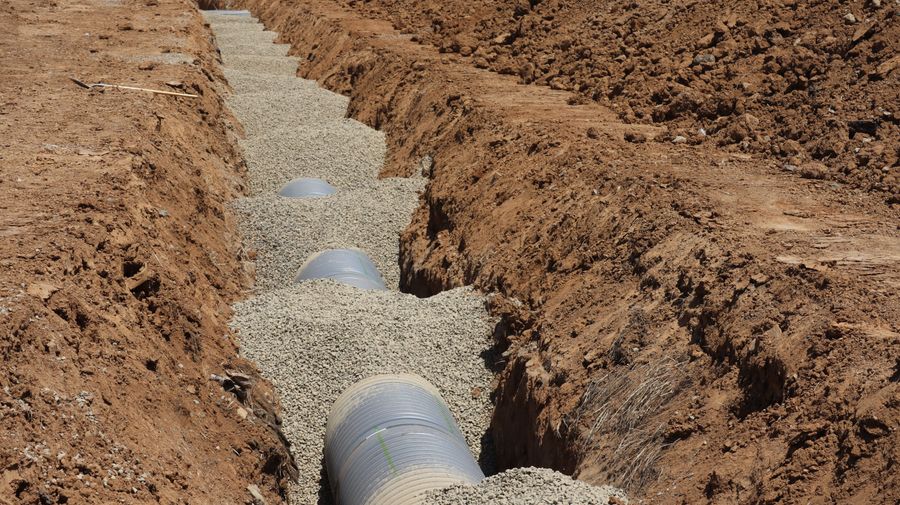
A French drain only works with steady slope, a fabric-wrapped gravel bed and a legal outlet · photograph via PexelsCheck the drains you already have; a clogged grate explains many wet corners · photograph via Pexels
Immediate action
What to do first, and what not to do
1. Stay off soggy ground
Walking on it compacts exactly the soil that is already struggling and undoes any improvements. Lay a plank or a ground protection mat if you must cross, and keep wheelbarrows, mowers and vehicles off entirely.
2. Clear what is already there
Clean gutters, clear catch basins and channel drains, snake a blocked downspout line if it is safe to reach, and make sure every downspout empties well away from the house. This is the one job that is both safe and often decisive.
3. Do not dig or rototill wet soil
Working saturated soil smears it into a slick, waterproof layer and makes drainage worse. Wait until it is moist and crumbly.
4. Move surface water only within your own lot
A shallow temporary channel or a downspout extension to a lower part of your own yard is reasonable. Do not send water onto a neighbor’s property, across the sidewalk or into the street unless your city allows it, and never into a sanitary sewer cleanout or toward a septic system. Doing so can cause real damage and make you liable, and extra water can overload a septic drain field.
5. Protect the house first
If water is standing against the foundation, or soil has been piled above the siding line, make that the priority. Pull soil back, create a slope away from the house, extend downspouts, and get professional advice if the basement or crawl space is already wet.
6. Decide whether this is a DIY job or an engineering job
Compaction, hardpan, a clogged catch basin or a downspout in the wrong place are well within reach of a handy homeowner. Whole-yard saturation, water at the foundation, or a system with no workable outlet is not; see the next two sections.
Choosing a solution
Matching the fix to the problem
The right answer comes from your diagnosis, not from what the neighbors had installed.
Diagnosis
Appropriate fix
Notes
Compaction or hardpan in the top foot
Core aeration; fork or broadfork; permanent paths
The most common home problem and the cheapest to fix
Heavy clay, slow everywhere
Compost every year; no-till beds; raised beds for vegetables
Improves over 3 to 5 years; see our Clay Soil guide
Runoff from a hard surface
Channel drain at the edge; permeable pavers when replacing
Fix the source before draining the destination
One wet spot, soil drains reasonably
A dry well, only if the perc test supports it
Still holding water at 12 hours means a dry well will not work
A wet area with a usable outlet downhill
French drain: perforated pipe in fabric-wrapped gravel at a steady slope
At least 1/8 inch per foot; design details in the Garden Drainage guide
Groundwater seeping in from uphill
A curtain drain across the slope above the wet area
Needs an outlet below; often a job for a pro
Water crossing a driveway, walkway or patio
Channel (trench) drain to a legal outlet
Choose a grate you can lift and clean
Roof water dumping at the house
Downspout extensions, or buried pipe to a pop-up emitter, dry well or rain garden
Rain barrels catch some of each storm, where your state allows them
High water table
Raised beds; mounded planting; a rain garden
Drains cannot lower a water table
Occasional heavy runoff, nowhere to send it
A rain garden: a shallow planted basin that soaks water in over a day or two
Turns a problem into a feature and keeps water on your lot
Ongoing whole-yard failure near the house
Professional drainage design and investigation
Slope, outlet and legal discharge all need to be right
Every drainage plan needs a legal outlet, chosen before anything is dug. That means a dry well in soil that passed a perc test, a rain garden, an approved storm drain or curb connection, or another option your city or county accepts. It never means a neighbor’s yard, the street where that is not permitted, a sanitary sewer or a septic system. If you cannot say where the water is going, the plan is not finished.
As an Amazon Associate, PlantMapper may earn from qualifying purchases. Prices and availability are set by Amazon. A detector lowers the risk but never replaces calling 811: have utilities marked, hand-dig near the marks, and stop if you hit anything unexpected. Every drainage project needs a legal outlet before work starts.
When to get help
Foundations, neighbors and local rules
Some of these are safety issues and some are legal ones. Take both seriously.
Situation
Why it matters
What to do
Water pooling against the foundation, or a wet basement or crawl space
Risk of foundation damage, mold and moisture inside
Top priority; regrade, extend downspouts, call a pro if water is getting in
A sewage smell
Possible broken sewer line or failing septic system
Do not dig; call a plumber or septic contractor
Anything near the septic tank or drain field
Extra water, digging or heavy equipment can damage the system
Keep drainage water away from it; get advice before working nearby
Water draining onto, or coming from, a neighbor’s lot
Real potential for damage and legal liability
Stop any diversion, talk to the neighbor, get advice before doing more
Draining to the street, a storm drain, a ditch or a creek
Often regulated by the city, county or state, and HOAs may add rules
Check with your building or public works department before connecting
Any digging at all
Buried utility lines are common and often shallow
Call 811 first; never dig blind; hand-dig near marks
New paving or regrading
Some cities limit impervious surfaces or require permits for grading
Check local rules and HOA guidelines before you start
A test hole that fills back up after bailing
High water table
Drains will not lower it; raise the planting instead
Whole yard soggy every year after compaction is fixed
A system-level problem
Professional drainage investigation and design
Deep trenches, or work you are not confident in
Trench walls can collapse without warning
Hire a qualified contractor; never work alone in a deep trench
Mistakes
Six common drainage mistakes
1. Digging a dry well in clay
A gravel pit only works if water can soak away from it. In slow-draining soil it becomes a bucket that fills, stays full and can make the surrounding ground wetter than before.
The fixDo a perc test first. If water is still standing in the test hole at 12 hours, choose another approach, such as a French drain to a usable outlet, raised beds or a rain garden.
2. Sending water onto someone else’s property
Piping runoff onto a neighbor’s yard or into the street where it is not allowed can cause real damage and liability, and it turns a yard problem into a dispute. Connecting yard drainage to a sanitary sewer or a septic system is just as wrong and can overload it.
The fixPick a legal outlet before you dig: a dry well in soil that passed a perc test, a rain garden, or a storm drain connection your city approves.
3. Digging without calling 811
Gas, electric, water and communication lines all cross yards, often shallower than people expect, and hitting one is dangerous as well as expensive.
The fixCall 811 a few business days ahead, locate private lines yourself, hand-dig near the marks, and stop the moment you hit anything unexpected.
4. A French drain with no outlet or the wrong slope
A perforated pipe that empties nowhere is just a buried trench full of water, and one laid with dips or no steady fall holds silt and stops working within a few seasons.
The fixChoose the outlet first, then set a steady slope of at least 1/8 inch per foot with no dips. The Garden Drainage guide has the details.
5. Skipping the filter fabric
Without a fabric wrap, silt washes into the gravel and the drain slowly clogs. It works for a couple of years, then quietly stops.
The fixLine the trench with non-woven filter fabric and wrap it over the gravel. It is the difference between a drain that lasts two years and one that lasts decades.
6. Draining the destination instead of the source
Putting a drain in a soggy lawn while the driveway keeps pouring hundreds of gallons onto it treats the symptom and leaves the cause running.
The fixTrace where the water really comes from and catch it there, with a channel drain at the edge of the paving, a downspout extension, or permeable pavers when the surface is next replaced.
Print or tick as you go
The drainage checklist
18 checks for before, during and after. Your ticks are saved in this browser only.
Investigate
Before digging
Solutions
Common questions
Yard drainage problems: your questions answered
How do I know if I have a real drainage problem?
Time it and map it. Puddles that disappear within a few hours of rain are normal, even on clay. Water that stands for 24 to 48 hours is worth investigating, and ground that stays soggy for weeks every winter or spring is a persistent problem. Then dig a test hole about 2 feet deep, fill it, let it drain, refill it and time it: still holding water at 12 hours is slow, still holding water at 24 hours is a real problem, and a hole that fills back up on its own after you bail it means a high water table.
Will a dry well fix my drainage?
Only if the water can soak away from it. A gravel pit dug into clay is not a dry well, it is a bucket that fills and stays full, and it can leave the ground around it wetter than before. Do a percolation test first: if water is still standing in the test hole after 12 hours, a dry well probably will not work, and you need a different answer, such as a French drain to a usable outlet, raised beds or a rain garden.
Can I drain my yard into the street or onto my neighbor's property?
Generally, no. Plan to handle runoff on your own lot. If you change how water flows and it damages a neighbor’s property, you can be held responsible, and many cities restrict piping or pumping water across sidewalks or into the street. Never connect yard drainage to a sanitary sewer line or send it toward a septic tank or drain field. Rules differ by state, county, city and HOA, so pick a legal outlet before you dig: a dry well in soil that passed a perc test, an approved storm drain connection, or another option your local building or public works department accepts.
What is the most common cause of poor yard drainage?
Compaction, by a wide margin, and it is also the cheapest to fix. Look for wet ground that follows exactly where people walk, where cars park or where construction equipment drove, and probe with a metal rod for a hard layer at a consistent depth. Core aeration on lawns, loosening beds with a fork or broadfork without flipping the soil, and permanent paths that keep feet off planting areas fix a lot of soggy yards with no pipe at all.
Do I need to call 811 before digging a drain?
Yes, every time. Call 811 or file your state’s online request a few business days before you dig, and the utilities will mark their buried lines for free. They do not mark private lines such as sprinkler pipes, landscape lighting cable or a gas line to a grill, so locate those yourself, hand-dig near any marks, and stop if you hit anything you did not expect. Hitting a gas or power line is dangerous as well as expensive.
What is the difference between a French drain, a curtain drain and a channel drain?
A French drain is a gravel-filled trench, usually with a perforated pipe wrapped in filter fabric, that collects water from the soil and carries it at a gentle slope to an outlet. A curtain drain is a French drain placed across a slope, uphill of the area you want to protect, to intercept groundwater before it arrives. A channel drain, also called a trench drain, is a surface channel with a grate that catches runoff across a driveway, patio or walkway. All three need a legal place for the water to go. Our Garden Drainage guide covers how to build them.
When should I call a drainage professional?
Call one when water is pooling against the foundation or getting into the basement or crawl space, when you smell sewage, when water is coming from or going onto a neighbor’s property, when the yard stays soggy every year even after you have dealt with compaction, when a septic drain field is involved, or when the job needs a deep trench, regrading near the house or work near a property line. Getting the slope, the outlet and the legal discharge right is exactly what a professional design is for.
Can improving the soil fix drainage by itself?
Often, yes, in a typical home yard. Breaking up compaction and any hardpan, adding compost every year, keeping the soil covered with plants or mulch and staying off it when it is wet will fix many soggy yards within three to five years, at a fraction of the cost of a drain system. Even when it does not, you will have ruled out the cheap causes before paying for the expensive fixes. Permeable surfaces and a rain garden are the next steps before pipe.