Lawn Problems: Diagnose Brown Patches, Grubs and Weeds
Brown spots in August, crabgrass along the driveway, a patch that rolls up like carpet. Most lawn trouble comes down to mowing, watering and timing - and the right timing depends on whether you grow cool-season grass like tall fescue and bluegrass or warm-season grass like Bermuda, zoysia and St. Augustine.
General guidance for US lawns. Apply any fertilizer, herbicide, insecticide or fungicide exactly as its label directs (the label is the law), check local rules on fertilizer and watering, and stay off soggy or frosted turf.
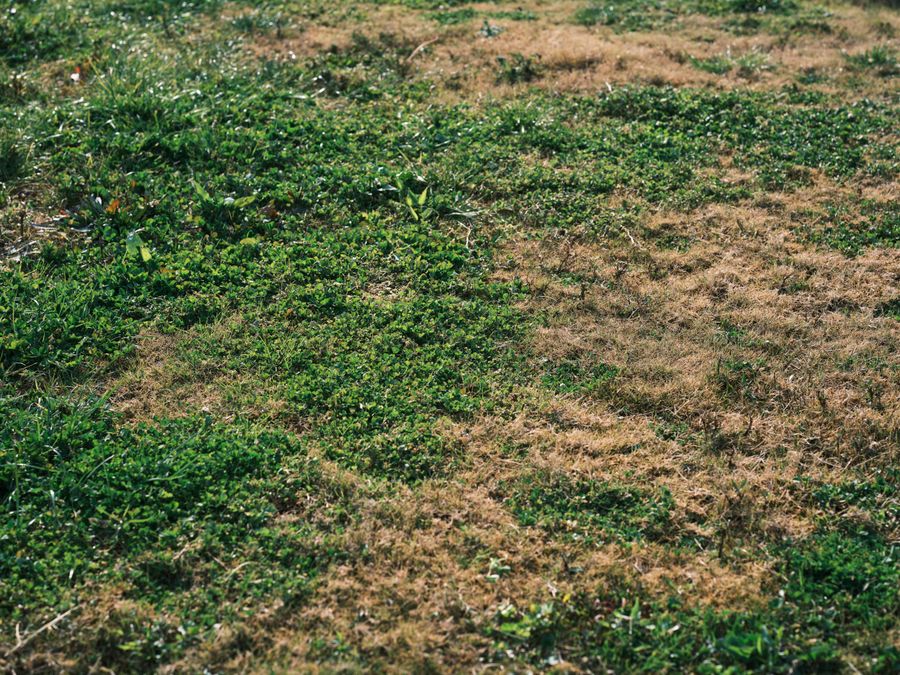
Where the bad patches are usually tells you why · photograph via Pexels
Start here
Know your grass first
American lawns fall into two camps, and nearly every piece of lawn advice depends on which one you have. Cool-season grasses - Kentucky bluegrass, tall fescue, perennial ryegrass and the fine fescues - grow most in spring and fall and struggle in summer heat. They dominate the North, the Midwest, the Pacific Northwest and the mountains. Warm-season grasses - Bermuda, zoysia, St. Augustine, centipede, bahia and buffalograss - grow in the heat of summer and go brown and dormant after frost. They rule the South, Florida, the Gulf Coast and the Southwest.
In between lies the transition zone, roughly from Kansas and Missouri east through Kentucky, Tennessee, Virginia and North Carolina, where summers are too hot for many cool-season grasses and winters too cold for many warm-season ones. Tall fescue and zoysia are the usual compromises there. Not sure where you are? Find your growing zone.
Whichever grass you have, most complaints trace back to a few ordinary habits: mowing too short, compacted soil, fertilizing at the wrong season and watering a little every day. Fix those and many "diseases" fade, because thick turf shrugs off what thin turf cannot. This guide covers reading the lawn, the common US culprits - grubs, chinch bugs, brown patch, dollar spot and crabgrass - repairs, a season-by-season routine for both grass types, and when to stop patching and renovate. Moss has its own guide: Moss Problems.
Identify
Reading the lawn
The shape of the problem
The outline narrows it down
Before anything else, look at the outline of the damage. It rules out a lot.
Roughly circular patches, sometimes with a dark edge - brown patch or large patch; tiny round spots point to dollar spot.
Small brown spots ringed with lush green - dog urine.
Irregular patches in the hottest, sunniest spots - drought, chinch bugs or shallow soil.
Straight lines and stripes - mower scalping, spreader overlap or a buried utility line.
Worn paths - foot traffic and compaction.
The color
Pale, gray-blue, straw or orange
Color separates hunger and drought from damage and disease.
Evenly pale yellow-green - usually low nitrogen, sometimes iron deficiency in alkaline Western soils.
Blue-gray, with footprints that stay - the first sign of drought stress; water now or let it go dormant.
Straw brown that greens after rain - summer dormancy in cool-season grass, not death.
Tan in winter - normal dormancy for warm-season grass after frost.
Orange dust on your shoes - rust, usually in a hungry or shaded lawn in late summer.
What is under the surface
Cut a square and look
Five minutes with a shovel answers questions guessing never will.
A spongy brown layer over ½ in thick between grass and soil - thatch.
Roots only in the top inch - compaction or shallow, daily watering.
White, C-shaped grubs - Japanese beetle, masked chafer or June beetle larvae.
Sod that lifts like carpet with no roots, plus skunks, raccoons or birds digging - a heavy grub infestation.
What is growing instead
Weeds are messengers
What moves into a lawn tells you what conditions have changed.
Crabgrass - thin turf, mowing too short, light frequent watering; worst along hot driveway and sidewalk edges.
Clover - low nitrogen; also good for pollinators if you can live with it.
Plantain, dandelion and knotweed - compacted, thin turf.
Moss - shade, damp, compaction or scalping. See our Moss Problems guide.
A brown cool-season lawn in August is usually not dead. Kentucky bluegrass and tall fescue go dormant in heat and drought and green up again when cooler, wetter weather returns. Light, erratic watering does more harm than good: either water deeply and regularly, or let it go dormant, give it about ½ in of water every two to three weeks to keep the crowns alive, and stay off it. Check local watering restrictions first.
Causes
What actually goes wrong
Roughly in order of how often each is the real answer. Scroll sideways on a small screen.
Cause
How it shows
What to do
Mowing too short
Thin, yellowish turf; crabgrass and weeds moving in; scalped high spots
Raise to the right height for your grass (3-4 in for tall fescue); never cut more than a third of the blade
Dull mower blades
Ragged, whitish, shredded tips a day after mowing
Sharpen blades once or twice a season - torn grass loses water and invites disease
Compaction
Hard soil, shallow roots, puddles, moss, worn paths
Core aerate at the right season; topdress with compost; reroute traffic
Drought and heat
Blue-gray tint, footprints that stay, then straw brown
Water about 1 in per week (rain included) in one or two deep soakings, or let it go dormant
Water less often and more deeply; check sprinkler timers; aerate
Wrong-season fertilizer
Brown patch in summer (cool-season), weak spring green-up or large patch (warm-season)
Feed cool-season grass mainly in fall; feed warm-season grass from late spring through summer
Grubs
Brown patches in late summer and fall that peel back like carpet; animals digging
Count grubs per square foot; treat only above threshold, at the right time, per label
Chinch bugs
Yellow then brown spreading patches in sunny, hot, dry spots - especially St. Augustine
Do the can float test; water properly; use a labeled insecticide if numbers are high
Fungal disease
Brown patch, large patch, dollar spot, rust, gray leaf spot
Usually linked to night watering, wrong fertilizer timing or poor airflow - fix those first
Shade
Thin, stretched grass under trees and on the north side
Limb up trees; use a shade-tolerant grass; or switch to a groundcover
Crabgrass and summer weeds
Coarse, light-green clumps from midsummer in thin turf
Thicken the lawn; pre-emergent in spring for problem areas, timed to soil temperature
Thatch
Spongy feel; water running off; scalping
Dethatch when over about ½ in - common on Kentucky bluegrass, Bermuda and zoysia
Dog urine
Small brown spots ringed with extra-lush green
Soak the spot with water right away; reseed or patch
What else it could be
Telling brown patches apart
Almost every lawn complaint shows up as "brown patches." These are the usual explanations.
What you see
Most likely
The giveaway
Small brown spots with a bright green ring
Dog urine
The lush ring; nitrogen at the edge, burn in the middle
Whole cool-season lawn straw-colored in a hot, dry spell
Summer dormancy
Greens up within a few weeks of cooler weather and rain
Brown patches that peel back like carpet in late summer or fall
White grubs
Roots chewed off; several C-shaped grubs per square foot; skunks or raccoons digging
Yellow-to-brown patches spreading from a hot, sunny edge
Chinch bugs
Tiny black-and-white bugs float up in the can test; common in St. Augustine
Circular brown areas with a darker "smoke ring" in humid summer weather
Brown patch
Hot, humid nights; tall fescue and ryegrass given heavy nitrogen
Circular tan patches with orange edges in cool spring or fall weather
Large patch
On zoysia, St. Augustine and centipede; worse with fall fertilizer
Many small straw-colored spots the size of a silver dollar
Dollar spot
Cobwebby threads on dewy mornings; usually an under-fed lawn
Dark green rings or arcs, sometimes with mushrooms
Fairy ring
A distinct ring rather than a patch; often over old buried wood
Chewed blades and brown patches, with moths flying up as you walk
Sod webworms or armyworms
Green droppings in the thatch; fall armyworms can strip Southern lawns in days
Straight brown stripes
Scalping or spreader overlap
Follows the mowing or spreading pattern exactly
Thin, bare ground under a tree
Shade and root competition
Matches the canopy outline
Diagnose it
Fifteen minutes with a shovel and a can
1. Measure the mowing height
Park the mower on the driveway and measure from the ground to the blade. Many lawns blamed on disease are simply cut an inch too short, and raising the deck is free.
2. Check the blades
Look at the grass a day after mowing. Whitish, shredded tips mean dull blades, which stress the whole lawn and open it to disease.
3. Lift a square foot of sod
At the edge of a bad patch, cut three sides of a 1 ft square about 3 in deep and fold it back. Count grubs, check thatch depth and see how deep the roots go. Repeat in a healthy area to compare, then press the sod back and water it.
4. Do the can test for chinch bugs
In hot, dry weather, push a can with both ends cut out a couple of inches into the turf at the edge of a yellowing patch, fill it with water and watch for 5-10 minutes. Small black-and-white bugs floating up means chinch bugs.
5. Probe for compaction and map sun and traffic
Push a long screwdriver into the lawn in several places; hard stops at a shallow depth mean compaction. Then note where shade falls and where kids, dogs and mowers actually travel. Lay that over the problem areas and much of it explains itself.
6. Get a soil test - or a second opinion
A soil test through your county Cooperative Extension office tells you pH and nutrients, so you fertilize and lime by numbers rather than guesswork. Many Extension offices and diagnostic labs will also identify a turf disease or insect from a sample.
The pattern of the poor areas usually points to the cause · photograph via PexelsDensity is the goal - thick turf leaves weeds nowhere to start · photograph via Pexels
Repair
Putting it right
1. Raise the mower first
Before buying anything, set the mower to the right height for your grass - about 3-4 in for tall fescue and St. Augustine, 2.5-3.5 in for Kentucky bluegrass, 1.5-2.5 in for zoysia and centipede, 1-2 in for Bermuda - sharpen the blades, and mow more often rather than lower. On many lawns this alone changes things within a season.
2. Relieve compaction
Core aerate - pulling plugs of soil rather than spiking it - in early fall for cool-season grass or late spring to early summer for warm-season grass. Leave the cores to break down and, if you can, topdress with a thin layer of compost. It is the single most valuable job on a tired family lawn.
3. Deal with pests on evidence
Treat grubs only when you find roughly 6-10 or more per square foot (thresholds vary by state and grub type): preventive products go down in late spring to early summer before eggs hatch, curative ones in late summer while grubs are small. For chinch bugs, confirm with the can test before using a labeled insecticide. Use EPA-registered products exactly as labeled, water them in as directed, and keep them off sidewalks and out of storm drains.
4. Repair bare patches
For cool-season lawns, loosen the top 2 in, level with a little topsoil or compost, seed with a matching grass type, rake lightly and keep it moist until established - early fall gives the best results. For warm-season lawns such as St. Augustine, centipede and most zoysia, patch with sod or plugs in late spring or early summer; Bermuda and centipede can also be seeded then.
For an instant fix in any lawn, cut out the damaged square and fit a piece of fresh sod, butting the joints tightly and watering daily until it roots.
5. Overseed thin cool-season lawns
After aerating in late summer or early fall, broadcast seed at the rate on the bag, rake it in lightly and keep the surface moist for two to three weeks. Turf-type tall fescue is the workhorse for much of the country; fine fescues handle shade. Do not use a crabgrass pre-emergent before seeding unless its label allows it.
6. Fertilize at the right season
Cool-season lawns: most nitrogen in fall, a light feeding in late spring, little or none in summer heat. Warm-season lawns: feed once the lawn is fully green in late spring and through summer, and stop by late summer. Base rates on a soil test, use a slow-release product, and follow any state or local rules on phosphorus and fertilizer blackout periods.
7. Water deeply or not at all
Aim for about 1 in per week including rain, applied in one or two deep soakings in the early morning, so roots follow the moisture down and leaves dry quickly. Daily sprinkling keeps roots shallow and invites disease and crabgrass. In a drought or under watering restrictions, let cool-season grass go dormant and stay off it.
As an Amazon Associate, PlantMapper may earn from qualifying purchases. Prices and availability are set by Amazon. Apply any lawn product at the label rate - overlapping passes cause the burned stripes people then try to fertilize away. Keep new seed moist until it is established.
Seasonal care
A simple year, by grass type
Spring
Crabgrass timing and a gentle start
Soil temperature, not the calendar, sets the pace.
Crabgrass pre-emergent where it has been a problem, when soil 2 in down holds near 55°F for several days - about when forsythia finishes blooming (late winter in the Deep South, April to early May in the North).
Cool-season: first mow at the high setting; light fertilizer in late spring only; spot-seed small areas if you skipped the pre-emergent.
Warm-season: wait until the lawn is fully green before fertilizing; scalp off dead growth on Bermuda as it greens up.
Stay off frosted grass; it shows footprints for weeks.
Summer
Heat stress, insects and disease
Peak season for warm-season grass, survival season for cool-season grass.
Cool-season: mow high, water deeply early in the morning or let it go dormant; skip nitrogen in the heat.
Warm-season: the time to fertilize, core aerate and patch with sod or plugs.
Watch for chinch bugs in hot, dry spots and brown patch after humid nights; apply preventive grub control by early summer if you had damage last year.
Leave clippings on the lawn - they return nutrients and do not cause thatch.
Fall
The big season for cool-season lawns
The most important time of year in the North and the most often skipped.
Cool-season - the main window: core aerate, overseed, topdress and fertilize from late August to early October.
Warm-season: stop fertilizing; keep mowing at normal height until dormancy; overseed with ryegrass only if you want winter color.
Check for grubs in late summer to early fall if patches brown out.
Mulch-mow or rake leaves - a layer left on the lawn smothers it within weeks.
Winter
Mostly leave it alone
Dormant grass needs very little.
Keep off soggy or frozen turf - both cause damage that lasts into spring.
In snow country, mark driveway edges and use deicers sparingly near the lawn.
In dry Western winters, water warm-season and cool-season lawns occasionally when the ground is not frozen.
Service the mower and sharpen the blades; send off a soil test so you are ready for spring.
Repair or renovate
When patching stops paying off
Repeated repairs on a lawn that is fundamentally wrong is the most common waste of effort in a yard.
Situation
Repair or renovate
Why
A few bare patches in otherwise thick turf
Repair
Seed or sod the patches and carry on
Thin but even, decent soil
Repair
Aerate, overseed (cool-season) or fertilize correctly (warm-season) - two seasons will do it
Roughly half weeds, crabgrass or bare ground
Renovate
Patching cannot keep up with what is spreading
Thick thatch that keeps coming back
Renovate
Power-rake, aerate and reseed, or strip and start again
Very bumpy, with hollows
Renovate
Levels only really change by lifting or by topdressing over several seasons
Patches of a different grass (for example Bermuda invading fescue)
Renovate
Spreading grasses cannot be removed selectively without killing the area
Deep shade under mature trees
Neither
Plant a shade groundcover or a mulched bed instead of fighting it every year
New-construction sod over compacted fill
Renovate
The problem is under the turf; it has to be broken up first
Renovation is all about timing. Do it in late summer to early fall for cool-season grass, or late spring to early summer for warm-season grass: kill or strip the old turf, core aerate or till, correct pH and nutrients from your soil test, then seed or sod and keep it consistently moist. A renovated lawn looks rough for a few weeks and transformed by the next growing season - but only if it is done when your grass grows fastest.
Mistakes
Six common lawn-care mistakes
1. Mowing too short
The most damaging habit in American yards. Scalping weakens grass, exposes soil to sun and crabgrass seed, and dries the surface - and then the thin lawn gets blamed on disease.
The fixMow at the right height for your grass type, higher in shade and summer heat, and never cut more than a third of the blade at once.
2. Watering a little every day
Short daily sprinkler cycles wet the surface, keep roots shallow, invite crabgrass and disease, and leave the lawn less able to handle a dry spell.
The fixWater about 1 in per week in one or two deep, early-morning soakings - or let cool-season grass go dormant.
3. Fertilizing on the wrong schedule
Heavy spring nitrogen on tall fescue feeds brown patch in summer; fall nitrogen on St. Augustine or zoysia encourages large patch and winter injury.
The fixFeed cool-season grass mainly in fall and warm-season grass from late spring through summer, at soil-test rates.
4. Mistiming crabgrass control
Pre-emergent applied too late does nothing once crabgrass has sprouted; applied right before seeding, it stops your new grass too.
The fixApply when soil reaches about 55°F, and plan seeding for fall in cool-season lawns, or use a product whose label allows seeding.
5. Treating for grubs or insects without checking
Whole-lawn insecticide "just in case" costs money, can harm bees and other beneficial insects, and often misses the real cause.
The fixLift a square foot of sod or do the can test first, treat only above threshold and only where damage is, and keep products off flowering clover and weeds visited by bees.
6. Patching the same lawn year after year
Where half the lawn is weeds, crabgrass or the wrong grass, annual patching never catches up and the lawn slowly declines.
The fixCommit to one proper renovation at the right season for your grass. A few rough weeks beats years of losing ground.
Print or tick as you go
The lawn checklist
16 jobs across the year. Your ticks are saved in this browser only.
Diagnose
Repair
Year round
Common questions
Lawn problems: your questions answered
Why is my lawn thin, patchy and full of weeds?
Almost always because the grass is weak, not because the weeds are strong. The usual culprits are mowing too short, compacted soil, fertilizing at the wrong time for your grass type (or not at all), watering a little every day, and too much shade. Weeds and crabgrass only fill space the grass leaves open, so the lasting fix is to raise the mower, core aerate, overseed or patch at the right season, and fertilize on the schedule for your grass. Density is the whole game.
What height should I mow my lawn?
It depends on the grass. Cool-season: tall fescue about 3-4 in, Kentucky bluegrass 2.5-3.5 in, perennial ryegrass 2-3 in, fine fescue 2.5-3.5 in. Warm-season: St. Augustine 3-4 in, bahiagrass 3-4 in, centipede 1.5-2 in, zoysia 1-2.5 in, common Bermuda 1-2 in. Go to the top of the range in shade and in summer heat, never remove more than a third of the blade at once, and keep blades sharp.
My lawn turned brown in summer. Is it dead?
Probably not. Cool-season grasses such as Kentucky bluegrass and tall fescue go dormant in heat and drought and usually green up once cooler, wetter weather returns. If you let a lawn go dormant, a deep watering of about half an inch every two to three weeks helps keep the crowns alive, and you should stay off it. Warm-season grasses go brown and dormant in winter after frost, which is normal. A patch that pulls up like loose carpet, though, may have grubs.
How do I know if I have lawn grubs, and when should I treat?
Grubs are white, C-shaped beetle larvae (Japanese beetle, masked chafer, June beetle and others) that eat grass roots. Signs are brown patches that peel back like carpet in late summer or fall, and skunks, raccoons or birds digging the lawn. Cut and lift a square foot of sod in a few spots; many Extension services suggest treatment only when you find roughly 6-10 or more grubs per square foot. Preventive products are applied in late spring to early summer before eggs hatch; curative products work best on young grubs in late summer. Follow the label exactly - the label is the law.
What are chinch bugs and how do I spot them?
Chinch bugs are tiny black-and-white insects that suck sap from grass blades in hot, dry weather. They are a major pest of St. Augustine in the South and also attack Kentucky bluegrass and fine fescue in the North. Damage shows as yellowing patches that turn brown and spread, often in the sunniest, driest part of the lawn next to a driveway or sidewalk. To check, push a bottomless can into the edge of a patch, fill it with water and watch for bugs floating up within a few minutes.
What causes brown patch and dollar spot?
Both are fungal diseases. Brown patch causes roughly circular brown areas, sometimes with a darker 'smoke ring' edge, in hot, humid weather with warm nights, especially on tall fescue and perennial ryegrass given heavy nitrogen in spring or summer; on St. Augustine and zoysia a related disease, large patch, appears in cool, wet spring and fall weather. Dollar spot makes small, straw-colored spots about the size of a silver dollar, often on under-fertilized lawns with long dew periods. Water early in the morning, fertilize correctly for your grass type, improve airflow, and treat with a labeled fungicide only if damage is severe.
When should I apply crabgrass pre-emergent?
When the soil at about 2 in deep has stayed near 55°F for several days, which is when crabgrass seed starts to sprout. That is typically around the time forsythia finishes blooming: late winter in the Deep South, March to April in the transition zone and April to early May in the North. Water it in as the label directs. Most pre-emergents also stop grass seed from sprouting, so do not use them where you plan to seed that season unless the label says otherwise.
When should I aerate and overseed?
For cool-season lawns, late summer to early fall is best, roughly mid-August to mid-September in the North and September to early October in the transition zone, with early spring as a weaker second choice. For warm-season lawns, core aerate in late spring to early summer when the grass is actively growing; patch with sod, plugs or seed (for seeded types such as Bermuda and centipede) in late spring or early summer. Avoid working a lawn in drought, extreme heat or when it is dormant.
How do I repair bare patches in a lawn?
Loosen the top couple of inches of soil, level with a little topsoil or compost, then seed a matching grass type (for cool-season lawns) and keep it consistently moist until it is established, staying off it meanwhile. For St. Augustine, centipede and most zoysia lawns, patch with sod or plugs instead, cut to fit tightly and kept watered until rooted. Fall gives the best results for cool-season grasses, late spring to early summer for warm-season grasses.
What causes brown spots with a green ring around them?
That is the classic sign of dog urine: the concentrated nitrogen scorches the center while the diluted edge grows extra lush. Soak the spot with water as soon as you can, and repair it by reseeding or patching. Brown patches without a green ring, or ones that lift like a carpet with roots eaten away, point to grubs; spreading yellow-to-brown patches in hot, sunny areas may be chinch bugs.
When should I fertilize my lawn?
Cool-season lawns get most of their fertilizer in fall (typically early September and again in late fall in the North), with only a light feeding in late spring; heavy spring nitrogen encourages brown patch and weak summer growth. Warm-season lawns are fed from late spring, once fully green, through summer, and not in fall, when lush growth is more prone to winter injury and large patch. Base the amount on a soil test from your county Extension office, and follow any local rules on phosphorus or fertilizer blackout dates.
When is it better to renovate a lawn than keep repairing it?
When roughly half of it is weeds, crabgrass or the wrong grass, when thick thatch keeps coming back, when the surface is badly uneven, or when it was laid over compacted construction fill. In those cases patching never catches up. Plan a full renovation at the right season for your grass: late summer to early fall for cool-season lawns, late spring to early summer for warm-season lawns.