Rock Garden Guide

Rock Garden Ideas: How to Build and Plant a Rock Garden That Thrives in Your Zone

A rock garden is a slice of mountainside or high prairie brought home: a sunny, fast-draining bed of stone and gritty soil, planted with low, jewel-bright plants that thrive where lusher ones fail. It turns a slope, a hot bank or a dry corner into one of the most detailed and long-lived plantings you can make, from a Colorado xeriscape to a New England ledge garden, with structure from the stone all year and a run of tiny, vivid flowers from early spring into fall.

The golden rule of rock gardens: drainage above everything. Most rock garden plants die from soggy roots and wet crowns in winter, not from cold. Build it lean, gritty and fast-draining and they largely take care of themselves.

Alpine plants and wildflowers blooming between sunny rocks in a rock garden
Compact plants flowering in the crevices between sunny, fast-draining rock · photograph via Pexels
The basics

What is a rock garden?

A rock garden, sometimes called an alpine garden or rockery, is a raised or sloping bed of carefully placed stone and fast-draining, gritty soil, planted with low, compact plants. It mimics a mountain scree or a rocky prairie outcrop: sharp drainage, lean soil, full sun and good air movement. In those conditions a whole range of small, brilliant plants does well, from cushions and rosettes to creeping mats that would vanish in an ordinary flower bed. The stone gives structure all year, the planting stays low and detailed, and the idea scales from a hillside down to a single stone trough on a patio. In the dry West, a rock garden doubles as a beautiful, water-wise piece of xeriscape.

Why gardeners love a rock garden

Turns a slope into a feature

Banks, berms and dry, sloping corners are the hardest places to plant, and exactly where a rock garden looks most natural and does best.

Water-wise once established

Rock garden plants are built for lean, dry, fast-draining ground. Once settled, many need little or no extra water, which makes them a natural fit for xeriscaping and watering restrictions.

Jewel-box planting

Tiny, intricate cushions, rosettes and starry flowers reward a close look. A rock garden packs more variety into a few square feet than almost any other bed.

Year-round structure

The stone holds the picture together through winter, and evergreen rosettes and dwarf conifers keep it handsome long after the flowers fade.

Works in tiny spaces

No slope? A stone trough, raised bed or old concrete sink gives you a rock garden in miniature on a patio, deck or front step.

Good for pollinators

Early creeping phlox and thyme, sun-warmed stone and open crevices make a rock garden a valuable refuge for native bees, butterflies and other insects.

How it compares with other garden styles

Rock Garden

Placed stone and gritty, fast-draining soil planted with low, compact plants: sharp drainage, sun and year-round structure on a slope or raised bed.

You are here

Gravel Garden

Drought-tolerant planting through gravel mulch: the flat-ground cousin of the rock garden, with the same love of drainage and sun.

Mediterranean Garden

Sun-baked herbs and silver foliage on fast-draining ground. Many of the same dry-loving plants suit both styles.

Japanese Garden

Stone, gravel and restraint used for calm and meaning. A different mood, but the same art of placing rock well.

Coastal Garden

Salt- and wind-tolerant planting on sharp-draining sand. Sea thrift and other tough plants overlap happily with rock garden plants.

The look & feel

Key features of a rock garden

A rock garden has a recognizable character wherever you find it. Get these few ingredients right and the style reads instantly; miss them and it turns into a pile of stones with plants scattered about.

Stone as the structure

Rock is the skeleton of the garden. Ideally use one stone type from your region, set in natural-looking outcrops with the layers all running the same way.

Sharp drainage

Gritty, fast-draining soil is not optional. Water must move through quickly, because standing water, especially in winter, is what kills most rock garden plants.

Low, compact planting

Cushions, mats, rosettes and dwarf plants keep everything in scale, so rock and plants read as one miniature landscape.

Open, sunny exposure

Most rock garden plants want an open spot and plenty of light: a sunny bank or a south- to west-facing slope away from overhanging trees. In the hottest parts of the South and Southwest, a little afternoon shade helps.

Planting pockets & crevices

Pockets of gritty soil between and behind the stones give roots a cool, fast-draining run and let cushion plants spill naturally over the rock.

Gravel mulch

A finishing layer of fine gravel or grit around every plant keeps crowns dry, discourages weeds, sets off the foliage and ties the whole planting together.

The case for

Advantages of a rock garden

Few styles pack so much into so little ground, or ask so little once they are established. Here is what a rock garden does brilliantly.

Solves difficult ground

Slopes, banks, thin rocky soil and hot, dry corners, the problem spots of a yard, are exactly what a rock garden is designed for.

Very low water use

Rock garden plants evolved for lean, fast-draining ground and cope well with drought. Once established, a rock garden in the West or on the Plains needs far less water than lawn, and in the East it rarely needs watering outside long dry spells.

Long season of detail

A well-chosen rock garden blooms in relays from late winter or early spring into fall, then relies on stone and evergreen rosettes for winter interest.

Low upkeep, once built

No mowing, no fertilizing and little watering. The main jobs are occasional weeding and a light cleanup, which is modest work for a garden this detailed.

Big variety, small footprint

Because the plants are small, you can grow dozens of different species in a few square yards. A collector’s paradise in miniature.

Valuable for wildlife

Early flowers, warm stone to bask on and sheltered crevices support native bees, other pollinators and lizards with almost no effort from you.

The case against

Disadvantages & things to weigh up

A rock garden is not the answer everywhere. Weigh these honestly before you start; most are about the site and the effort, and all of them can be planned around.

!Hard work to build

Moving and setting stone is heavy, physical work, and the build is the hardest part. Good stone and delivery are not cheap either, so budget for both muscle and material, and rent a dolly or hire help for big boulders.

!Hates soggy winters

Most rock garden plants are killed by cold, standing water around the crown far more often than by low temperatures. On heavy clay or poorly drained ground you must fix drainage first, or the style will not work.

!Needs sun

Classic sun-loving rock plants want an open, bright site. A shady, tree-covered lot rules most of them out, and drips and falling leaves cause real problems.

!Fiddly weeding

Weeds that seed into the gaps between rocks are awkward to pull, and a perennial weed left in at the build stage is very hard to get rid of later. Start with clean, weed-free soil.

!Easy to get wrong

Small rocks dotted evenly like chocolate chips in a cookie, or a jumble of mismatched stone, look artificial and are the most common mistake. It takes some care to make stone look natural.

!Heat and humidity can be tough

True high-mountain alpines sulk in hot, humid Southern summers and on muggy Midwest nights. Lean on reliable, heat-tolerant plants such as creeping phlox, sedums and hens-and-chicks first, and add fussier treasures once you know your site.

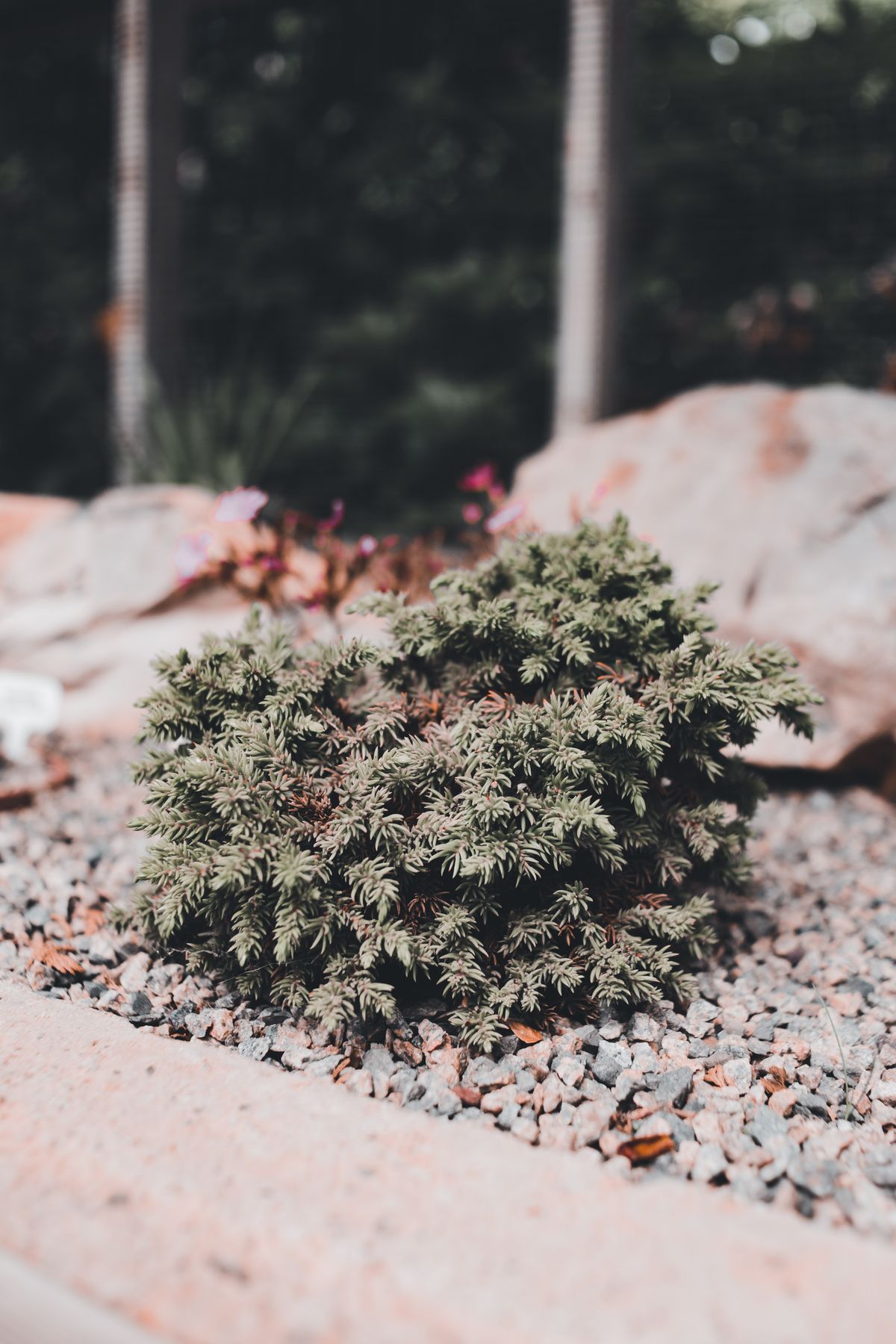
A shrub and low planting growing through gravel and boulders in a rock garden
A natural-looking outcrop: stone set into the slope with gritty planting pockets between
Getting it right

Best locations & exposure

More than almost any other garden style, a rock garden succeeds or fails on its location. Choose the spot well and everything after is easy.

Open & sunny

Aim for an open spot with at least six hours of sun, ideally facing south or west in the North. In zones 8 and warmer, an east-facing slope with afternoon shade is often kinder.

A natural slope

A bank or slope is the perfect canvas: it drains freely, shows plants off at an angle and lets you build tiers of rock that look convincingly natural.

Away from trees

Avoid building under trees. Drips, dense shade, dry root-filled soil and a blanket of fall leaves are all bad news for rock garden plants.

Flat plot? Build up

No slope is no problem. A raised bed, a berm, a dry-stacked stone edge or a stone trough gives the height and drainage a rock garden needs.

Shelter, not enclosure

A little shelter from the harshest wind helps, but avoid a damp, still frost pocket at the bottom of a slope where cold, wet air settles.

A shady rock garden is possible

Only have shade? A north-facing rock garden can work: switch to shade-tolerant plants such as small native ferns, woodland stonecrop (Sedum ternatum), foamflower, wild columbine and mossy saxifrages.

Match the plants to the spot. Use the Plants by Sun or Shade guide to match plants to a hot, sunny bank or a cool, north-facing one before you buy.

The foundation

Soil, drainage & building the rock garden

Everything a rock garden plant needs comes down to one word: drainage. Make the soil sharp and lean, set the stone with care, and the planting nearly grows itself.

The gritty mix

Aim for roughly equal parts screened topsoil, coarse grit and compost or leaf mold. Grit can be crushed granite, pea gravel, chicken grit (granite) or expanded shale. On heavy clay add even more grit, and avoid sand, which can pack down with clay into something like concrete.

Keep it lean

Low fertility is a feature, not a fault. Rich, heavily fertilized soil makes rock garden plants soft, floppy and short-lived. Skip the manure: you are building for drainage, not richness.

Set the big rocks first

Place the largest stones first and bury each by a third to a half, tilted slightly back into the slope, so it looks rooted in place rather than dropped on top.

Run the layers one way

Line up the grain and layering of the stone so it all flows in the same direction, as in a real outcrop. That is the secret to a natural look.

Leave planting pockets

Between and behind the rocks, leave generous pockets of gritty mix. These cool, fast-draining pockets are where roots run and cushion plants settle in.

Mulch with gravel

Finish with about 1 inch of fine gravel or grit worked right up to each plant. It keeps crowns dry, blocks weeds and gives that crisp, mountain-scree look.

Work out your quantities first. Use the soil calculator for your gritty mix and the gravel calculator for the gravel mulch, so you order the right amount (usually by the cubic yard or bag) in one go. And call 811 before you dig into a slope or bring in a machine.

Keeping it well

Sun, watering & maintenance

A rock garden is low-maintenance, not no-maintenance. A handful of light seasonal jobs keeps the planting healthy, neat and long-lived.

Sunlight

Most rock garden plants want full sun, six hours or more, to stay compact and bloom well. In a shady spot, choose shade-tolerant plants rather than forcing sun lovers.

Watering

Water new plants through their first growing season, then ease off. Established rock garden plants rarely need watering in the East and need only deep, occasional soaks in the arid West. Too much water, especially in winter, does more harm than drought.

Weeding

The main ongoing job. Pull weeds little and often while they are small and before they seed into the crevices; a gravel mulch keeps most of them away.

Shear after flowering

Shear creeping phlox, basket-of-gold and rock rose (Helianthemum) once the flowers fade to keep them tight and fresh, and lift any mats that are smothering smaller neighbors.

Fall cleanup & winter care

Clear fallen leaves so they do not rot the plants and top up thin gravel. In cold zones without reliable snow cover, a light layer of evergreen boughs after the ground freezes helps prevent frost heave; in wet-winter areas such as the Pacific Northwest, prop a pane of glass over a few sensitive plants to keep rain off their crowns.

Divide & refresh

Every few years, lift and split crowded clumps and replant the strongest pieces. It keeps the planting vigorous and gives you free plants to spread around.

Free plant guide

Best plants for a rock garden

These twelve are a dependable backbone for rock gardens across much of the US: tough, sun-loving plants that thrive on sharp drainage and stay in scale. Several are North American natives. Check each against your USDA zone, mix cushions, mats and rosettes for contrast, then filter the wider range by your own conditions in the Plant Finder.

Saxifrage

Saxifraga

Neat domes of tight rosettes studded with starry spring flowers, the classic rock garden cushion. Encrusted saxifrages (zones 3-7) are toughest; most saxifrages dislike hot, humid summers, so they shine in the North, the mountains and the Pacific Northwest.

Cushion formSun / part shadeEvergreen

Hens-and-chicks

Sempervivum tectorum

Fleshy rosettes in jade, plum and bronze that cling to the leanest, driest crevices. Drought-proof, evergreen, endlessly collectible and hardy in zones 3-8. Deer usually pass them by, though rabbits sometimes nibble.

Drought-proofFull sunEvergreen

Aubrieta (rock cress)

Aubrieta deltoidea

A tumbling mat of purple, mauve or pink that pours over a wall or rock face in early spring. Best in zones 4-8 with cool nights; it fades in hot, humid summers, where creeping phlox is the better choice.

Spring colorFull sunTrailing

Alpine pinks

Dianthus

Tight blue-gray cushions topped with clove-scented flowers in pink, white and crimson. Compact, long-blooming, fairly deer resistant and suited to a sunny, gritty pocket in zones 3-9.

ScentedFull sunCompact

Creeping thyme

Thymus serpyllum

A low, fragrant carpet that hugs the stone and covers itself in tiny pink or mauve flowers buzzing with bees. Takes light foot traffic, is rarely touched by deer and grows in zones 4-8.

Bee magnetFull sunGroundcover

Basket-of-gold

Aurinia saxatilis

Mounds of gray-green leaves buried under bright golden-yellow flowers in spring. A reliable, sun-loving classic that spills over a wall or rock edge; best in zones 4-7, as it can melt out in Southern heat.

Spring goldFull sunReliable

Creeping phlox (moss phlox)

Phlox subulata

A native of the eastern US. Dense, needle-leaved mats vanish under a sheet of pink, white or lavender stars in spring. Hardy in zones 3-9 and one of the few rock garden classics that handles Southern heat.

Flower carpetFull sunEvergreen mat

Fairy thimbles

Campanula cochleariifolia

Dainty, nodding blue or white bells over a fine creeping mat in summer. Threads through crevices and softens the edges of stone without crowding its neighbors. Zones 5-7; best where summers are not too hot.

Long floweringSun / part shadeDainty

Sea thrift

Armeria maritima

Neat grassy hummocks topped with pink pompom flowers on wiry stems. A form is native to the Pacific coast, and it loves sharp drainage, wind and poor soil. Zones 4-8.

Pompom flowersFull sunCoastal-tough

Pasque flower

Pulsatilla vulgaris

Silky purple cups over ferny leaves in early spring, then beautiful feathery seed heads. Zones 4-8. Its native cousin, the American pasqueflower (Pulsatilla nuttalliana), blooms on prairies from the Plains to the Rockies and is the state flower of South Dakota.

Spring & seed headsFull sunLong-lived

Stonecrop

Sedum acre

A succulent carpet of tiny fleshy leaves lit by starry yellow flowers in early summer, rooting into the poorest crevice. Hardy in zones 3-8, but it spreads hard and can escape into natural areas; native woodland stonecrop (Sedum ternatum) or a clumping sedum is a better-behaved choice.

Tough & creepingFull sunDrought-proof

Candytuft

Iberis sempervirens

A low evergreen mound smothered in crisp white flowers in spring, popular with early bees and seldom bothered by deer. Neat, dependable and pretty on a wall top or rock edge in zones 3-9.

White spring flushFull sunEvergreen
Region by region

Rock gardens across the US

The same principles work everywhere, but the best plants change from a snowy Vermont ledge to an Arizona xeriscape. Look up your USDA zone, then plant for your region.

Northeast & Upper Midwest

Zones 3-6. Classic alpine rock garden country: cold winters, often with snow cover that insulates plants, and cooler summers. Saxifrages, pinks, pasque flower, gentians and dwarf conifers do well, and granite and fieldstone are easy to find. Deer pressure is high, so lean on sedums, thyme, candytuft and hens-and-chicks.

Southeast & South Central

Zones 7-9. Heat, humidity and heavy summer storms are the challenge, not cold. Raise the beds high, use extra grit, and choose heat-proof plants: creeping phlox, native sedums, hens-and-chicks, prickly pear, rain lilies and dwarf yaupon. Skip true high-mountain alpines, which tend to melt by July.

Mountain West & Plains

Zones 3-7. Strong sun, low humidity, wind and alkaline soil suit rock gardens perfectly. Natives shine: penstemons, sulphur buckwheat, prairie smoke, Ozark sundrops, blue grama grass and American pasqueflower. The Rocky Mountain region is known for crevice gardens, built from slabs of stone set on edge.

Southwest & California

Zones 7-11. Here a rock garden is xeriscape by default. Pair stone with agaves, red yucca, desert marigold, blackfoot daisy, California buckwheat and dudleyas, water deeply but rarely with drip irrigation, and ask your water utility about rebates for replacing lawn.

Pacific Northwest

Zones 6-9 west of the Cascades. Mild, very wet winters are the main enemy, so drainage and gravel collars matter most. Sedums, hens-and-chicks, penstemons, kinnikinnick and many classic alpines thrive as long as water never sits. Watch for slugs.

Rock garden or rock mulch? A true rock garden is planted between bedded-in stones. A yard covered in landscape fabric and decorative rock with a few shrubs is a different thing: it heats up fast, gets weedy as windblown dirt builds up on the fabric, and gives little to wildlife. If you are replacing lawn to save water, a planted rock garden or a gravel garden full of natives is the better xeriscape.

Leave these out

Plants to avoid in a rock garden

The quickest way to spoil a rock garden is to let the wrong plant in. These swamp the scale, want the wrong conditions or simply take over, so keep them for other parts of the yard.

!Rampant spreaders

Snow-in-summer (Cerastium tomentosum), creeping Jenny (invasive in parts of the Midwest and Northeast) and the vigorous trailing bellflower (Campanula poscharskyana) look charming, then bury every small plant around them. Keep spreaders well away.

!Moisture-lovers

Hostas, ferns that need constant moisture, astilbes and bog plants want the rich, wet soil a rock garden denies them. In sharp, dry grit they sulk and fade.

!Big perennials & shrubs

Tall perennials and full-size shrubs wreck the miniature scale and shade out the low planting. Anything taller than knee-high belongs elsewhere, so use dwarf forms instead.

!Vigorous grasses & bamboo

Large ornamental grasses and running bamboo are far too big for a rock garden, threading through the stonework and swamping everything. Miscanthus and some bamboos are also invasive in many states.

!Hungry, soft annuals

Thirsty, heavily fed bedding annuals grow lush and floppy in lean grit and rot in the first cold, wet spell. Rock garden plants want it poor and sharp, not rich and soft.

!Groundcovers that creep everywhere

Baby’s tears (Soleirolia), English ivy, vinca and other blanket groundcovers creep into every crevice and are almost impossible to weed out. English ivy and vinca are invasive in many states. Never let them start.

Design formula

Rock garden design tips

A convincing rock garden looks as if nature put it there. These simple principles separate a natural outcrop from a pile of stones with plants scattered between.

One regional stone

Use one type of stone, ideally quarried in your region: granite in New England, limestone in the Midwest, sandstone or moss rock in the Rockies and Southwest. Mixing types looks artificial, and regional stone weathers to suit its surroundings and costs less to haul.

Bury rocks by a third

Set each stone a third to a half into the ground, tilted back slightly, so it looks anchored rather than perched on the surface like an ornament.

Align the layers

Keep the grain and layering of every stone running the same way, as it does in a natural rock face. This one trick does more for a natural look than any other.

Build in tiers & a scree

Build up in gentle terraces, with the tallest stones and dwarf conifers at the back or top, and add a flat ‘scree’ of gravel at the base for creeping plants.

Anchor with structure

A dwarf conifer or two, such as a dwarf mugo pine or dwarf Alberta spruce, or a small evergreen shrub gives height and holds the scheme together through winter.

Plant in natural drifts

Group each plant in loose, uneven sweeps rather than one of everything, and let cushions spill over the rock. Restraint and repetition keep it calm and believable.

Avoid the ‘chocolate chip cookie’. The most common mistake is dotting small rocks evenly over a mound like chips in a cookie. Group fewer, larger stones into natural outcrops instead, and let the plants knit them together.

All year round

Seasonal interest in a rock garden

Plant a little for every season and a rock garden is never dull: a relay of small flowers from spring to fall, then stone and evergreen rosettes carrying the winter.

Spring

The big flush

  • Creeping phlox & basket-of-gold pour color over the stone
  • Saxifrage & candytuft in cushions of bloom
  • Pasque flower in silky purple cups
  • Dwarf bulbs - crocus & species tulips

The rock garden’s headline season, when mats and cushions burst into color and the first native bees arrive.

Summer

Fine detail

  • Alpine pinks clove-scented in the sun
  • Creeping thyme buzzing with bees
  • Fairy thimbles nodding blue bells
  • Thrift, sedum & penstemon in steady bloom

A quieter, more intricate show: smaller flowers over a long season that reward a close look and need almost no water. In the West, native penstemons bring hummingbirds.

Fall

Late color

  • Fall gentians in electric blue
  • Sedums flushing bronze and red
  • Pasque-flower seedheads catching the light
  • Asters & hardy cyclamen in cooler pockets

The planting shifts to russets and late blues, with fluffy seed heads adding softer, textural interest.

Winter

Structure & form

  • Hens-and-chicks rosettes tight and evergreen
  • Dwarf conifers holding the shape
  • The stone itself dusted with frost or snow
  • Early bulbs pushing through by late winter

When most of the yard is asleep, the bones of a rock garden, its rock, gravel and evergreen rosettes, look their crisp, sculptural best.

Alpine flora growing in the crevices of weathered mountain rock
Warm stone, open crevices and early flowers make a rock garden quietly rich in wildlife
Good for nature

Wildlife value of a rock garden

Far from a sterile heap of stone, a planted rock garden is surprisingly good habitat, and it supports wildlife with no extra effort from you.

Early nectar

Creeping phlox, thyme, candytuft and other early bloomers are among the first nectar of the year, a lifeline for native bees such as mason bees emerging in early spring.

Warm basking stone

Sun-warmed rock is a favorite basking spot for butterflies, beetles and, in many regions, fence lizards and skinks soaking up the warmth.

Crevices for shelter

Gaps and hollows between stones give safe refuge to ground-nesting native bees, ground beetles, spiders and other small allies that keep pests in check.

Seed heads

Leave pasque flower plumes, allium heads and fall seed heads standing. They feed juncos, sparrows and finches and shelter insects through the cold months.

No need for sprays

Tough, well-sited rock garden plants rarely suffer serious pests, so there is no call for pesticides, which lets pollinators and natural predators thrive.

A drink for insects

Tuck a shallow dish or hollowed stone of water among the rocks and you add a safe drinking and bathing spot for bees, butterflies and birds.

Plant for the pollinators. Add extra bee-friendly plants from the pollinator plants guide. Creeping phlox, thyme, native penstemons and bellflowers are as valuable to wildlife as they are pretty.

Fix it early

Common rock garden problems

Nearly every rock garden disappointment comes back to a few avoidable issues. Spot them early and each is easy to fix.

!Winter wet & crown rot

The number-one killer. If plants collapse and blacken over winter or in a wet spring, drainage is too slow. Add more grit, put a gravel collar around each crown and cover the fussiest with a pane of glass.

!Weeds in the crevices

Weed seeds love bare, gritty soil. Stay on top of them by pulling little and often, and keep a good gravel mulch that smothers most seedlings before they root.

!Slugs, snails & deer

Soft-leaved plants and fresh spring growth draw slugs hiding under the stones, a real issue in the Pacific Northwest. Clear hiding spots and use wildlife-safe baits. Where deer and rabbits browse, favor hens-and-chicks, sedums, thyme, pinks, candytuft and penstemon.

!A spreader taking over

One rampant spreader can smother a dozen choice plants in a season. Cut it back hard, dig it out if needed, and keep known thugs out from the start.

!Poor drainage on flat clay

On heavy, level ground water just sits. Raise the whole bed, add a deep fast-draining base and plenty of grit, or build a raised bed or trough instead.

!Frost heave & sinking rocks

Stones set on the surface settle, tip and look fake, and in cold zones freeze-thaw cycles can heave small plants out of the ground. Bed stones in properly, align the layers, and press heaved plants back in during a winter thaw.

Good questions

Rock garden FAQs

The questions we hear most often about planning, building and planting a rock garden.

What is a rock garden?

A rock garden, also called a rockery or alpine garden, is a raised or sloping bed of placed stone and fast-draining, gritty soil, planted with low, compact plants. It recreates the sharp drainage and open, sunny conditions of a mountain scree or rocky prairie, so small, jewel-like plants thrive and the stone gives structure all year.

How do I build a rock garden?

Pick a sunny, well-drained spot, ideally a slope, or build a raised bed or berm on flat ground. Call 811 before digging. Improve drainage with a deep, gritty mix, set the largest rocks first (buried by a third to a half, layers aligned), leave gritty planting pockets between the stones, plant, and finish with a gravel mulch around every plant.

What are the best plants for a rock garden?

Reliable sun lovers make the backbone: creeping phlox, hens-and-chicks, sedums, candytuft, alpine pinks, creeping thyme, basket-of-gold, sea thrift, pasque flower, saxifrages and, in the West, native penstemons and buckwheats, with a dwarf conifer or two for structure. Check each against your zone and filter the full range in the Plant Finder.

Does a rock garden need full sun?

Most rock garden plants want six hours of sun or more to stay compact and bloom freely. A shady, north-facing rock garden can still work with shade-tolerant plants such as small native ferns, woodland stonecrop, foamflower and wild columbine. In zones 8 and warmer, afternoon shade helps even sun lovers.

What soil do rock garden plants need?

Fast-draining, low-fertility, gritty soil: roughly equal parts screened topsoil, coarse grit (crushed granite, pea gravel or expanded shale) and compost or leaf mold, with extra grit on heavy clay. Rich, damp soil makes plants soft and prone to rot. Winter wet at the crown, not cold, is what usually kills them.

Are rock gardens low-maintenance?

Once built and established, yes: little watering, no mowing and no fertilizing. They are not maintenance-free, though. Expect to weed between stones, top up gravel, shear after flowering, clear fall leaves and protect a few sensitive plants in winter.

What are the best native plants for a rock garden?

Good North American natives include creeping phlox, woodland stonecrop, wild columbine, prairie smoke, American pasqueflower, penstemons, sulphur buckwheat, Ozark sundrops, blue grama grass, pussytoes and, in the Southwest, blackfoot daisy and red yucca. Choose ones native to your own region and check them against your zone.

Which rock garden plants are deer resistant?

Deer usually avoid hens-and-chicks, sedums, creeping thyme, lavender, candytuft, pinks, penstemons, basket-of-gold and ornamental grasses. No plant is completely deer proof, and hungry deer will sample almost anything in a hard winter, so protect new plantings where browsing is heavy.

Can I build a rock garden in a hot, humid climate?

Yes, with the right plants and extra drainage. In zones 8-9 in the Southeast and Gulf states, raise the bed, use plenty of coarse grit, allow afternoon shade, and choose heat-tolerant plants such as creeping phlox, native sedums, hens-and-chicks, prickly pear and rain lilies instead of true high-mountain alpines.

Find your plants

Explore rock garden plants in the Plant Finder

Browse and filter the wider PlantMapper range by your own zone, sun, soil and space. These shortcuts are a good place to start a rock garden.

Free planning tools

Helpful garden calculators

Work out the practical side of a rock garden, from gravel and soil to plant numbers, with our free calculators.

Useful for a rock garden

Our picks

As an Amazon Associate, PlantMapper may earn from qualifying purchases. Prices and availability are set by Amazon.

The goal

A rock garden, settled in

Give the plants a season or two to settle into their gritty pockets and a rock garden knits into a living tapestry of cushions, mats and rosettes: detailed, full of character and barely any work.

An established rock garden of drought-tolerant plants and succulents among stone
An established rock garden: fast-draining, low-water planting that nearly looks after itself
Start your rock garden

Plan your rock garden with PlantMapper

Everything on this page is free to use. When you are ready to plan, use the Plant Finder to match plants to your own zone, sun and soil, size up your gravel and gritty mix with the free garden calculators, and browse the rest of the Garden Types for more ideas. A rock garden sits naturally alongside our Gravel, Mediterranean and Coastal gardens.

Build it lean, sharp and sunny, and a rock garden rewards you for decades. Get the drainage right first and the planting takes care of itself.

A planted rock garden of small plants and flowering succulents among stones
Sharp drainage · sun · low, compact plants
The small print

Disclosures & disclaimers

Affiliate disclosure

Some links on this page are affiliate links. If you buy through them, PlantMapper may earn a small commission at no extra cost to you. It never changes which products we suggest.

Gardening disclaimer

All advice is general guidance for yards across the US. Results vary with your zone, rainfall, soil and setting, so always confirm a plant’s hardiness and invasive status where you live.

Plant safety note

Some rock garden plants, including pasque flower and euphorbias, have irritant sap or are toxic if eaten. Wear gloves when handling them, and check each plant before growing it where children or pets play.