
Olive treeLavenderRosemaryThyme
- Layout
- A small olive in a central pot, herbs softening the edges
- Materials
- Pale gravel, terracotta, a warm stucco wall
- Atmosphere
- Still, scented, sun-warmed at any hour
California has a true Mediterranean climate: mild, wet winters and long, dry summers. That makes this style a natural fit for the West Coast and, with a few swaps, for the Southwest's xeriscapes and any sunny, well-drained yard elsewhere. Plan it here with plants by zone, natives that thrive on little water, and calculators in feet and gallons.
Plant suggestions are general guidance. Check each plant's USDA zone and your state's invasive plant list before planting.

Think of a hillside in Provence or a courtyard in Santa Barbara. A Mediterranean garden swaps a thirsty lawn for gravel, stone, terracotta and plants with silver, needled or waxy leaves that need little summer water once established. In the West it is close cousin to xeriscaping, the water-wise landscaping style many cities now encourage. Check your growing zone before you choose plants.
Pea gravel or decomposed granite in place of lawn: drought-friendly and easy to keep.
Olive trees (zones 8-11), lavender, rosemary and thyme for evergreen calm and scent.
Terracotta pots, stucco walls and natural stone that age beautifully.
A shaded patio or pergola, made for long evenings outdoors.
Sun-loving, low-water planting in gravel and stone. Ideal for dry-summer climates.
You are hereSoft, romantic and abundant. Layered beds of flowers, herbs and climbers.
Bold leaves and exotic shapes for a lush, dramatic, jungle-like feel.
Native, habitat-led planting, left a little wild to support birds and pollinators.
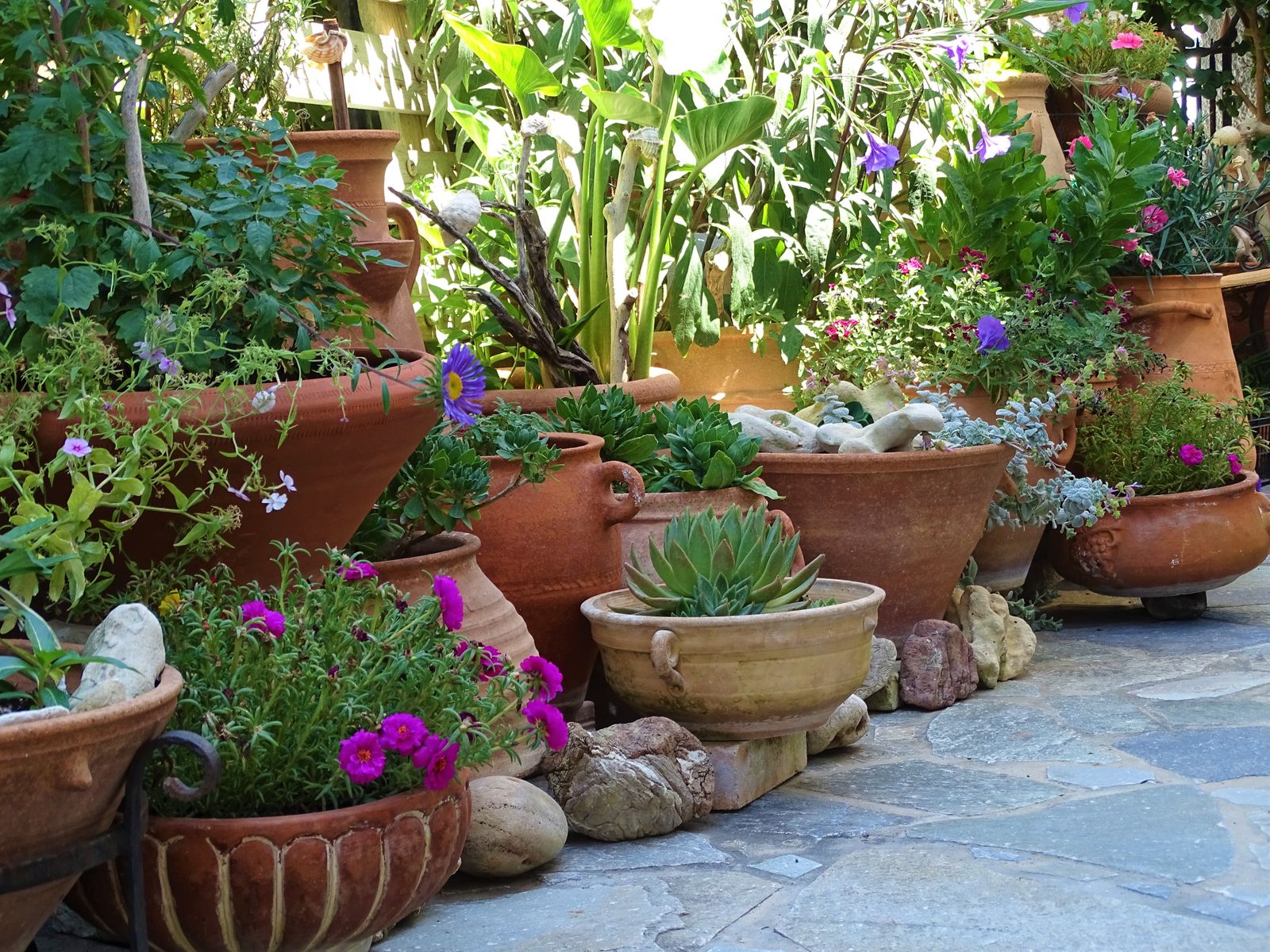
Some inspiration before you plan: olive trees, terracotta, pale gravel and sun-loving herbs in the relaxed Mediterranean style.


The look seems effortless, but a few simple ideas hold it together. Follow these and the yard will feel calm, warm and planned rather than just dry.
Fast-draining soil is the foundation. Most of these plants die from wet roots, not drought.
A few strong evergreen shapes give the garden its year-round bones.
An olive in zones 8-11, or a hardier stand-in such as a desert willow or juniper, anchors the planting.
Warm pots add height, focus and a place for tender plants.
Silver, needled and waxy leaves shrug off heat and dry summers. On drip, they need little water.
Soft silver, olive green, lavender blue and gentle terracotta.
A shaded corner to sit, eat and linger is part of the plan, especially where summers top 90°F.
A south- or west-facing wall can buy you half a zone for tender plants.
Spiky, soft, feathery and glossy leaves set against one another.
Bold outlines, from a clipped bay to a spiky agave, read against the sky.

Work out how much gravel or decomposed granite to order, in cubic yards and tons, before you call the landscape supply yard.
Enter the area and depth, then press calculate.
As an Amazon Associate, PlantMapper may earn from qualifying purchases. Prices and availability are set by Amazon.
Browse drought-tolerant plants with their USDA zones, including West Coast and Southwest natives, and filter by your conditions. Combine a few filters to narrow the list, and tap “North American Native” or “Deer Resistant” if those matter in your yard.
- shown
No plants match every filter at once. Try removing one to widen the search.
Pots are the heart of a Mediterranean patio, and the way to grow olives, citrus and agaves north of their zone. Plan the potting mix, drainage and planting.
Choose a pot and a planting, then press calculate.
As an Amazon Associate, PlantMapper may earn from qualifying purchases. Prices and availability are set by Amazon.
Olives handle light frost but are damaged below about 15°F, so how much care yours needs depends on your zone. Answer three questions to find out.
Answer three quick questions for tailored guidance.
As an Amazon Associate, PlantMapper may earn from qualifying purchases. Prices and availability are set by Amazon.
See roughly how much water a gravel garden can save compared with keeping a lawn green through a dry Western summer.
Enter the area of lawn you are thinking of changing.
Seven relaxed ideas to plant toward, from a Southern California courtyard to a desert driveway. Copy one, or use it as a starting point.
Seven groupings that like the same conditions, with texture and bloom time already worked out. Check the zones of each plant in the finder above.

The style was made for California's climate, and it adapts well to the Southwest. Elsewhere, humid summers, cold winters or heavy clay call for a few changes. Here is how it plays out across the country, plus the invasive plants to leave out.
Wet winters and dry summers match the Mediterranean exactly. Plant in fall so winter rain establishes roots, and mix in natives such as ceanothus, manzanita and sages.
In Arizona, Nevada and New Mexico, lean on agaves, red yucca, desert marigold and penstemons, use drip irrigation, and give pots and olives afternoon shade in the hottest months.
Humid heat and summer storms rot lavender and rockrose. Plant on raised mounds of gritty soil, space plants for airflow, and favor rosemary, yucca, sedum and native coneflowers.
Use zone 4-6 plants for the look (Russian sage, lavender, sedum, yucca, thyme) and keep olives, bay and aeonium in pots that spend winter indoors.
In the Pacific Northwest and on heavy clay anywhere, winter wet kills more of these plants than cold. Build raised gravel beds or choose forgiving plants: sea holly, Russian sage, sedum and blanket flower.
Pampas grass, Mexican feather grass, red valerian and fruiting olives are invasive in parts of California, and myrtle spurge is a noxious weed in Colorado. Check your state's invasive plant list first.
Water deeply for the first year or two, then cut back. Established plantings need little irrigation, no mowing and no fertilizer, which also helps under watering restrictions.
Give the planting a sunny spot and a season or two to settle, and it knits into the relaxed, silvery look that makes the style so easy to live with.
Suggestions grouped by job. Everything here is optional, and much of it can be added gradually.
The links in this section are paid affiliate links. If you buy through them we may earn a small commission, at no extra cost to you.
An instant digital download in US Letter and A4. Print it at home as often as you like and plan a sun-loving, low-water yard. Inside are a plant directory of trees and evergreen anchors, border plans, planting grids and worksheets, seasonal schedules and warm, terracotta-toned color palettes. It was written for the original edition of PlantMapper, so use this page to check each plant against your zone. It sits alongside our Cottage, Tropical and Shady garden kits.
Download the Starter Kit on Etsy (UK edition)
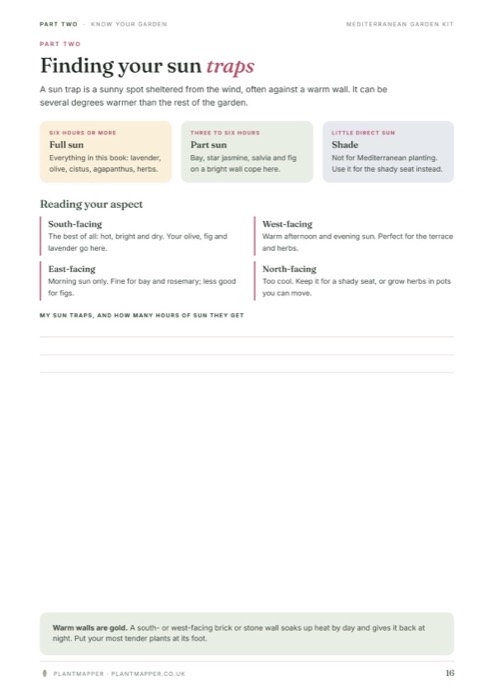
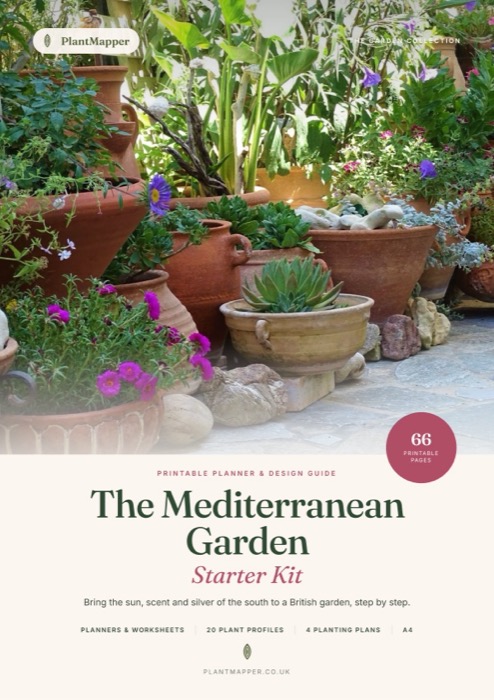 66-page printable planner · US Letter & A4
Coastal and inland California has a true Mediterranean climate, with wet winters and dry summers, so the style fits perfectly there. It also suits the Southwest as xeriscaping, and the Pacific Northwest if you build in sharp drainage for the wet winters. In the humid Southeast and the cold North, use hardy, humidity-tolerant stand-ins such as rosemary, yucca, Russian sage and sedum, and grow olives in pots.
Olive trees grow outdoors in USDA zones 8 to 11 and are damaged when temperatures fall below about 15 degrees F. They do best in California, Arizona's low deserts and parts of Texas and the Gulf Coast. In zone 7 and colder, grow an olive in a pot and move it into a bright garage or sunroom for winter. In California, choose a fruitless variety, because fruiting olives are invasive in parts of the state.
About 2 inches gives a good crunch underfoot and helps keep weeds down. For the Mediterranean look, choose a warm, pale stone such as tan pea gravel, crushed limestone or decomposed granite. On a driveway or busy path, add 4 inches of compacted crushed stone base underneath. Order about 10 percent extra for settling and topping up.
Most need fast-draining soil that does not stay wet in winter, which kills them more often than cold. On heavy clay, build raised beds or mounds with gritty soil. Poor soil is fine: rich soil and heavy fertilizing make these plants soft and floppy. A gravel mulch keeps their crowns dry.
In California, pampas grass, Mexican feather grass, red valerian and fruiting olive trees spread into wild land, and myrtle spurge is a listed noxious weed in Colorado and other Western states. Check your state's invasive plant list, and consider natives such as California lilac, manzanita, Cleveland sage, deer grass and red yucca.