

Why good watering matters
Water drives almost everything about how well a vegetable garden grows. Steady moisture keeps plants growing and fruit sweet, while boom-and-bust watering causes many of the problems gardeners blame on pests and disease, from cracked tomatoes to bitter, bolted lettuce. Watering well isn't about watering more; it is about putting the right amount in the right place at the right time, with a system that makes it easy. Do that and you grow healthier plants, spend less time with a hose and use less water, which matters in drought-prone states and anywhere water is metered.
Healthier plants
Even moisture gives smooth, sweet produce. Cracking, bolting and blossom end rot usually come from uneven watering, not disease.
Less time watering
A soaker hose, a drip kit and a hose timer do the work for you, and keep things alive while you are away on vacation.
Lower water bills
Targeted watering and a rain barrel cut how much city or well water you use, which helps your bill and your local water supply in dry summers.
Deeper roots
Deep, less frequent watering pulls roots down after the moisture, building plants that cope far better with heat waves and dry spells.
Watering Systems in the Grow Your Own collection
Watering Systems
Water efficiently for healthier plants and less effort, from the watering can to automatic drip irrigation.
You are hereTomatoes
The crop that most rewards steady watering: even moisture prevents cracking and blossom end rot.
Greenhouse Growing
Under cover, summer watering is daily work, so a system pays off most here.
Raised Beds
Fast-draining beds need thoughtful watering, and a soaker hose or drip line is the perfect partner.
Composting
Compost-rich, mulched soil holds water much longer, the foundation of efficient watering.
How much water do plants need?
Not every plant needs the same amount of water. A few basics tell you what to water, when and how much, and stop you wasting water on plants that don't need it.
About an inch a week
Most vegetable gardens need roughly 1 inch of water a week from rain and irrigation combined, and up to 2 inches in hot, dry or windy weather. A rain gauge tells you what nature has already supplied.
Water in the morning
Early morning is best: less water evaporates, and leaves dry quickly, which reduces disease. Evening is second best; midday in summer loses the most to evaporation.
Know the thirsty crops
Lettuce, cucumbers, squash, beans, tomatoes and anything flowering or fruiting drink the most. Established perennials, herbs and native or drought-tolerant plants need far less.
Water the roots
Aim water at the soil, not the leaves. Wet foliage spreads leaf diseases, and sprinkler water often lands on paths and driveways instead of roots.
Check before you water
Push a finger into the soil. If it is moist an inch or two down, wait. Watering on a fixed schedule regardless of the weather wastes water and can rot roots.
Mind the critical times
Seeds, new transplants and plants in flower or fruit are thirstiest. Water those well, and you can ease off elsewhere.
Watering across the US
How much you need to water, and the rules you water under, change hugely from the rainy Southeast to the desert Southwest. Your growing zone tells you about winter cold; your local water utility tells you about watering rules. Find your growing zone.
Southwest & California
The driest region, with the most watering restrictions. Drip irrigation under mulch is close to essential, water early in the morning, use shade cloth in the low desert and choose native and drought-tolerant plants for the rest of the yard.
Texas, Florida & the Southeast
Summer heat dries containers fast, but thunderstorms can bring inches of rain at once. A rain sensor or smart controller avoids watering after storms, and many Florida and Texas cities limit sprinkler days, so check yours.
Northeast & Midwest
Rain is usually more reliable, but midsummer dry spells still stress vegetables. A soaker hose or drip line on a timer covers vacations, and in cold zones drain hoses, timers and drip lines before the first hard freeze.
Pacific Northwest
Wet winters and surprisingly dry summers. Most gardens need regular watering from July to September, and a rain barrel filled in spring can only cover part of that, so pair it with drip and thick mulch.
Mountain West & Plains
Dry air, wind and strong sun mean water evaporates fast. Water early, use drip under mulch, protect lines from hail and freezing, and check rain barrel rules, which are stricter in some western states.
Watering raised beds
A raised bed drains freely, which roots love, but it dries out faster than an in-ground garden, especially in hot, dry summers. A little planning keeps it evenly moist with minimal effort.
Soak it deeply
Give beds a slow, deep soak instead of a quick sprinkle, so water reaches the lower roots and the bed stays moist longer between waterings.
Drip or soaker hose
Run drip line or a soaker hose along each row and water goes slowly to the roots with almost no waste. On a timer, the bed practically waters itself.
Mulch to hold moisture
Two to three inches of straw, shredded leaves or compost on top slows drying dramatically and evens out moisture. It is the biggest single cut you can make in watering.
Rich soil holds water
Compost-rich soil acts like a sponge and holds far more water than sandy or tired soil, so feeding the soil also helps it hold water.
Watering containers
Pots, window boxes and grow bags dry out faster than anything else, often needing water every day in summer and sometimes twice in desert heat. A few tricks keep them moist without tying you to the hose.
Check daily in summer
Small pots can dry out within hours on a hot afternoon. Check them every day, and water before the potting mix pulls away from the sides.
Bigger pots, less worry
The more potting mix a container holds, the slower it dries. Moving from a 1-gallon to a 3- or 5-gallon pot is the easiest way to water less often.
Self-watering containers
Containers with a built-in water reservoir keep the mix evenly moist for days from one fill, ideal for tomatoes, peppers and busy weeks.
Drip kit for many pots
A drip system with an emitter or spray stake in each pot, run from a hose timer, waters a whole deck full of containers at once.
Mulch and saucers
A layer of mulch on top slows drying, and a saucer underneath holds a reserve in hot weather. Empty saucers after rain so roots don't sit in water and mosquitoes don't breed.
Group them together
Grouping pots together, in light shade during the hottest part of the day, raises humidity around them and slows how fast they dry out.
Watering greenhouses
A greenhouse heats up and dries out fast, so watering is daily work in summer, and it is where an automatic system pays off most.

Water daily in summer
Under cover, containers can need water once or even twice a day in summer. Keep up with it for steady, healthy growth.
Automate it
A drip system or capillary mat on a timer is a game changer, giving steady water through hot days and vacations with no daily trip out.
Damp down the floor
Wetting the greenhouse floor on hot days raises humidity and cools the air, which plants like and spider mites don't.
Water roots, not leaves
In still, warm air, wet leaves invite mold and mildew. Water the potting mix in the morning and keep the foliage dry.
Watering with a hose
A garden hose is the quickest way to hand-water a larger yard. With a good nozzle it is flexible and efficient; left running, it wastes a lot of water.
Use a shut-off nozzle
An adjustable nozzle or watering wand lets you switch from a gentle shower to a soaking stream and shuts off between plants, so nothing runs to waste.
Aim at the base
Direct water to the soil around each plant instead of spraying the whole bed. A long watering wand reaches the back of beds and the base of tall crops easily.
Go gentle and slow
A gentle flow soaks in; a hard blast runs off and washes soil and seeds away. Water slowly and give it time to sink in.
Know your city's watering rules
Many towns and water districts, especially in the West, Texas and Florida, limit lawn and garden watering to certain days or hours, and stricter rules can apply in a drought. Hand-watering and drip irrigation are often treated differently from sprinklers, so check your local rules.
Watering cans
The watering can is still the most precise tool there is: perfect for seedlings, containers and exactly targeted watering, and one every gardener needs whatever else they use.
Total precision
A can lets you give each plant exactly what it needs, right at the roots, ideal for seedlings, single pots and newly planted transplants.
A fine rose for seedlings
Use a fine rose (sprinkler head) for a soft shower that won't wash out seeds or flatten tiny seedlings. Take it off for a quick soak at the roots.
Perfect for liquid fertilizer
A can is the easiest way to apply liquid fertilizer or fish emulsion: mix it in the can and pour it straight onto the roots.
Fill from the rain barrel
Keep a can or two next to the rain barrel and refilling is easy: free rainwater, always to hand, no faucet needed.
Soaker hoses
A soaker hose oozes water slowly along its whole length, straight into the soil. Snaked through a bed, it is one of the simplest and most efficient ways to water, and it works well on a timer.
Waters at the roots
The hose weeps directly into the soil, so water goes to the roots with very little lost to evaporation, runoff or wet leaves.
Snake it through the bed
Lay it in loops between the plants and cover it with mulch. After that, watering is just a matter of turning on the faucet for a while.
Add a timer
Screw a hose timer onto the faucet and the soaker waters the bed for you early every morning, the cheapest way to fully automatic watering.
Cheap and low-pressure
Soaker hoses are inexpensive and work best at low pressure, so add a simple pressure regulator. They can even run slowly from a raised rain barrel, handy for a community garden plot with no faucet.
Drip irrigation systems
Drip irrigation carries water through flexible tubing to an emitter at each plant. It is the most efficient way to water, and the method many water utilities and Extension services recommend for vegetable beds, shrubs and containers.

An emitter per plant
Tubing carries water to emitters rated in gallons per hour (for example ½ or 1 GPH) at each plant or pot, or you can use drip line with emitters built in every 12 inches for rows.
The least waste
Water drips slowly onto the root zone, so very little is lost to evaporation, overspray or runoff. That makes drip the most water-thrifty system there is.
Kits make it easy
Drip kits from a home improvement store include tubing, fittings, emitters, a filter and a pressure regulator. Fit them to a hose bib with a backflow preventer and you can build a system in an afternoon with no plumbing.
Set it on a timer
Add a hose timer and the system runs early each morning with no effort from you, giving consistent crops and peace of mind on vacation.
Automatic watering systems
Adding a timer to a soaker or drip system turns watering from a daily chore into something that just happens. It is the best upgrade for busy gardeners, and a lifesaver when you go away.
A simple hose timer
A battery-powered hose timer screws onto the faucet and turns a drip or soaker system on and off at set times. Cheap, easy to fit, and the heart of any automatic setup.
Water at the best time
Set it for early morning, when the least water evaporates. The garden is watered before you are even up, and timers make it easy to stick to permitted watering days.
Vacation cover
An automatic system keeps everything watered while you're away, with no coming home to wilted containers and no favors to ask of the neighbors.
Add a rain or moisture sensor
Smart controllers and rain sensors skip a watering after rain or when the soil is still moist. Look for the EPA WaterSense label on smart irrigation controllers; some water utilities offer rebates for them.
Still keep an eye on it
Automatic doesn't mean forgotten. Check for clogged emitters and leaks, adjust run times as the season changes, and in cold zones drain and bring in hose timers and drip parts before the first hard freeze.
Run it from a rain barrel
Some low-pressure timers and small pumps work from a rain barrel, so a drip system can run on free rainwater instead of city water.
Rainwater harvesting
Collecting rainwater is the thriftiest and greenest water source there is: free, soft and well suited to most plants. A rain barrel or two can make a real dent in summer water use.

Add a rain barrel
A barrel connected to a downspout fills fast. As a rough guide, 1 inch of rain on 1,000 sq ft of roof sheds about 600 gallons, so even a small roof can fill a 50-gallon barrel in one storm.
Plants like it
Rainwater is soft and slightly acidic, without the chlorine of treated tap water, which suits acid-loving plants like blueberries and azaleas.
Check your state's rules
Most states allow and even encourage rain barrels, but a few western states regulate collection; Colorado, for example, allows up to two barrels holding 110 gallons in total. Check before adding big tanks.
Keep it covered
A tight lid or fine screen keeps out leaves and mosquitoes (which can carry West Nile virus). Raising the barrel on blocks lets you fill a can or run a soaker hose by gravity.
Water-saving techniques
With hotter summers, droughts and watering restrictions more common across much of the country, watering wisely matters more than ever. A few simple habits cut water use while growing tougher plants.
Mulch everything
Two to three inches of wood chips, straw or shredded leaves is the most powerful water saver there is: it slows evaporation, smothers thirsty weeds and keeps roots cool.
Water deeply, less often
Deep, occasional soaks build deep roots that find their own moisture; light daily sprinkles keep roots shallow and thirsty.
Collect rainwater
A rain barrel is the simplest way to cut your use of city water and keep some water on hand during restrictions, where your local rules allow it.
Time it right
Water early in the morning, when it is cool and calm, and much less is lost to evaporation and wind than in the heat of the day.
Improve the soil
Soil rich in compost holds water like a sponge. Building the soil is, in the end, the surest way to need less watering.
Target the water
Soaker hoses and drip irrigation put water exactly where it is needed, so none is wasted on paths, sidewalks and bare soil, unlike a sprinkler or a hose left running.
Common watering mistakes
Most watering problems come down to a few habits, and fixing them grows healthier plants while saving water.
!A little every day
Light daily sprinkles that only wet the surface. This keeps roots shallow and thirsty. Water deeply and less often, so moisture and roots go deep.
!Watering the leaves
Spraying the whole plant instead of the soil. Wet leaves invite disease, and much of the water never reaches the roots. Aim at the base, in the morning.
!Watering at midday
Watering in the heat of the afternoon. A lot is lost straight to evaporation. Water early in the morning for the same benefit with far less waste.
!Forgetting the containers
Treating pots like an in-ground bed. Containers dry out much faster and need checking every day in summer. They are the most common cause of sudden wilting.
!Overwatering
Too much water, too often. Soggy soil rots roots as surely as drought kills them. Check the soil first and let the surface dry between waterings.
!No mulch
Bare soil baking in the sun. Uncovered soil loses a lot of water to evaporation. A simple mulch can cut how often you need to water dramatically.
Watering systems - frequently asked questions
The watering questions American gardeners ask most, answered simply.
What is the most efficient way to water a vegetable garden?
Drip irrigation or a soaker hose on a timer, running early in the morning, is the most efficient method. Water goes straight to the roots with very little lost to evaporation, overspray or runoff, the leaves stay dry, and the timer does the job for you.
How often should I water my vegetable garden?
Water deeply rather than often. Most vegetable gardens need about 1 inch of water a week, including rain, and up to 2 inches in hot, dry or windy weather. Containers and greenhouse plants may need water daily in summer, while mulched in-ground beds may need it only every few days.
Is drip irrigation allowed during watering restrictions?
Often, but not always. Many cities treat drip irrigation and hand-watering differently from sprinklers, because they use far less water, but the rules vary by city and water district and can change in a drought. Check your local water utility's current rules.
Is it legal to collect rainwater?
Rain barrels are legal for homeowners across the country, and many cities encourage them with rebates, but some western states set limits. Colorado, for example, allows up to two barrels with a combined 110 gallons per household. Check your state and local rules before installing larger systems.
Is rainwater better for plants?
Rainwater is soft, slightly acidic and free of the chlorine in treated tap water, which most plants like, and it is especially good for acid-loving plants such as blueberries and azaleas. Keep barrels covered to stop mosquitoes breeding.
Do I need a backflow preventer for drip irrigation?
Yes, it is a good idea and often required by local plumbing codes. A backflow preventer or vacuum breaker on the hose bib stops garden water being drawn back into your drinking water. Most drip kits also need a filter and a pressure regulator.
Example watering setups
Four simple watering setups, whatever size your yard is. Copy one as it is or adapt it to your space.
Deck containers
- A watering can with a fine rose
- A rain barrel on the house downspout
- Self-watering containers for tomatoes and peppers
- A mulch layer on top to slow drying
- A daily check in summer
The simplest start: a can, a rain barrel and a few self-watering containers keep a deck garden thriving in a few minutes a day.
The soaker-hose bed
- A soaker hose snaked through the bed
- A hose timer set for early morning
- A straw mulch over the hose
- A pressure regulator
- Almost no daily effort
Set it up once and the bed waters itself at first light: efficient, cheap and easy on your time.
Drip-fed greenhouse
- A drip line to every pot and grow bag
- A timer for once or twice a day
- Capillary matting on the benches
- The floor dampened in the heat
- Vacation-proof watering
A greenhouse is where automation pays off most: steady water through the hottest days with no daily trip.
The water-wise garden
- Rain barrels linked together, where allowed
- Drip line on a smart timer that skips after rain
- Everything mulched to hold moisture
- Deep, infrequent watering
- Fits within watering restrictions
A thrifty setup for dry western summers and drought years: water only where roots are, only when needed, on your permitted days.
Explore more with Plant Finder & the Grow Your Own guides
Good watering grows great crops. Use our free Plant Finder to match plants to your conditions, and these guides to grow them well.
Handy garden calculators
Plan the practical side of your beds with our free calculators, so the soil that holds your water is right from the start.
Handy for watering your garden
Our picksAs an Amazon Associate, PlantMapper may earn from qualifying purchases. Prices and availability are set by Amazon.
The Grow Your Own Starter Kit
Everything on this page is free: plant water needs, watering beds, containers and greenhouses, choosing between hoses, soaker hoses, drip and timers, rain barrels and saving water. If you like planning on paper, the Grow Your Own Starter Kit is an optional printable workbook for planning an efficient, well-watered garden. It pairs with our free garden calculators and Plant Finder.
Watering plan
Worksheets to map which beds, containers and crops need what, and which watering method suits each, so the whole garden is covered with the least effort.
Seasonal watering guide
A reminder of how much to water as the season warms and cools, easing off in spring and stepping up in the heat of summer.
System chooser
A simple guide to choosing between can, hose, soaker, drip and timer for your space and budget.
Water-saving checklist
The mulch, timing, rainwater and soil habits that cut your water use, on one page.
Setup plans
Ready-made watering setups for containers, raised beds, the greenhouse and a water-wise garden, with the parts each one needs.
Grower's journal
Pages to record how much you watered and how crops responded, so your watering gets better every year.
Download the Grow Your Own Starter Kit
An instant digital download in US Letter and A4 - print it at home as often as you like. Inside are planning pages, bed and rotation planners, a sowing and harvest calendar, a crop directory and seasonal trackers, all in the calm PlantMapper style. It is part of the wider PlantMapper Collection.
Get the Starter Kit on Etsy (UK edition)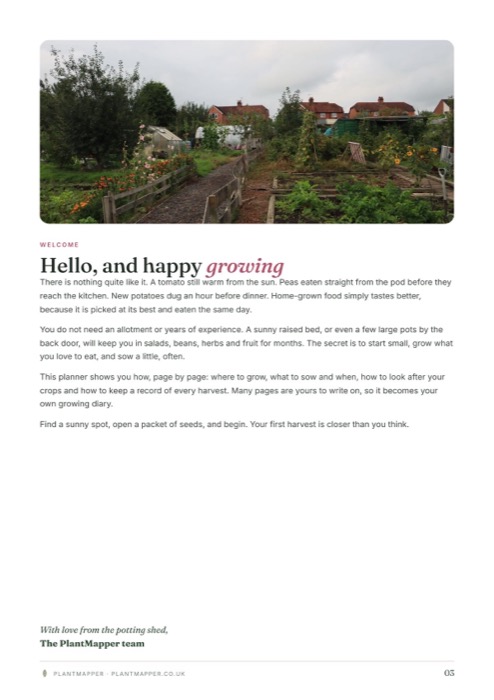
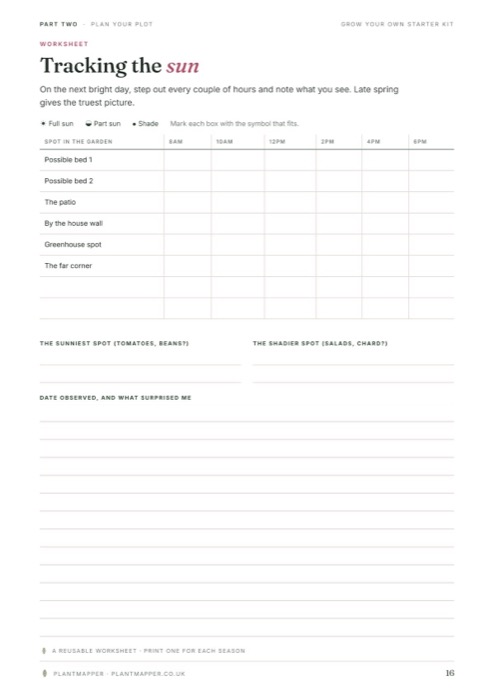
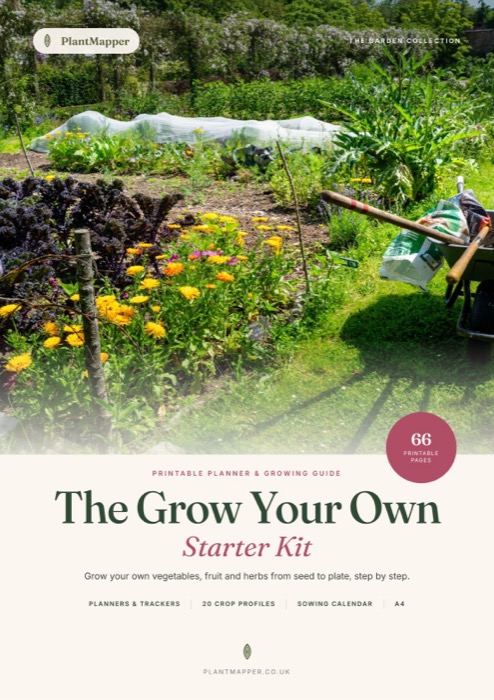 66-page printable workbook · US Letter & A4
Disclosures & disclaimers
Affiliate disclosure
Some links on this page are affiliate links. If you buy through them, PlantMapper may earn a small commission at no extra cost to you. It never affects which products we suggest.
Gardening disclaimer
All advice is general guidance for US gardens. Water needs vary with climate, soil and season, so check the soil before watering rather than following a fixed schedule.
Water-use note
Follow your city's or water district's watering rules, and check your state's rules before collecting rainwater. Keep rain barrels covered and secure, especially around children, and fit a backflow preventer on hose bibs used for drip systems.