

Why grow in a greenhouse?
A greenhouse gives you control over the one thing a garden can't: the weather. It traps the sun's heat, shuts out wind, hail and heavy rain and keeps frost off tender plants, which in most of the US adds weeks or months to the growing year. You can start your own transplants from seed rather than buying flats at the garden store, grow heat-loving crops where summers are short or cool, and harvest salad greens and herbs through the winter in many zones. In the hottest regions, a shaded greenhouse or hoop house can even make the winter and spring season more productive.
A longer season
Start seeds weeks before your last frost and keep crops going weeks after your first fall frost. In mild zones, you can grow something every month of the year.
Warmth for heat-lovers
Tomatoes, peppers, eggplant, cucumbers and melons ripen reliably where summers are short or cool, such as the northern tier, the mountains and the foggy Pacific coast.
Grow your own transplants
Raise your own seedlings for a fraction of the cost of nursery six-packs, with a far wider choice of varieties than any store stocks.
Shelter from the weather
A greenhouse protects plants from hail, wind, heavy rain, late frosts and many pests, and gives you a dry, pleasant place to work on raw spring days.
Greenhouse growing in the Grow Your Own collection
Greenhouse Growing
Earlier, bigger, more dependable crops: the serious grower's upgrade.
You are hereTomatoes
The classic greenhouse crop, earlier and more reliable under cover.
Beginner Vegetables
Start here, then raise your own transplants in the greenhouse.
Herbs
Grow tender herbs and keep fresh leaves going into the cold months.
Raised Beds
Plant out your greenhouse-grown seedlings into warm, rich beds.
Choosing the right greenhouse
The best greenhouse fits your yard, your budget and your climate. Size, frame, covering and how it handles your local snow, wind and heat decide how much you will use it.
Go bigger than you think
Greenhouses fill up fast. If space and budget allow, buy the next size up; most growers wish they had more bench space after one season.
Glass, polycarbonate or film
Glass is clearest and longest-lasting. Twin-wall polycarbonate is lighter, safer and insulates better, which helps in cold zones. Greenhouse film on a hoop frame is the cheapest way to cover a large area.
Aluminum, wood or steel hoops
Aluminum frames are slim and low maintenance; cedar looks handsome and holds heat but costs more. Galvanized steel hoop houses (high tunnels) give the most growing space for the money.
Snow and wind ratings
In snowy regions check the snow load rating, and on the Plains and the coasts check the wind rating. A firm, anchored base is essential everywhere, as storms can lift a light kit.
Plenty of ventilation
Look for roof vents, side vents or louvers and room for an exhaust fan. In warm zones, ventilation and shade matter more than anything else on the spec sheet. Automatic vent openers are well worth adding.
Short on space?
A lean-to against a south-facing wall, a mini walk-in greenhouse, a cold frame or a low tunnel of row cover brings many of the same benefits in a fraction of the space.
Siting, permits & HOA rules
Where you put a greenhouse matters as much as which one you buy, and before you build it is worth checking whether your city, county or homeowners association has rules about it.
Maximum winter light
Choose the sunniest open spot. For year-round growing, run the ridge roughly east to west so a long side faces south and catches the low winter sun.
Shelter, but airflow too
A windbreak of a fence, hedge or building on the north or windward side cuts heat loss and storm damage. Don't box it in so tightly that air can't move.
Away from trees and frost pockets
Keep clear of overhanging trees, which shade the roof and drop branches in storms, and of low spots where cold air settles on still nights.
Check permits and HOA rules
Many cities and counties require a building permit for accessory structures above a certain size, and most have setback rules from property lines. HOAs often need to approve the location and style. A quick call before you buy saves trouble later.
Near water and power
You will visit daily, so put it close to a hose bib and, if you want fans or heat, an outdoor-rated electrical supply installed to code.
Room to work around it
Leave space on all sides for cleaning the panels, opening vents and getting a wheelbarrow in. A greenhouse wedged against a fence is hard to maintain.
What to grow in a greenhouse
A greenhouse earns its keep in every season: a seed-starting house in late winter, a home for heat-lovers in summer (in cooler regions) and a winter salad bar in much of the country.
Heat-loving summer crops
The headliners: tomatoes, cucumbers, peppers, eggplant and melons crop earlier and more reliably under cover in short-season and cool-summer regions.
Seedlings and transplants
From late winter it becomes a nursery, raising flats of vegetable, herb and flower seedlings to plant out after your last frost date.
Winter greens and herbs
Sow lettuce, spinach, arugula, mache, kale and herbs in early fall for winter harvests. Spinach and kale tolerate cold well in an unheated greenhouse in many zones.
An early and late edge
Grow early potatoes and carrots in containers, get strawberries going early and ripen the last tomatoes and peppers after your first fall frost has finished the garden.
Overwintering tender plants
Keep geraniums, citrus, figs in pots and tender perennials above freezing through the winter until it is safe to move them out again.
Beds, containers or benches
Plant straight into in-ground beds, or use large containers, grow bags and benches. Containers make it easy to move plants and rotate crops.
Tomatoes, peppers and cucumbers
If you grow only three crops under cover, make it these. All are heat-lovers that repay steady warmth with heavy harvests, as long as you keep the greenhouse from overheating.

Tomatoes
Under cover, indeterminate tomatoes start earlier, stay drier and are less troubled by leaf diseases. Train them up strings, feed regularly and they crop for months. See our full tomato guidefor varieties and care.
Peppers and hot peppers
Bell peppers, jalapenos and hotter chiles love the warmth and crop heavily in containers. In cool-summer regions a greenhouse can be the difference between a crop and none.
Cucumbers
Greenhouse (parthenocarpic) cucumbers set fruit without pollination and are very productive. Train them up strings, keep them warm and well watered and pick often.
Train them upward
All three crop best grown vertically. Train them up strings or stakes toward the roof to save space, improve airflow and make picking easy.
Help the flowers set
With little wind or bees inside, tap tomato and pepper flower clusters daily or use a small fan. Tomatoes set poorly when days top about 90°F or nights stay above about 75°F, so keep it ventilated.
Steady water and feed
These are hungry, thirsty crops. Once fruit sets, water evenly and feed every week or two with a tomato fertilizer to avoid blossom end rot and keep them cropping.
Seed starting and transplants
Raising your own plants from seed is one of the best reasons to own a greenhouse. Count back from your last frost date: most tomatoes and peppers are sown 6-8 weeks before it, cabbage-family crops 4-6 weeks.

Sow into cell trays
Start seeds in cell trays or small pots of fresh seed-starting mix. Each seedling grows its own root ball and transplants without a setback.
Bottom heat to germinate
A seedling heat mat speeds and evens germination, especially for tomatoes, peppers and eggplant, which like soil around 75-85°F to sprout.
Bright light once they're up
Give seedlings the brightest spot as soon as they emerge. In midwinter in the North, add grow lights over the bench to keep them stocky rather than leggy.
Pot up as they grow
When seedlings have their first true leaves, move them into their own pots, handling them by a leaf rather than the stem. Pot up again before they get root-bound.
Water gently from below
Set trays in a little water to soak up from below, or mist gently. A hard spray knocks over tiny seedlings and washes seeds out.
Harden off before planting
Over 7-10 days, set greenhouse-raised plants outside for a few hours, then longer, before planting them in the garden after your last frost.
Heating, cooling and ventilation
Managing temperature is the core greenhouse skill. Most plants are happiest between about 60°F and 85°F. Northern growers spend more effort on holding heat, Southern and Southwestern growers on getting rid of it, and everyone needs airflow.
Open up on warm days
Open doors, roof and side vents whenever the inside heads above about 75-80°F. Stagnant, hot air stresses plants and breeds disease.
Automatic vents and fans
Wax-cylinder vent openers need no electricity and open as it warms. A thermostat-controlled exhaust fan with an intake louver does the job in larger houses and hot climates.
Shade and evaporative cooling
In summer, 30-50% shade cloth over the roof is essential across the South and Southwest. In dry climates such as Arizona, Nevada and inland California, an evaporative (swamp) cooler cools far better than fans alone.
Heat for winter
Line the inside with bubble insulation and use a thermostat-controlled electric, propane or natural gas heater rated for greenhouse use, vented as the maker requires, to keep it above freezing. Barrels of water soak up daytime heat and release it at night.
Keep a thermometer
A max-min thermometer shows how hot and cold it really gets. Many growers add a wireless sensor that sends alerts to a phone when the temperature drops or soars.
Watch the humidity
Some humidity helps seedlings and cucumbers, but damp, still air invites powdery mildew and gray mold. In humid Southern summers, keep fans running.
Greenhouse growing across the US
A greenhouse in Minnesota and one in Arizona are run almost opposite ways. Here is what to focus on in your region. Find your growing zone and frost dates to plan your year.
Northeast & Midwest
Heating is the main cost. Choose twin-wall polycarbonate, insulate in winter and check the snow load rating. Most growers run unheated or barely heated through the coldest months, growing cold-hardy greens, and start heating in late winter for seed starting.
Southeast & Gulf Coast
Heat and humidity are the challenges. Shade cloth, roof vents and strong fans are essential, and fall through spring is the main growing season. Check the wind rating in hurricane-prone areas and anchor the frame firmly.
Southwest & California
Cooling matters more than heating. In the desert, an evaporative cooler plus shade cloth keeps a greenhouse productive into late spring. Along the coast, a greenhouse adds the warmth that tomatoes and peppers need in foggy summers.
Pacific Northwest
Mild, cloudy winters and cool summers make a greenhouse very useful for ripening tomatoes, peppers and melons. Maximize light with clear glazing, and keep air moving to prevent mold in damp weather.
Mountain West & Plains
Short seasons, hail, high wind and huge day-night swings. Pick a sturdy, well-anchored structure with a good wind and snow rating, add thermal mass such as water barrels and vent early on sunny days, which can overheat even in winter.
Watering and feeding
Plants under cover dry out faster than those outside, so they need regular attention. A simple routine keeps them growing well.
Check every day in summer
Containers and grow bags dry out fast in greenhouse heat. Check daily, sometimes twice in hot weather, and water before plants wilt.
Water the roots, not the leaves
Water the soil rather than the foliage, ideally in the morning. Wet leaves in warm, still air invite mildew and blight.
Automate it
Drip irrigation on a timer, capillary mats on the benches or self-watering containers keep moisture steady through busy weeks and vacations.
Feed once fruiting
Once fruit sets, feed tomatoes, peppers and cucumbers every week or two with a balanced or tomato fertilizer to keep them producing.
Collect rainwater
Gutters on the greenhouse can feed a rain barrel by the door, where local rules allow rain collection. Plants appreciate the soft water.
Don't drown them
Constantly soggy soil rots roots as surely as drought kills plants. Aim for evenly moist and let the surface dry slightly between waterings.
Pest and disease prevention
The warm, sheltered conditions plants love also suit pests. Prevention is simple: keep it clean, keep the air moving and look at your plants often.
Clean it every year
Remove fallen leaves and dead plants and wash down benches, pots and panels once a year. A clean greenhouse gives pests nowhere to overwinter.
Airflow beats disease
Good ventilation and sensible spacing keep leaves dry and are the best defense against powdery mildew, gray mold (botrytis) and leaf spots.
Use beneficial insects
Lady beetles, green lacewings and commercially available predatory mites and parasitic wasps control aphids, whiteflies and spider mites in an enclosed space without sprays.
Use sticky traps
Yellow sticky cards catch whiteflies, fungus gnats and winged aphids and act as an early warning: a sudden jump in catches means it is time to act.
Inspect as you water
Look under leaves and along stems as you water. Catch aphids, whiteflies and spider mites early and a strong spray of water or insecticidal soap is often enough.
Watch for spider mites
Spider mites thrive in hot, dry greenhouses, especially in the Southwest. Raising humidity a little helps, but keep the air moving so you don't swap mites for mildew.
The greenhouse year by zone
What you do in your greenhouse depends far more on your zone than on the calendar. Use your last and first frost dates as your anchors.
Late winter and spring: start seeds
Start transplants 6-8 weeks before your last frost: January to February in zones 8-10, February to March in zones 6-7 and March to April in zones 3-5. Pot them up and harden them off for planting out.
Summer: grow or rest
In zones 3-7 and cool coastal areas, summer is peak season for tomatoes, peppers and cucumbers: ventilate hard and shade. In the hottest parts of zones 8-10, many greenhouses are too hot for crops in midsummer; shade them heavily or let them rest.
Fall: harvest and sow greens
Harvest the last warm-season crops after your first fall frost hits the garden, clean the greenhouse, and sow lettuce, spinach, kale and herbs for winter. In the South, fall is the start of the best greenhouse season.
Winter: protect or produce
In cold zones, keep tender plants above freezing, harvest hardy greens and order seeds. In zones 8-10, winter is prime time for greens, herbs, peas and even tomatoes in a warm greenhouse.
Want the detail? Seed packets list days to maturity and how many weeks before your last frost to sow, and our vegetable growing calendar helps you plan the whole year around your own frost dates.
Common greenhouse mistakes
Almost every greenhouse problem comes down to heat, air or water. Know the usual mistakes ahead of time and your first season under cover will go far more smoothly.
!Poor ventilation
Wilting, scorched plants and spreading disease. The most common mistake. Open vents and doors on warm days, add automatic openers and a fan, and never let the air turn hot and still.
!Letting it overheat
Plants cooked on a sunny day. A closed greenhouse heats up astonishingly fast, even on a cold, sunny winter day. Shade in summer, vent early in the morning and use a thermometer with an alarm.
!Overwatering
Yellow leaves and rotting roots. Soggy soil in warm, still air is fatal. Water consistently but never leave plants standing in water, and water the soil, not the leaves.
!Skipping the yearly clean
Pests and diseases coming back every year. A neglected greenhouse shelters pests over winter. A yearly clean of panels, benches and pots breaks the cycle.
!Cramming it full
Crowded plants, poor airflow and spreading disease. It is tempting to fit in one more flat, but space and air keep plants healthy. Grow a little less, a little better.
!Skipping hardening off
Transplants scorched or stunted after planting out. Going straight from a sheltered greenhouse to full sun and wind is a shock. Harden plants off over 7-10 days before planting out.
Greenhouse growing - frequently asked questions
The greenhouse questions American beginners ask most, answered simply.
Is a greenhouse worth it for a beginner?
Yes, if you choose one that suits your climate. Even a small greenhouse lets you start your own transplants, grow heat-loving crops where summers are short or cool, and harvest greens through much of the winter. Start with a modest kit or hoop house, add automatic vent openers and shade cloth, and grow a few reliable crops in the first year.
Where should I put a greenhouse?
Put it in the sunniest open spot you have, ideally with the long side facing south for winter light, sheltered from the prevailing wind but with air moving around it. Keep it away from overhanging trees and low frost pockets, on level, well-drained ground close to water and power.
Do I need a permit for a backyard greenhouse?
It depends on where you live. Many cities and counties require a building permit for accessory structures above a certain size, and most have setback rules from property lines. If you have a homeowners association, it may need to approve the size, location and look. Check with your local building department and HOA before you buy.
How do I keep a greenhouse cool in summer?
Use 30-50% shade cloth over the roof, open every vent and door, and add a thermostat-controlled exhaust fan. In dry climates such as Arizona, Nevada and inland California, an evaporative (swamp) cooler works very well. Tomatoes stop setting fruit when days pass about 90°F, so in the hottest areas many greenhouses rest in midsummer.
How do I heat a greenhouse in winter?
Insulate the inside with bubble wrap, seal drafts and use a thermostat-controlled electric heater or a propane or natural gas heater made for greenhouses, vented as the manufacturer requires. Water barrels store daytime heat. Keeping it just above freezing (about 35-40°F) is far cheaper than keeping it warm enough for tomatoes.
What is the easiest thing to grow in a greenhouse?
Lettuce and other salad greens are the easiest, and tomatoes are the most rewarding. Tomatoes, peppers and cucumbers do especially well under cover in cool-summer and short-season regions, while greens, herbs and transplants are easy almost everywhere.
Example greenhouse layouts
Four ready-made ways to set up a greenhouse, whatever its size. Copy one or adapt it to your space and your climate.

The seed-starting house
- Benches on both sides for flats and pots
- Seedling heat mats for early sowings
- Cell trays & small pots of seed-starting mix
- Grow lights for short winter days
- Cleared after your last frost for summer crops
A spring workhorse. Raise all your own vegetable, herb and flower transplants, plant them out after the last frost and switch the space to summer crops.
The summer crop house
- Grow bags or large containers down one side
- Indeterminate tomatoes & cucumbers up strings
- Peppers & eggplant in pots on benches
- Drip irrigation on a timer
- Vents, fan & shade cloth for hot days
The classic setup for cooler regions: heavy crops of tomatoes, cucumbers and peppers from a small backyard greenhouse.
In-ground beds
- A soil bed down each side
- Tomatoes & cucumbers planted straight in
- A central path of pavers or gravel
- Compost worked in every year
- Crops rotated to keep the soil healthy
For the biggest harvests. Plants in the ground have more root room and need less watering than containers.
The year-round greenhouse
- Benches for flats and a bed for crops
- Spring transplants, summer tomatoes
- Fall-sown winter greens & herbs
- Insulation, heater & shade cloth
- Something growing in every season
The fullest use of all: a greenhouse that pays its way from the first spring seedlings to fresh winter greens.
Explore more with Plant Finder & the Grow Your Own guides
A greenhouse opens up a whole range of crops. Use our free Plant Finder to match plants to your conditions, and these guides to grow each one well.
Handy garden calculators
Work out the potting mix, soil and spacing your greenhouse crops need with our free calculators, so you buy the right amount.
Handy for greenhouse growing
Our picksAs an Amazon Associate, PlantMapper may earn from qualifying purchases. Prices and availability are set by Amazon.
The Grow Your Own Starter Kit
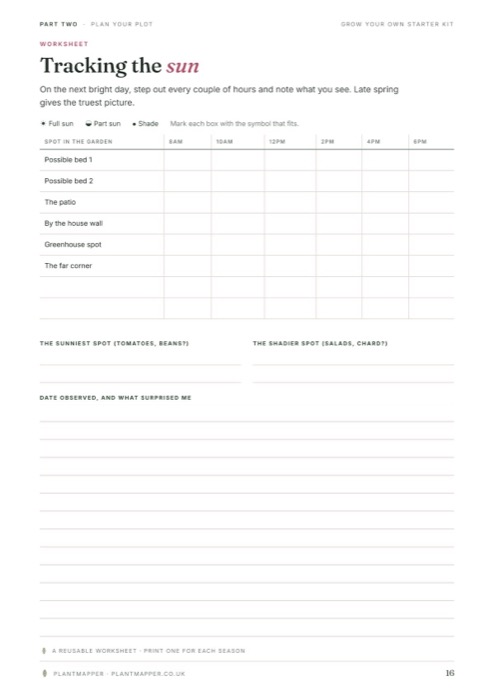
Everything on this page is free to use, from choosing and siting a greenhouse to heating, cooling, seed starting, watering, pests, the year by zone and the common mistakes. The Grow Your Own Starter Kit is an optional next step: a printable workbook to plan and track a whole year under cover, away from the screen. It works hand in hand with our free garden calculators and Plant Finder.
Crop & sowing chooser
Worksheets to plan what to grow under cover and when to sow it, from spring transplants to summer crops and winter greens.
Greenhouse year planner
A season-by-season plan of what to sow, tend, harvest and protect, built around your own frost dates.
Seed-starting guide
Clear, illustrated steps for sowing, potting up and hardening off, the skills that turn a seed packet into sturdy transplants.
Problem-solver
A quick troubleshooting guide to overheating, ventilation, watering and the common pests.
Layout plans
Ready-made plans for a seed-starting house, a summer crop house, in-ground beds and a year-round greenhouse, with the gear each one needs.
Grower’s journal
Pages to record what you grew, how it did and what to change next year.
Download the Greenhouse Growing Guide
An instant digital download in A4 and US Letter. Print it as often as you like to get more from your greenhouse all year, with layout and zone planners, climate and heat-management systems, propagation and crop planners and seasonal trackers in the calm PlantMapper style. Part of the wider PlantMapper Collection.
Download the Guide on Etsy (UK edition)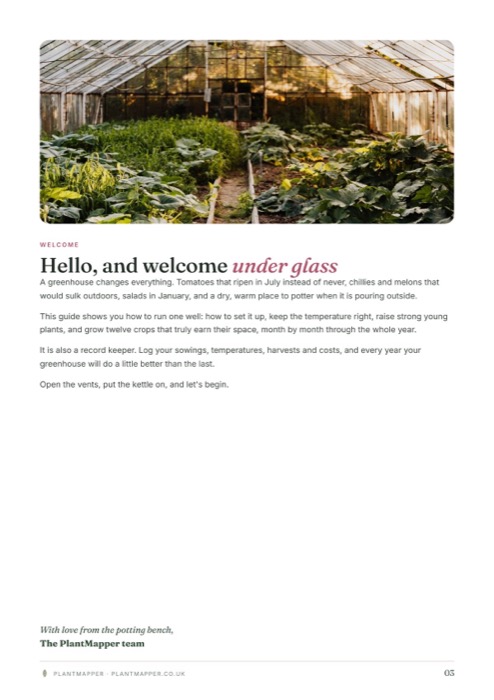
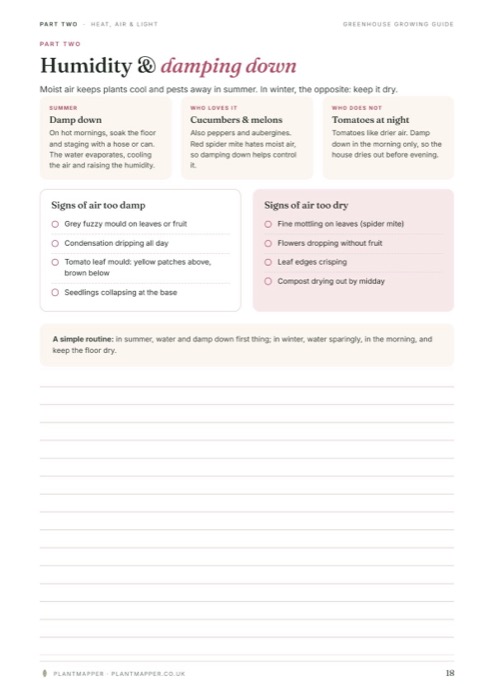
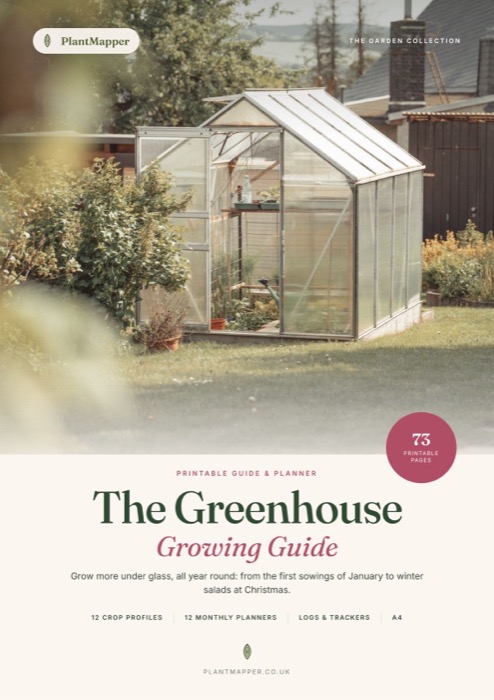 73-page printable workbook · A4 & US Letter
Download the Grow Your Own Starter Kit
An instant digital download in A4 and US Letter. Print it at home as often as you like and plan a full year of homegrown food, with planning and crop systems, bed and rotation planners, a sowing and harvest calendar, a crop directory and seasonal trackers in the calm PlantMapper style. Part of the wider PlantMapper Collection.
Download the Starter Kit on Etsy (UK edition)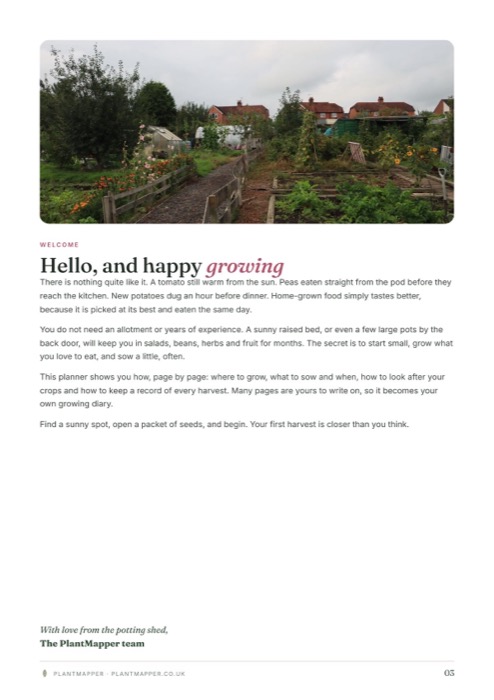
 66-page printable workbook · A4 & US Letter
Disclosures & disclaimers
Affiliate disclosure
Some links on this page are affiliate links. If you buy through them, PlantMapper may earn a small commission at no extra cost to you. It never changes which products we suggest.
Gardening disclaimer
All advice is general guidance for home gardens in the United States. Results vary with your zone, local climate and the season, so check sowing and planting times for your area, and check local building and HOA rules before you build.
Safety note
Take care with glass panels, heaters and electrical equipment. Follow the manufacturer's instructions, have wiring done to code with outdoor-rated fittings, vent fuel-burning heaters as directed, and only eat crops you have grown and can identify with certainty.