

Why grow your own vegetables?
Homegrown vegetables taste different. A tomato that ripened on the vine, sugar snap peas eaten in the garden and a salad picked ten minutes before dinner are simply better than produce that traveled across the country to the grocery store. Growing your own can trim the grocery bill, gets you outside every day and shows kids where food really comes from. And it is more forgiving than most people expect: plant the right crop at the right time and the plants do most of the work.
Better flavor
Picked ripe and eaten fresh, homegrown vegetables are sweeter, crisper and more flavorful than anything picked early to survive shipping.
Easy on the budget
A seed packet costs a few dollars and can feed you for weeks. Salad greens, herbs, cherry tomatoes and zucchini alone can make a real dent in the produce bill.
Forgiving for beginners
The easiest crops nearly grow themselves. You need sun, decent soil, regular water and the right planting date, not years of experience.
Good for body and mind
Time in the garden is calming and gently active, and kids who help grow vegetables are far more likely to eat them.
Beginner vegetables in the Grow Your Own collection
Beginner Vegetables
The place to start: easy, reliable crops and simple advice for your very first season.
You are hereTomatoes
The crop everyone wants to grow, and very rewarding once you have the basics down.
Herbs
Quick, fragrant and easy, the perfect partners for your first vegetables.
Raised Beds
The easiest way to start: good soil from day one, with no digging.
Companion Planting
Simple plant partnerships that keep your vegetables healthy.
The easiest vegetables for beginners
These crops rarely fail. They sprout readily, grow fast and forgive a missed watering or two, which makes them perfect for building confidence.

Lettuce and salad greens
The quickest win of all. Sow leaf lettuce, arugula or a mesclun mix and you can pick baby greens in three to four weeks. Grow them in the cool weeks of spring and fall, since heat makes them bolt.
Radishes
Ready in about four weeks from seed, perfect for impatient beginners and kids. Sow a short row every couple of weeks in spring and fall, before and after the summer heat.
Zucchini and summer squash
One or two plants can feed a family all summer. Plant after your last frost in rich soil and full sun, water well and pick the fruits small and often.
Bush and pole beans
Big seeds that are easy to handle and sprout fast once the soil is warm. Bush beans need no support; pole beans climb a trellis or teepee and crop for weeks.
Cherry tomatoes
Far more forgiving than big slicing tomatoes, and very productive. Buy healthy transplants and plant them after your last frost in the sunniest spot you have.
Peas, kale and Swiss chard
Sugar snap peas go in a few weeks before your last frost. Kale and chard handle cool weather, shrug off light frost and keep producing for months if you pick the outer leaves.
Just starting out? Choose three crops for your first year: a salad green for speed, zucchini or bush beans for abundance and a cherry tomato for flavor. Three easy successes are the best way to build the confidence to grow more next season.
What to grow first
The most common beginner mistake is trying to grow everything at once. A small, well-chosen start, planted at the right time for your zone, sets you up for success.
Grow what you like to eat
There is no point in a bumper crop of something nobody wants. Start with two or three vegetables your household actually eats, and you will enjoy tending them far more.
Start with a few crops
Three crops grown well beat a dozen grown badly. Keeping it small means you can give each plant the attention it needs.
Choose quick crops
Radishes, salad greens and bush beans pay off within weeks. Early success is the best motivation to keep going.
Buy transplants if it helps
Tomatoes, peppers and eggplant take months to grow from seed. For your first year, buy healthy transplants from a local nursery or garden center and plant them after your last frost.
Sow a little, often
Instead of one big sowing, plant a short row of lettuce or radishes every two weeks in spring and again in fall. You get a steady supply rather than a glut.
Keep a few notes
Write down what you planted, when and how it did. A few notes turn this year's trial and error into next year's better-planned garden.
Vegetables for containers
No yard? A cluster of containers and grow bags on a sunny deck, patio, balcony or front step can grow a surprising amount of food, with fewer weeds and everything within easy reach.
Use big containers
Bigger containers hold more soil, dry out more slowly and crop better. A 5-gallon container or larger suits tomatoes, peppers and zucchini; 12-inch pots suit herbs and greens.
Use potting mix
Fill containers with a good-quality potting mix, not garden soil, which packs down hard in a pot and suffocates roots.
Water often
Containers dry out fast, especially in Southern and Western heat. Check them daily in summer and water whenever the top inch feels dry. Self-watering containers make it much easier.
Best crops for containers
Salad greens, herbs, tomatoes, peppers, bush beans, compact zucchini, radishes and potatoes in grow bags all do well in containers.
Find the sun
Most vegetables need at least six to eight hours of direct sun a day. In the hottest parts of the South and Southwest, a little afternoon shade helps greens and even tomatoes.
Feed once cropping
Potting mix runs short of nutrients within a couple of months. Feed every week or two with a liquid vegetable fertilizer once plants start producing.
Vegetables for raised beds
A raised bed is the easiest way for a beginner to grow vegetables. You fill it with good soil from the start, never step on it, and it drains well and warms quickly in spring, which helps everywhere from heavy clay in Georgia to rocky ground in New England.

Good soil from day one
Fill the bed with a mix of garden soil and compost or a raised-bed mix, so your crops start strong instead of struggling in clay, caliche or rocky ground.
No digging, no stepping
You reach in from the sides, so the soil stays loose and roots grow freely, with fewer weeds and far less work.
Easy to plan and space
A defined bed makes it simple to lay out rows or a square-foot grid and space plants properly for healthy growth and easy picking.
Warms up early
Raised soil warms and dries out faster in spring, so you can plant cool-season crops sooner in northern zones.
Top up every year
Add an inch or two of compost to the surface each year and the bed stays fertile. Earthworms do the mixing for you.
Start with one bed
A bed about 4 ft wide lets you reach the middle from either side; 4 x 8 ft is a classic first size. Get one working well before you build more.
Vegetables for small spaces
You don't need a big yard to grow food. A townhouse patio, a small backyard or an apartment balcony can be very productive with compact varieties and a little planning.
Grow up
Train pole beans, peas, cucumbers and indeterminate tomatoes up a trellis, fence or cattle panel arch. Going vertical multiplies your space.
Choose cut-and-come-again crops
Leaf lettuce, chard, kale and herbs give weeks of harvests from a tiny patch, rather than one harvest and done.
Choose compact varieties
Look for bush, patio, dwarf or container varieties, bred to crop well without sprawling.
Fill the gaps
Sow quick radishes or baby greens between slower crops. They are harvested before the bigger plants need the space.
Use windowsills and railings
Window boxes, railing planters and hanging baskets add growing space. A sunny window can keep you in herbs and microgreens.
Grow the high-value crops
In a small space, favor crops that cost more at the store or taste far better fresh, like herbs, salad greens, cherry tomatoes and snap peas, over space-hungry crops like corn and pumpkins.
Short on space? See our small garden guide and plants for pots for more ways to grow a lot in a little space: think vertical, use containers and keep sowing.
Vegetables for kids
Growing vegetables with kids gets them outdoors, curious and more willing to try what they've grown. Choose fast, fun crops that show results quickly.
Radishes for speed
Ready in about a month, radishes are perfect for kids who can't wait. The seeds are easy to handle, and pulling up the first one is a thrill.
A bean teepee
Big bean seeds are easy for small hands, and a teepee of pole beans becomes a leafy summer hideout. Plant it after your last frost when the soil is warm.
Potatoes to dig
Tipping out a grow bag or digging a row of potatoes is a real treasure hunt for kids of any age.
Cherry tomatoes to snack on
Sweet, bite-size and warm from the sun, cherry tomatoes can win over picky eaters. Grow one in a big container near the back door.
Pumpkins and sunflowers
Giant pumpkins planted in late spring are ready to carve by Halloween, and tall sunflowers give kids something to measure all summer.
Give them their own patch
A small bed or a couple of containers that are truly theirs to sow, water and harvest gives kids pride and a reason to keep coming back.
When to plant: frost dates and seasons
Vegetables fall into two groups. Cool-season crops (lettuce, spinach, peas, radishes, kale, broccoli, carrots) like temperatures around 50-75°F and handle light frost. Warm-season crops (tomatoes, peppers, beans, squash, cucumbers, corn) are killed by frost and need warm soil. Your average last spring frost and first fall frost decide when each goes in.

Spring: cool crops first
Sow peas, spinach, lettuce and radishes and set out broccoli and cabbage transplants 2-6 weeks before your last frost. Plant tomatoes, peppers, beans and squash only after the last frost, once the soil is warm.
Summer: tend and pick
Water deeply, mulch and harvest often to keep plants producing. In the hottest zones, many crops pause in midsummer heat; cool-season greens bolt and are best left until fall.
Fall: the second season
Sow lettuce, spinach, radishes and kale, and set out broccoli and cabbage transplants, about 6-10 weeks before your first fall frost. In zones 8-10, fall is often the best season of all for these crops. Plant garlic in fall for harvest next summer.
Winter: rest or keep growing
In cold zones, order seeds and plan. In zones 8-10, kale, chard, lettuce, carrots, onions and broccoli keep growing through mild winters, with row cover on the occasional frosty night.
Not sure when to plant? Seed packets tell you how many weeks before or after your last frost to sow and how long the crop takes to mature. Look up your frost dates, then count from there. Our vegetable growing calendar helps you plan the whole year around your zone.
Planting times across the US
The same crops grow almost everywhere, but planting dates differ by months. Use these as a rough guide and find your growing zone to look up your own frost dates.
Zones 3-5 (northern tier)
Last frost mid-May to early June, first frost September to early October. Plant cool-season crops as soon as the soil can be worked, buy tomato and pepper transplants and choose fast-maturing varieties. Row cover helps at both ends of the short season.
Zones 6-7 (Mid-Atlantic, Ohio Valley, Pacific Northwest)
Last frost mid-April to early May. A long, comfortable season for most crops: cool-season crops in March and April, warm-season crops from early May and a second planting of greens and broccoli in late summer for fall.
Zones 8-9 (South, Texas, inland California)
Last frost from February to late March. Plant tomatoes early so they set fruit before summer heat (they stop setting above about 90°F days), expect a midsummer slowdown and treat fall and winter as a second main season for greens, broccoli, carrots and onions.
Zone 10 and up (Florida, Southern California, Hawaii)
Little or no frost, so the year is turned on its head: the main vegetable season runs from fall through spring, and summer is for heat-lovers such as okra, southern peas, sweet potatoes and peppers, or a rest under a cover crop.
Desert Southwest
Phoenix and Las Vegas have two short planting windows, late winter to spring and late summer to fall. Use drip irrigation, mulch heavily and give afternoon shade. Check local Extension planting calendars, which are made for these extremes.
Mountain West & Plains
Short seasons, cold nights, hail and wind. Use raised beds that warm quickly, protect transplants with row cover or wall-of-water cloches and choose early varieties. Wait for warm nights before setting out tomatoes and peppers.
Common beginner mistakes
Every gardener was a beginner once, and most of us made the same few mistakes. Knowing them ahead of time saves a lot of disappointment.
!Growing too much
A big garden that quickly overwhelms you. The most common mistake. Start with two or three crops in a small space, succeed, then expand next year.
!Planting at the wrong time
Tomatoes killed by a late frost, or lettuce bolting in the heat. Learn your frost dates. Plant cool-season crops in early spring and fall, and wait until after the last frost, with warm soil, for tomatoes, peppers, beans and squash.
!Overcrowding
Weak, spindly plants competing for light and water. Thin seedlings and space plants as the seed packet says. It feels wasteful, but well-spaced plants are healthier and produce more.
!Watering too little or too lightly
Wilting plants, bitter lettuce and cracked tomatoes. Water deeply about once or twice a week rather than a little every day, check containers daily in summer and mulch to hold moisture. Most vegetables want about 1 inch of water a week, more in heat.
!Too much shade
Spindly plants that never really produce. Fruiting crops need six to eight hours of direct sun. Leafy greens can manage with a bit less, which makes them good choices for a partly shaded yard.
!Giving up too soon
One bad year and the trowel goes back in the garage. Every gardener loses crops to weather, pests or bad timing. Note what went wrong, adjust and try again. Next year will be easier.
Simple vegetable garden plans
Four small, forgiving starting points built around easy crops. Copy one or adapt it to your space.
Container garden
- Three or four large containers in the sunniest spot
- A cherry tomato and a compact zucchini
- A container of salad greens, resown in spring and fall
- Herbs by the kitchen door
- Watered daily, fed every week or two
The simplest start of all. A few big containers by the back door can keep you in salad, tomatoes and zucchini for months.
One small raised bed
- A single 4 x 8 ft raised bed filled with good soil
- A row of lettuce and a row of radishes
- Bush beans with no staking needed
- Swiss chard for months of picking
- Quick crops resown in any gaps
One manageable bed of easy crops: enough variety to feel like a real kitchen garden, small enough never to become a chore.
The family garden
- A teepee of pole beans to make a hideout
- A grow bag of potatoes to dig up
- Radishes for quick results
- Cherry tomatoes to snack on
- A patch of their own to look after
Built for fun and fast rewards, with the crops that turn kids into keen gardeners.
The easy starter garden
- Two raised beds or a sunny in-ground plot
- Lettuce, bush beans, zucchini & chard
- A few herbs and tomatoes in containers
- Compost added to the surface each year
- A short row sown every couple of weeks in spring and fall
A complete beginner's kitchen garden that produces from spring to fall, varied and generous but still simple enough for a first full season.
Beginner vegetables - frequently asked questions
The questions first-time vegetable gardeners ask most, answered simply.
What are the easiest vegetables for beginners?
Leaf lettuce and other salad greens, radishes, bush beans, zucchini, cherry tomatoes (from transplants), sugar snap peas, kale and Swiss chard are the most forgiving. Plant the cool-season ones (lettuce, radishes, peas, kale) in spring and fall and the warm-season ones (beans, zucchini, tomatoes) after your last frost.
When should I plant my vegetable garden?
It depends on your average last spring frost date. Cool-season crops such as peas, lettuce, spinach and radishes go in about 2-6 weeks before the last frost. Warm-season crops such as tomatoes, peppers, beans, squash and cucumbers go in after the last frost once the soil is warm. That is roughly mid-March to April in zones 8-9, April to early May in zones 6-7 and mid-May to early June in zones 3-5.
What vegetables can I plant in the fall?
About 6-10 weeks before your first fall frost, sow lettuce, spinach, radishes, turnips, kale and collards and set out broccoli and cabbage transplants. Plant garlic in fall for a harvest the next summer. In zones 8-10, fall and winter are the main season for most cool-season crops.
Can I grow vegetables in containers?
Yes. Use containers of at least 5 gallons for tomatoes, peppers and zucchini and 1-2 gallons for herbs and greens, fill them with potting mix rather than garden soil, place them where they get six to eight hours of sun and check the water daily in summer. Feed every week or two once plants start producing.
How much sun does a vegetable garden need?
Fruiting crops such as tomatoes, peppers, squash and beans need six to eight hours of direct sun a day. Lettuce, spinach, kale and herbs like parsley can manage with four to six hours, and in hot Southern and desert summers they appreciate some afternoon shade.
Why did my lettuce and spinach bolt?
Heat and long days make lettuce, spinach and cilantro send up flower stalks and turn bitter. Plant them early in spring and again in late summer or fall, choose slow-bolting varieties and give them afternoon shade. In the South, grow them from fall through early spring instead of summer.
Explore more with Plant Finder & the Grow Your Own guides
Beginner vegetables are just the start. Use our free Plant Finder to match crops to your conditions, and these guides to grow each one well.
Handy garden calculators
Work out the potting mix, soil and spacing your vegetables need with our free calculators, so you buy the right amount.
Handy for growing your own
Our picksAs an Amazon Associate, PlantMapper may earn from qualifying purchases. Prices and availability are set by Amazon.
The Grow Your Own Starter Kit
Everything on this page is free to use, from the easiest crops and what to grow first to containers, raised beds, small spaces, planting by frost date and the common mistakes. The Grow Your Own Starter Kit is an optional next step: a printable workbook to plan and track your whole first season away from the screen. It works hand in hand with our free garden calculators and Plant Finder.
Crop chooser
Worksheets to pick the right vegetables for your space, your time and your table, so you start with crops you will actually grow and enjoy.
Sow & harvest calendar
A planner for when to sow, transplant and harvest, built around your own frost dates.
Simple bed & pot plans
Ready-made layouts for containers, a first raised bed and a small starter garden, with the crops, spacing and gear each one needs.
Beginner problem-solver
A quick troubleshooting guide to common first-year mistakes, so you can see what went wrong and fix it.
Watering & care guide
Simple steps for watering, feeding and care, the small regular jobs that turn seedlings into a good harvest.
Grower’s journal
Pages to record what you grew, how it did and what to change next year.
Download the Grow Your Own Starter Kit
An instant digital download in A4 and US Letter. Print it at home as often as you like and plan a full year of homegrown food, with planning and crop systems, bed and rotation planners, a sowing and harvest calendar, a crop directory and seasonal trackers in the calm PlantMapper style. Part of the wider PlantMapper Collection.
Download the Starter Kit on Etsy (UK edition)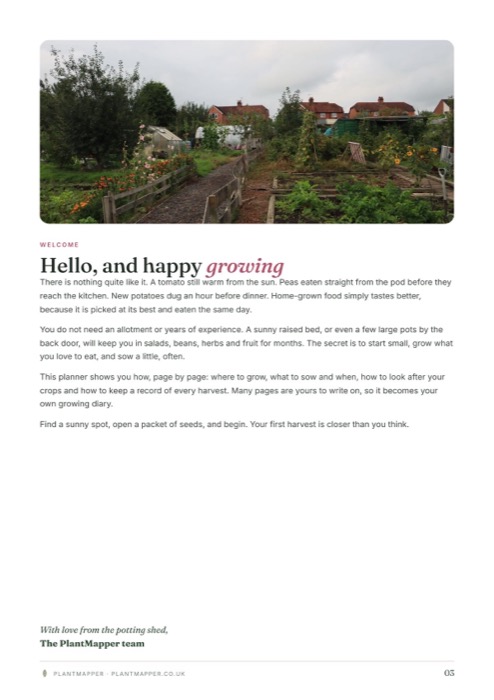
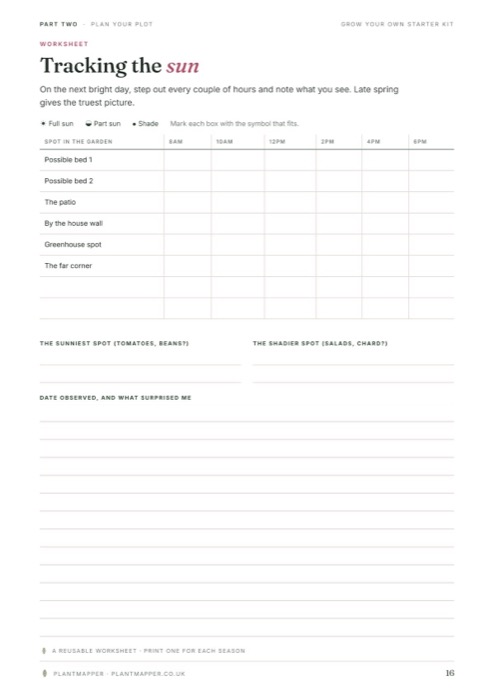
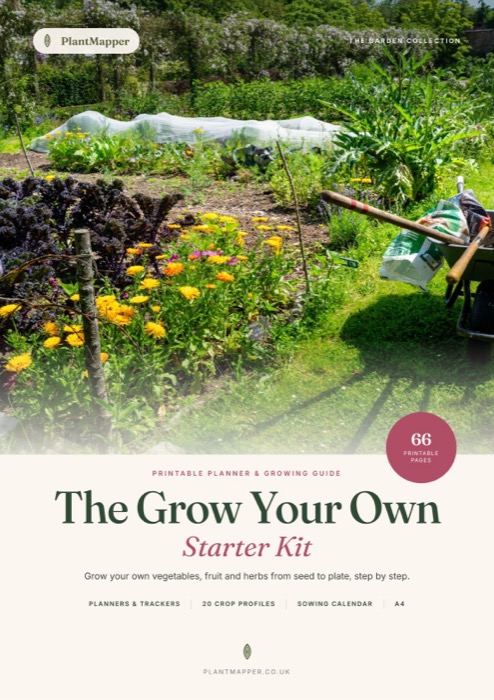 66-page printable workbook · A4 & US Letter
Disclosures & disclaimers
Affiliate disclosure
Some links on this page are affiliate links. If you buy through them, PlantMapper may earn a small commission at no extra cost to you. It never changes which products we suggest.
Gardening disclaimer
All advice is general guidance for home gardens in the United States. Results vary with your zone, frost dates and the season, so check planting times for your area.
Food-safety note
Only eat crops you have grown and can identify with certainty, and wash all homegrown produce before eating. Some plant parts, such as potato and tomato leaves and rhubarb leaves, are not edible.