

What is companion planting?
At its simplest, companion planting is growing plants together because each does something useful for the other. A flowering plant feeds the lady beetles and parasitic wasps that hunt aphids. A tall crop shades a heat-sensitive one. A legume adds nitrogen that a hungry neighbor uses later. A strongly scented herb may make a crop harder for a pest to find. Gardeners have relied on these partnerships for centuries, and Indigenous farmers in North America were growing corn, beans and squash together long before anyone wrote a gardening book. Research backs some combinations well, such as flowering borders for beneficial insects and trap crops for cucumber beetles; others are traditional advice with little testing. Both are worth trying, as long as you treat the folklore as a bonus rather than your only line of defense.
Fewer pests
Mixed plantings and strong scents make crops harder for pests to locate, and trap crops lure insects away, so you spray less often or not at all.
More helpers
Flowers feed native bees, honeybees, hover flies, lacewings, lady beetles and tiny parasitic wasps, which pollinate your crops and eat aphids and caterpillars for free.
Better use of space
Pair tall crops with short ones, quick crops with slow ones and deep roots with shallow roots, and the same bed gives you more food over the season.
A healthier bed overall
Diversity spreads the risk. A varied planting is less likely to be wiped out by one pest or disease, and the flowers make the vegetable garden a nicer place to be.
Companion planting in the Grow Your Own collection
Companion Planting
The thread that ties a whole vegetable garden together, from the first sowing to the last fall harvest.
You are hereTomatoes
The crop most gardeners pair with basil first, and the best place to start.
Herbs
Many herbs double as companions, feeding pollinators and adding scent to the bed.
Beginner Vegetables
Easy, reliable crops to start pairing up in your first season.
Raised Beds
A tidy, defined space where mixing crops, herbs and flowers is easy to plan.
What companion planting does for you
It costs nothing but a little planning, and the payoff shows up all season. Here is what a well-mixed bed gives you.
Bigger harvests
Better pollination of squash, cucumbers and beans, plus fewer plants lost to pests, adds up to more food from the same square footage.
Pests kept in check
Trap crops, scent and a resident population of predatory insects keep pest numbers down, which means less spraying near food you are about to eat.
More pollinators and wildlife
Flowers between the vegetables bring in bumblebees, sweat bees, butterflies and, with the right blooms, hummingbirds, turning a working garden into a small habitat.
More food per square foot
Interplanting fits a second crop into the gaps and the shade, ideal for small yards, raised beds and community garden plots where every inch counts.
Healthier soil
Legumes, mixed root depths and plenty of living roots keep the soil busy, well structured and full of life, especially if you follow up with a fall cover crop.
A garden that bounces back
If one crop has a bad year, the others carry on. A mixed bed is much more forgiving than a monoculture, which is exactly why farmers worry about pests in big single-crop fields.
Best vegetable companions
These are the dependable combinations to build a bed around. Some are backed by research, some by generations of gardeners, and all are easy to try.
Tomatoes & basil
The pairing everyone knows. Both love heat and steady water, basil fits neatly under the tomatoes, and you pick them together for the kitchen. Claims that basil repels pests or improves flavor are mostly anecdotal, but it is a good use of space either way.
Carrots & onions
An old pairing based on scent masking: onions are said to hide carrots from the carrot rust fly, and carrots to hide onions from the onion maggot. The evidence is mixed, but the two crops share a bed well because their roots and leaves use space differently.
Corn, beans & squash
The Three Sisters. Pole beans climb the corn, squash shades the soil and smothers weeds, and the beans add nitrogen through their roots. Developed by Indigenous farmers across North America, it is the best-known companion planting in the world.
Lettuce in the shade of tall crops
In hot summers, lettuce and other greens sown on the shady side of tomatoes, pole beans or corn stay cooler and are slower to bolt, then come out before the big plants need the room.
Cabbage family & aromatic plants
Onions, garlic, dill and thyme dotted among cabbage, kale and broccoli may make them harder for cabbageworms and cabbage loopers to find. Row cover is still the surest protection, so treat the scent as a backup.
Almost anything & flowers
Marigolds, nasturtiums, calendula, zinnias and sweet alyssum earn a place beside nearly every crop, feeding the predatory insects that keep aphids and caterpillars down.
Tomatoes and basil
If you try one companion planting this year, try this one. Tomatoes and basil grow well together and belong together on the plate. For growing the tomatoes themselves, see our full tomato guide for varieties and care.

Same conditions, shared space
Both want full sun, warm soil and even moisture, so a basil plant or two at the base of each tomato uses ground that would otherwise sit bare.
Flavor and pest claims
Many gardeners swear basil improves tomato flavor or wards off hornworms and whiteflies. There is little solid research behind that, so enjoy it as folklore and keep checking the plants for hornworms by hand.
Let some basil bloom
A few basil plants left to flower feed bees and small parasitic wasps, including the kinds that lay their eggs in tomato hornworms (look for the white cocoons on their backs and leave those caterpillars alone).
Great in containers
Tuck basil into the edge of a large tomato pot or grow bag on the deck. They enjoy the same heat and the same watering, so both are easy to look after together.
Carrots and onions
Carrots and onions have been grown side by side for generations on the idea that each disguises the other from its main pest. It is a low-effort pairing worth trying, with one honest caveat about how well it works.
Onions may hide carrots
The strong smell of onions, leeks and garlic is said to confuse the carrot rust fly, a pest of carrots in the Pacific Northwest and northern states whose maggots tunnel into the roots.
Carrots may hide onions
In return, carrot foliage is said to confuse the onion maggot fly. Results in trials are inconsistent, so don't rely on scent alone where either pest is a known problem.
Plant in alternating rows
Sow them in alternating rows or blocks. The shallow onions and deep carrots share the bed without competing much, and the bed looks neat too.
Row cover is the real fix
Where carrot rust fly or onion maggot is common, cover the crop with lightweight insect netting or floating row cover from sowing. That keeps the flies off, which no amount of scent can promise.
The Three Sisters: corn, beans and squash
Corn, beans and squash grown together are a cornerstone of Native American agriculture, practiced by the Haudenosaunee (Iroquois) and many other nations long before European settlers arrived. The three crops support each other in the field and in the diet, and the system still works beautifully in a backyard bed.
Corn is the trellis
Strong corn stalks give pole beans something to climb, so you need no stakes or netting. Plant the corn first and let it reach about 6 inches before the beans go in.
Beans add nitrogen
Beans are legumes, and the bacteria in their root nodules turn nitrogen from the air into a form plants can use. Much of it is released as the roots break down, which helps next year's crop most.
Squash covers the ground
Winter squash or pumpkins planted between the hills shade the soil, hold moisture and crowd out weeds, and their prickly vines are said to discourage raccoons from the corn.
Plant corn in blocks or hills
Corn is wind pollinated, so plant it in a block or in traditional mounds rather than a single row. Choose a vigorous pole bean and a sturdy corn variety so the beans don't pull the stalks over; many gardeners use flint or flour corn as the original growers did.
Herbs as companion plants
Herbs are some of the easiest companions to fit in: compact, fragrant and loved by pollinators. To grow them well in their own right, see our full herb guide for each herb's needs.

Scented pest confusers
Thyme, rosemary, sage, oregano and mint have strong scents that may make crops harder for pests to locate. Dot them along the edges and between plantings, where they are useful in the kitchen too.
Chives near carrots and roses
Chives are an easy edging for carrot beds, and many rose growers plant them nearby. Their purple flowers are covered in bees in late spring, which is reason enough to grow them.
Dill and fennel for predators
The flat flower heads of dill draw in hover flies, lacewings, lady beetles and parasitic wasps, all aphid hunters. Dill and fennel also feed black swallowtail caterpillars, so plant a little extra to share.
Mint near the cabbages, in a pot
Mint is often grown near cabbage-family crops to confuse cabbageworm butterflies and flea beetles. It spreads aggressively, so keep it in a pot sunk into the soil rather than loose in the bed.
Let some herbs flower
Cilantro, oregano, thyme and parsley left to bloom become magnets for small beneficial insects. Cilantro bolts fast in Southern heat anyway, so let the flowers do some good.
Easy to fit in
Most herbs stay compact and need little care, so they fill gaps between vegetables or sit in pots along a bed edge without getting in the way.
Flowers for vegetable gardens
Flowers among the vegetables do real work. They feed the pollinators your squash and cucumbers need, shelter the predators that eat pests, and some act as trap crops that draw insects away from your food.
Marigolds
French marigolds are the classic companion. Their reputation for repelling pests is mostly folklore, but planted thickly as a cover crop they can reduce root-knot nematodes in Southern soils, and the flowers feed hover flies.
Nasturtiums
A useful trap crop: aphids often settle on nasturtiums before your beans and kale, so you can pull or spray the infested plants. The leaves and flowers are edible and peppery.
Calendula and zinnias
Easy, cheerful and long flowering. Calendula likes cool weather and zinnias love heat, so between them you have flowers for beneficial insects (and zinnias for butterflies) from spring into fall.
Borage and sweet alyssum
Borage is a top bee plant, and low sweet alyssum is one of the best flowers for drawing in the hover flies and tiny wasps that control aphids. Tuck alyssum under tomatoes, peppers and lettuce.
Sunflowers and native flowers
Sunflowers (a North American native) add height and feed bees, then goldfinches. Native coneflower, bee balm, black-eyed Susan and goldenrod nearby support native bees and monarchs all season.
Edge beds with flowers
A strip of flowers along the edge of a bed draws helpers right up to the crops, makes the garden look loved and is the single change most likely to cut your pest problems.
Plants that should not be grown together
A few combinations are best kept apart, usually because they share diseases or pests, compete for the same food and water, or one simply shades the other out. These are the separations that matter.
Tomatoes & potatoes
Close relatives that share late blight and Colorado potato beetles. Keep them in separate beds, and don't follow one with the other in the same spot.
Onions & beans or peas
Traditional advice says onions and garlic slow the growth of beans and peas. The evidence is thin, but keeping them in separate rows costs you nothing.
Same family together
A whole bed of squash, cucumbers and melons, or of cabbage, kale and broccoli, gives their shared pests (squash bugs, cucumber beetles, cabbageworms) one big target. Mix families up.
Fennel on its own
Fennel is widely said to hold back the growth of many vegetables. Few studies confirm it, but it grows large and does best in its own corner or container anyway.
Hungry crops crammed together
Two heavy feeders, such as corn and winter squash planted too densely, will fight for nitrogen and water. Give them space and plenty of compost, or the Three Sisters turns into three weak sisters.
Rotate every year
Even the best partners shouldn't sit in the same spot year after year. Move each crop family to a new bed each season to keep soil-borne diseases and overwintering pests from building up.
Companion planting charts
A quick look at good and poor neighbors for some of the most popular crops in American gardens. Use it as a starting point when you plan a bed.
Tomatoes
- Basil & marigolds
- Sweet alyssum & nasturtiums
- Lettuce on the shady side
Keep apart from: potatoes, eggplant in the same spot, fennel.
Carrots
- Onions, leeks & chives
- Lettuce & radishes
- Rosemary & sage nearby
Keep apart from: dill planted close, parsnips (shared pests).
Beans
- Corn as a trellis
- Squash & cucumbers
- Nasturtiums as an aphid trap
Keep apart from: onions, garlic (folk advice).
Cabbage family
- Onions & garlic
- Mint (in a pot) & dill
- Nasturtiums as an aphid trap
Keep apart from: more cabbage-family crops in the same bed.
Onions
- Carrots & beets
- Lettuce & cabbage family
- Chamomile
Keep apart from: beans, peas (folk advice).
Squash & zucchini
- Corn & pole beans
- Blue Hubbard squash as a cucumber beetle trap
- Nasturtiums & borage for pollinators
Keep apart from: potatoes, other squash in the same spot.
Companion planting across the US
The pairings stay the same from Maine to California, but the pests, the heat and the planting dates change a lot. Here is what to focus on in your region. Find your growing zone to time your plantings.
Northeast & Midwest
Short seasons mean every week counts, so pair quick crops like radishes and lettuce with slow ones like peppers and winter squash. Plant the Three Sisters after the last frost, typically mid-May to early June, and watch for squash vine borers and Mexican bean beetles. Row cover over cabbage-family crops beats any scent trick for cabbageworms.
Southeast & Gulf Coast
Heat, humidity and long seasons bring heavy pest pressure. Lean on flowers for predators, use Blue Hubbard squash as a trap crop for cucumber beetles and grow French marigolds thickly where root-knot nematodes are a problem. Plant spring companions early, take a break in high summer, then plant a fall bed of greens, onions and cabbage-family crops.
Southwest & California
Shade and water are the big issues. Tall crops and shade cloth protect lettuce and greens, drip irrigation keeps companions from competing for water, and native flowers such as desert marigold, penstemon and California poppy feed native bees. Plant cool-season beds in fall and winter in the low deserts, where summers are too hot for most vegetables.
Pacific Northwest
Cool, damp springs favor slugs and the carrot rust fly is a known pest. Grow carrots under insect netting rather than relying on onions alone, and plant warm-season Three Sisters crops only once the soil has warmed in late May or June. Calendula and phacelia flower well here and feed bumblebees.
Mountain West & Plains
Wind, hail, short seasons and big temperature swings call for sturdy partners. Plant corn in blocks for wind shelter, add quick-maturing squash and bush or pole beans, and use row cover early and late in the season to protect against frost. Native sunflowers, bee balm and blanket flower stand up to the conditions and feed pollinators.
Companion planting in raised beds
A raised bed makes companion planting easy to plan: a fixed, fertile space where you can mix crops, herbs and flowers and see at a glance what is growing next to what.

Plan the bed on paper
Clear edges make it simple to sketch where each crop goes, group good partners and keep poor ones apart, all before you buy a single seed packet.
Tall, short and trailing
Put tall crops on the north side so they don't shade the rest, short crops in front and trailing plants over the sides. Rich raised-bed soil handles this close planting well.
Edge with flowers and herbs
Ring each bed with marigolds, sweet alyssum, nasturtiums and herbs. They draw beneficial insects right to the crops and make the bed look finished.
Mix fast and slow crops
Sow radishes, arugula and baby greens between slow crops like peppers and broccoli. They are harvested before the bigger plants need the space.
Rotate between beds
With three or four beds you can rotate crop families each year without much thought, which is the easiest way to keep soil diseases and pests from settling in.
A small, balanced ecosystem
A well-planned raised bed settles into a balance of its own, with predators living alongside the pests, pollinators visiting daily and crops sheltering each other.
Common mistakes
Companion planting is forgiving, but a few habits can cancel out the benefits. Here is what to watch for and how to put it right.
!Overcrowding
Packing companions in so tightly that they compete. The most common mistake. Every plant still needs its full spacing, light and water. Companions should share a bed, not fight over it.
!Expecting it to solve everything
Treating companion planting as a cure-all. It tips the odds in your favor but is not a pest control program on its own. Combine it with healthy soil, row cover, hand-picking and regular checks.
!Skipping crop rotation
Growing the same family in the same spot every year. Good neighbors still need moving. Rotate crop families each season so soil-borne diseases and pests like squash vine borers don't build up.
!Letting spreaders take over
Mint, oregano or self-seeding dill swamping the crops. Keep mint and lemon balm in pots, deadhead dill before it scatters seed everywhere and cut back anything that starts to shade the vegetables.
!No flowers at all
A tidy bed of vegetables and nothing else. Without flowers there is nothing to feed the predators and pollinators that make companion planting work. Always include a few blooms.
!Ignoring the basics
Hoping good neighbors make up for a bad spot. A crop in too much shade or poor soil will struggle whatever is growing next to it. Get sun, soil and watering right first, and let the companions do the rest.
Companion planting - frequently asked questions
The companion planting questions American gardeners ask most, answered honestly.
What is companion planting?
Companion planting is growing plants side by side because they help each other: flowers feed pollinators and the insects that eat pests, tall crops shade or support shorter ones, legumes add nitrogen, and trap crops pull pests away from your food. Some pairings are well researched, others are traditional advice, but a mixed bed is almost always healthier than a single-crop row.
What are the Three Sisters in companion planting?
The Three Sisters are corn, pole beans and squash grown together, a system developed by Indigenous farmers across North America, including the Haudenosaunee. The corn supports the climbing beans, the beans add nitrogen to the soil and the squash shades the ground and smothers weeds. Plant the corn first, add beans when it is about 6 inches tall, then squash between the hills, all after your last frost.
What are the best companion plants for vegetables?
Reliable choices are tomatoes with basil, carrots with onions, corn with pole beans and squash, lettuce in the shade of taller crops, and flowers such as sweet alyssum, marigolds, nasturtiums, calendula, zinnias and borage beside almost anything. The flowers feed hover flies, lady beetles and parasitic wasps that eat aphids and caterpillars.
Which plants should not be grown together?
Keep tomatoes and potatoes apart, because they share late blight and Colorado potato beetles. Avoid filling a bed with one plant family, such as all squash or all cabbage-family crops, which gives their shared pests an easy target. Onions next to beans and fennel next to most vegetables are traditional no-nos with thin evidence, but separating them costs nothing.
Do marigolds really keep pests away?
Mostly that is folklore. Marigolds feed hover flies and other helpful insects, which is useful, but they don't repel most garden pests. The one well-documented benefit is that French marigolds grown thickly as a cover crop can reduce root-knot nematodes, a soil pest that is common in warm Southern soils.
Does companion planting work in hot Southern gardens?
Yes, and shade is one of its biggest benefits there. Lettuce, spinach and cilantro sown on the shady side of tomatoes, pole beans or corn bolt more slowly in Texas or Georgia heat, and heat-loving flowers such as zinnias, cosmos and basil keep beneficial insects around through the summer. In zones 8-10 many gardeners plant a second companion bed of cool-season crops in fall.
Example planting combinations
Four ready-made combinations you can copy into your own garden, or adjust to your space and your zone.
The deck container
- A determinate tomato as the centerpiece
- Basil around its base
- A marigold for color and hover flies
- Trailing nasturtium over the edge
- Watered & fed on the same schedule
The classic combination in one large container, at least 10 gallons. Productive, pretty and about as simple as companion planting gets.
The Three Sisters
- Corn in hills or a block
- Pole beans climbing the stalks
- Winter squash spreading between the hills
- Beans add nitrogen, squash shades, corn supports
- One bed, three crops
Plant after your last frost once the soil is warm. A planting that has fed people across North America for centuries, with each crop doing a job for the others.
The carrot & onion bed
- Alternating rows of carrots & onions
- Chives at each end
- A row of calendula along the edge
- Insect netting where carrot rust fly is a problem
- Lettuce in the gaps
A neat, productive bed in which every plant earns its place, and the flowers bring in the beneficial insects.
The pollinator strip
- Borage, sweet alyssum & zinnias
- Nasturtiums spilling over the edge
- Flowering herbs such as oregano and thyme
- A few sunflowers for height and goldfinches
- In bloom from spring to fall
A strip of flowers along the vegetable garden is the most useful companion planting of all for bringing in pollinators and predators.
Explore more with Plant Finder & the Grow Your Own guides
Companion planting connects everything in your vegetable garden. Use our free Plant Finder to match crops and companions to your conditions, and these guides to grow each one well.
Handy garden calculators
Work out the spacing, soil and compost your mixed beds need with our free calculators, so every crop and companion has the room it needs.
Handy for companion planting
Our picksAs an Amazon Associate, PlantMapper may earn from qualifying purchases. Prices and availability are set by Amazon.
The Grow Your Own Starter Kit
Everything on this page is free to use, from the best pairings and the Three Sisters to the plants to keep apart, the charts and the common mistakes. The Grow Your Own Starter Kit is an optional next step: a printable workbook for planning and tracking a whole companion-planted garden away from the screen. It works hand in hand with our free garden calculators and Plant Finder.
Companion charts
Printable good- and poor-neighbor charts for popular crops, so planning a bed takes minutes instead of guesswork.
Bed planning grids
Grids for mapping out your beds, grouping good companions and keeping poor ones apart, with the whole plan on one sheet.
Sowing & rotation planner
A planner for timing sowings around your frost dates and rotating crop families between beds each year.
Pest & helper guide
The common pests and the flowers, herbs and insects that help keep them under control, all on one page.
Ready-made combinations
Proven combinations, including the container pairing, the Three Sisters and the carrot and onion bed, to copy straight into your garden.
Grower’s journal
Pages to record which pairings worked, what the pests did and what to change next year.
Download the Vegetable Garden Planner
An instant digital download in A4 and US Letter. Print it as often as you like to plan, rotate and forecast a productive vegetable garden, with a raised-bed matrix, crop-rotation planners, harvest-forecast and value dashboards, sowing calendars and seasonal trackers in the calm PlantMapper style. Part of the wider PlantMapper Collection.
Download the Planner on Etsy (UK edition)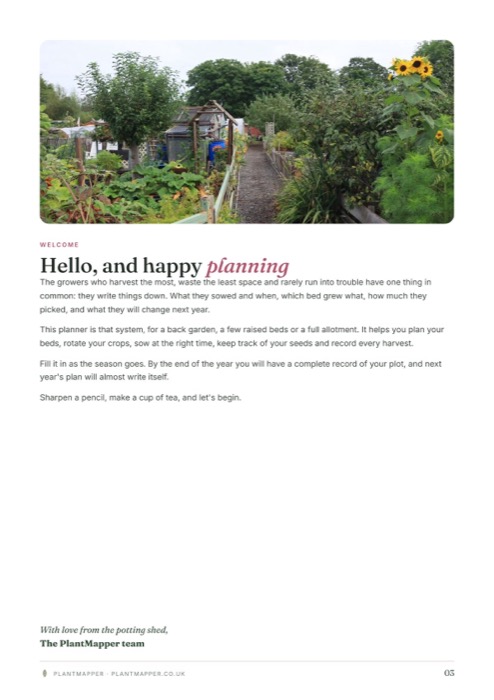

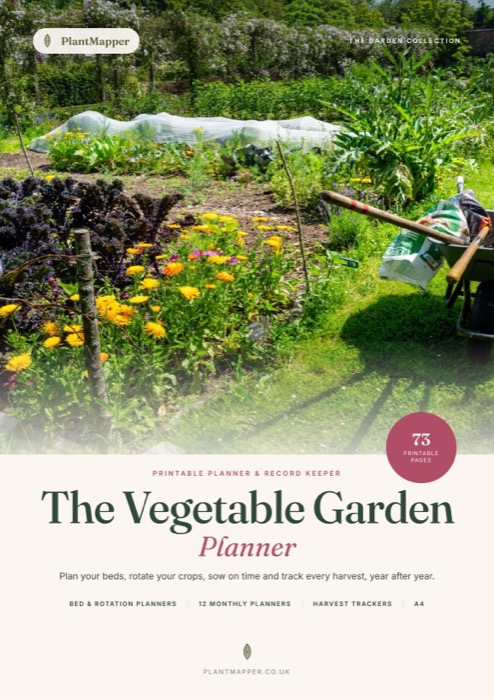 73-page printable workbook · A4 & US Letter
Download the Grow Your Own Starter Kit
An instant digital download in A4 and US Letter. Print it at home as often as you like and plan a full year of homegrown food, with planning and crop systems, bed and rotation planners, a sowing and harvest calendar, a crop directory and seasonal trackers in the calm PlantMapper style. Part of the wider PlantMapper Collection.
Download the Starter Kit on Etsy (UK edition)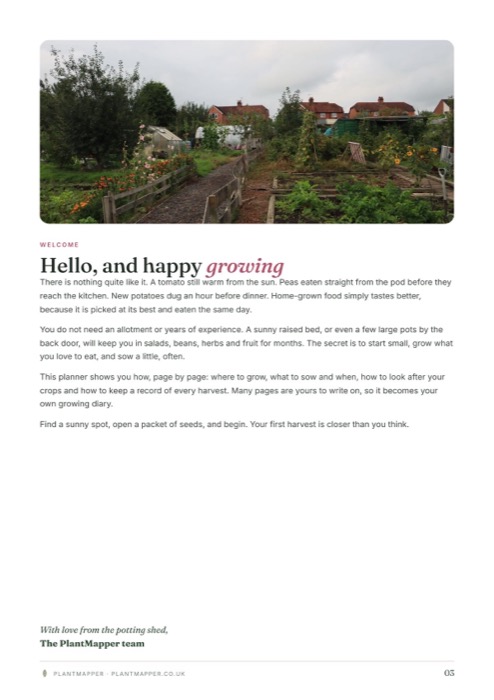

 66-page printable workbook · A4 & US Letter
Disclosures & disclaimers
Affiliate disclosure
Some links on this page are affiliate links. If you buy through them, PlantMapper may earn a small commission at no extra cost to you. It never changes which products we suggest.
Gardening disclaimer
All advice is general guidance for home gardens in the United States. Timing varies by zone and by year, and companion planting improves the odds rather than guaranteeing results.
Food-safety note
Only eat flowers and leaves you have grown yourself and can identify with certainty. Some ornamental flowers are not edible, so check before adding any bloom to food.