

Why grow blueberries?
Blueberries belong here. Wild lowbush blueberries carpet the barrens of Maine and eastern Canada, highbush blueberries grow in bogs and woodland edges across the East, and rabbiteye blueberries are native to the Southeast. In a garden they give you white spring bells for the bees, summer fruit you can eat straight off the bush and some of the best red fall color of any shrub. The one catch is soil: they need it acidic, and most yards need some help to get there.
Better than store-bought
Fully ripe homegrown berries are sweeter than the clamshells at the grocery store, and a well-kept bush keeps producing for 20 years or more.
Great in containers
Where garden soil is alkaline, as in much of the West and Plains, a large pot of acid potting mix lets you grow them anyway, on a patio, deck or balcony.
Handsome all year
White flowers in spring, blue fruit in summer, scarlet leaves in fall and red winter twigs make blueberries a worthy shrub for the front yard as well as the vegetable garden.
Easy once the soil is right
With the pH sorted and a net in place, blueberries need little pruning for the first few years, have few serious pests in most regions and crop reliably year after year.
Blueberries in the Fruit Trees & Bushes collection
Blueberries
Acid-loving native shrubs for beds, edible hedges and big containers.
You are hereRaspberry Canes
Summer-bearing and fall-bearing canes for bowlfuls of berries.
Apple Trees
The backyard orchard classic, with varieties and rootstocks for most zones.
Pear Trees
Long-lived, productive and grown in much the same way as apples.
Grow Your Own
Vegetables, herbs and salad greens to grow alongside your fruit.
Blueberry types for every zone
There is a blueberry for almost every part of the country, but the type matters more than the variety name. The big difference is winter chill: northern types need a long cold winter, southern types need only a short one. Match the type to your zone and chill hours, then choose varieties that ripen at different times.
Northern highbush (zones 4-7)
The classic garden blueberry for cold winters, needing about 800-1,000 chill hours. 'Bluecrop', 'Duke', 'Patriot' and 'Chandler' are reliable choices for the Northeast, Midwest and Pacific Northwest.
Southern highbush (zones 7-10)
Bred from highbush and native Southern species to need only about 150-600 chill hours. 'O'Neal', 'Emerald', 'Jewel' and 'Sunshine Blue' suit the Gulf Coast, Florida, Texas and California.
Rabbiteye (zones 7-9)
Tall, vigorous natives of the Southeast that tolerate heat, drought and less-than-perfect soil better than highbush. 'Climax', 'Premier', 'Powderblue' and 'Tifblue' are proven. Plant two rabbiteye varieties together, as they need cross-pollination.
Half-high (zones 3-7)
Crosses of highbush and lowbush, 2-4 ft tall, for the coldest winters. 'Northblue', 'Northsky' and 'Chippewa' survive under snow in Minnesota, Wisconsin and northern New England.
Lowbush and compact types
Wild lowbush blueberries (zones 3-6) make a fruiting groundcover. For containers, compact selections such as 'Top Hat' and 'Sunshine Blue' stay small, and 'Pink Lemonade' adds pink berries for fun.
Plant two varieties of the same type
Plant at least two varieties of the same type that bloom at the same time. Cross-pollination gives bigger berries and heavier crops, and rabbiteyes depend on it.

Not sure which type? Look up your zone and your local chill hours (your county Extension office can tell you). Zones 4-6 with cold winters: northern highbush. Zone 3 or very snowy: half-high. Zones 8-9 in the Southeast: rabbiteye or southern highbush. Zones 9-10, Florida and coastal California: low-chill southern highbush. Then buy two varieties of that type.
Growing blueberries across the US
Blueberries grow in zones 3-10, but which type you plant and how you handle the soil depends on where you live. Find your growing zone before you buy.
Northeast & Midwest
Northern highbush is the go-to, and many Northeast soils are already fairly acidic. In the Midwest, alkaline soils often need sulfur or raised beds. Use half-high types in zone 3 and the snowiest areas, and watch for blueberry maggot and spotted wing drosophila at harvest.
Southeast & Gulf Coast
Rabbiteye is the dependable choice across the Southeast, with southern highbush for earlier crops and for Florida. Soils are often naturally acid and sandy, so add plenty of pine bark and water steadily in summer. Plant in fall or winter so roots establish before the heat.
Southwest & California
Coastal and inland California grow low-chill southern highbush well in acid mix. In the desert Southwest, alkaline soil and hard water are the main obstacles: grow in large containers or raised beds of acid mix, use drip irrigation and give afternoon shade.
Pacific Northwest
Western Oregon and Washington have acid soils, mild winters and dry summers, close to ideal for northern highbush. Water through the dry summer, watch for mummy berry in wet springs and net early against robins and cedar waxwings.
Mountain West & Plains
Alkaline soils, cold winters and dry winds make blueberries a challenge. Choose half-high or hardy northern highbush, grow in raised beds or containers of acid mix, protect plants from winter wind and water with collected rainwater where local rules allow.
Acid soil, pH testing & sulfur
Blueberries need an acidic soil of about pH 4.5-5.5, plenty of organic matter and good drainage. Parts of the East, the Southeast, the Pacific Northwest and the upper Midwest have naturally acid soils, but much of the Midwest, Plains and West is neutral to alkaline. Test before you plant, then adjust the soil or grow in containers.
Why pH matters so much
Blueberry roots evolved in acid, peaty soils. In neutral or alkaline soil they can't take up iron and other nutrients, so the leaves turn yellow with green veins and the bush slowly declines however well you feed it.
Get a soil test first
Send a sample to your county Extension office or state university soil lab. You get the exact pH plus a recommendation for how much elemental sulfur to add. Home kits give a rough idea, but a lab test is cheap and far more accurate.
Lower pH with sulfur, early
Elemental sulfur is converted by soil bacteria into acid, which takes months. Work it in the fall before spring planting, or at least several months ahead, at the rate your soil test recommends. Avoid aluminum sulfate, which can harm the roots.
Add organic matter
Mix sphagnum peat moss, pine bark fines or composted pine needles into the planting area. They lower pH slightly and give the light, moist, airy soil blueberry roots like.
Keep it acid year after year
Mulch every year with pine bark, pine needles or wood chips and feed with an acid-forming fertilizer. Retest the soil every two or three years and add sulfur again if the pH has crept up.
When to use containers
If your soil test shows a pH above about 7, or you have heavy clay or caliche, growing in containers or raised beds of acid mix is far easier than trying to change the native soil.
Test, don't guess. A lab soil test tells you whether you can plant straight in the ground, how much sulfur to add, or whether containers make more sense. Fix the pH before planting and you have solved most blueberry problems before they start.
Pollination advice
Most highbush blueberries set some fruit on their own, but every type crops better with a partner. Rabbiteyes need one. Two or more varieties of the same type that bloom together give bigger berries and heavier yields.
Partly self-fertile
A single northern or southern highbush bush will produce fruit, but noticeably fewer and smaller berries than one with a pollination partner nearby.
Grow two for more fruit
Plant two or more varieties of the same type with overlapping bloom times. Rabbiteyes in particular are largely self-unfruitful and need a second rabbiteye variety.
Native bees do the work
Blueberry flowers are pollinated best by bumblebees and native southeastern blueberry bees, which buzz the bell-shaped flowers to release the pollen. Avoid spraying insecticides during bloom.
Watch for late frosts
Southern highbush and early varieties can bloom before your last frost. Cover bushes with frost cloth on cold nights during bloom, or choose later-blooming varieties if frost pockets are a problem.

Two of the same type, blooming together. The easiest way to bigger crops is a second variety of the same type with an overlapping bloom time. Don't pair a northern highbush with a rabbiteye; their bloom times and needs rarely match.
Planting blueberries
Plant container-grown or bare-root bushes in early spring in cold zones, or in fall through late winter in zones 7-10, where the cool months let roots establish before summer heat. What you plant them in matters far more than the date.
Plant in a big container
Use a pot at least 18-24 inches across (about 15-20 gallons) filled with an acid potting mix or a blend of pine bark fines and peat. Set the bush at the depth it grew in the nursery pot.
Or prepare the bed in advance
In the ground, plant only after the soil pH is right. Many growers build wide raised beds or mounds of pine bark and peat, which also solves poor drainage in clay soils.
Water in and mulch
Soak the root ball before planting, loosen any circling roots, water in well and spread 3-4 inches of pine bark or pine needle mulch over the root zone, keeping it off the stems.
Space them well
Space northern highbush about 4-6 ft apart, rabbiteyes 6-8 ft and half-highs about 3 ft, in rows about 8-10 ft apart. Close spacing makes a handsome fruiting hedge that is easy to net.
Test, acidify, plant two. The whole recipe in one line. A soil test, sulfur and organic matter where needed, and two compatible varieties in full sun will beat a single bush planted in untested soil every time.
Site & position
After soil pH, blueberries need full sun, steady moisture and good drainage. They are shallow-rooted, so a spot free of tree-root competition helps too.
Full sun for sweet fruit
At least six to eight hours of sun gives the biggest crops, the sweetest fruit and the best fall color. In the hottest Southern and desert gardens a little afternoon shade helps.
Moist but well drained
The roots like constant moisture but rot in waterlogged soil. In heavy clay, plant on a raised bed or mound of acid organic mix.
Away from tree roots
Keep bushes clear of large trees, whose roots steal water and nutrients from the shallow blueberry roots. Avoid low frost pockets where spring frost settles.
Containers can move
Potted bushes can be moved into shelter on frosty spring nights, into full sun for ripening and somewhere easy to net as the berries color.

Watering & feeding
Blueberries are shallow-rooted and fussy about what they eat and drink. Water steadily, use an acid-forming fertilizer and watch your water source if it is alkaline.
Water steadily
Give about 1-2 inches of water a week, more in hot weather and while the fruit swells. Drip irrigation or a soaker hose under the mulch works well. Containers may need daily watering in summer.
Mulch deeply
Keep 3-4 inches of pine bark, pine needles or wood chips over the roots. Mulch keeps the shallow roots cool and moist and slowly helps hold the soil acidic.
Feed with an acid-forming fertilizer
Use a fertilizer labeled for acid-loving plants, or ammonium sulfate at the rate your Extension service suggests, in early spring and again lightly after bloom. Avoid nitrate fertilizers and manures high in salts.
Watch alkaline water
Well water and city water in much of the West and Midwest are alkaline and slowly raise the pH. Collect rainwater where local rules allow it, or ask your Extension office about acidifying irrigation water.
Steady water, acid feed. Yellow leaves with green veins usually mean iron cannot be taken up because the pH is too high, not that the bush is hungry. Check the pH, use an acid-forming fertilizer and switch to rainwater where your tap water is hard.
Pruning & maintenance
Young blueberries need almost no pruning, and established bushes only a light renewal each year. The aim is a steady supply of vigorous young canes, which carry the best fruit.
Let young bushes establish
In the first two years, rub off flower buds so the bush puts its energy into roots and shoots, and remove only dead or broken twigs. You give up a tiny crop for a much stronger plant.
Prune in late winter
From about year four, prune while dormant in late winter: cut one or two of the oldest, grayest canes to the ground each year so new canes replace them.
Open up the center
Remove crossing, crowded and low, twiggy growth so light and air reach the middle of the bush. An open bush ripens fruit evenly and dries quickly after rain.
A light touch
Blueberries fruit best on vigorous wood that is two to five years old, so never shear them like a hedge. Rabbiteyes grow tall and may need their tallest canes cut back to keep fruit within reach.
Remove dead and weak wood
Any time of year, cut out dead, broken or diseased wood and thin, weak shoots that will never carry good fruit.
Renew older bushes
Neglected bushes can be renewed over three years by removing a third of the oldest canes each winter. Repot container bushes into fresh acid mix every two or three years.
Less is more with blueberries. Unlike raspberries, blueberries need very little cutting. For the first few years simply tidy them, then remove a cane or two of the oldest wood each winter and leave the rest to fruit.
Common problems
With the right soil pH, blueberries are among the easier fruits to grow. Most problems come down to soil, water or birds, with a few regional pests and diseases to watch for.
Yellow leaves with green veins
Iron chlorosis, the classic sign of soil pH that is too high. Test the soil, add sulfur as recommended, switch to an acid-forming fertilizer and avoid alkaline water.
Birds (the big one)
American robins, gray catbirds, cedar waxwings, mockingbirds and blue jays can strip a bush in days. Cover the bushes with bird netting on a frame before the first berries turn blue, and close the gaps at the base.
Spotted wing drosophila
This small fruit fly lays eggs in ripe berries, leaving them soft and wormy. Pick often and completely, refrigerate fruit quickly and remove fallen or overripe berries. Fine mesh netting helps.
Mummy berry and frost
Mummy berry turns berries into hard gray mummies; rake up and destroy them and renew the mulch. Late spring frosts damage open flowers, so cover bushes in bloom on frosty nights.
Deer, rabbits and Japanese beetles
Deer browse blueberry twigs in winter and rabbits gnaw young canes, so fence or cage young plants. Japanese beetles chew leaves in summer; hand-pick them into soapy water in the morning.
Prevention is mostly soil and netting
Get the pH, the mulch and the netting right, pick often, and most blueberry problems never get started.
Net before the berries turn blue. The classic heartbreak is watching birds clear the bush the week before you would have picked. Have the netting up as soon as the first berries start to color, not the morning after they disappear.
Harvest season & planning
Depending on your region, blueberries ripen anywhere from April in Florida to August in the far North. Each bush ripens over several weeks, and early, mid and late varieties stretch the season much further.
Spring to late summer
Southern highbush in Florida and south Texas can ripen in April and May, rabbiteyes in the Southeast in June and July, and northern highbush in the Northeast, Midwest and Pacific Northwest from July into August.
Wait a few days after they turn blue
Berries turn blue before they are fully sweet. Leave them on for three to five more days and they get plumper and sweeter, and roll off into your hand with a gentle touch.
Pick every few days
Fruit on a bush ripens unevenly, so go over each bush every few days, taking only fully blue berries. Frequent picking also helps keep spotted wing drosophila down.
Stretch the season
Plant early, mid and late varieties of the same type and you can pick for six weeks or more from just a few bushes.

Storing, freezing & using
Blueberries are among the easiest fruits to keep. They store well in the fridge, freeze beautifully with no preparation and work in everything from pancakes to pie.
Keep them in the fridge
Store berries dry and unwashed in a shallow container in the refrigerator, where they keep for a week or more. Rinse just before eating.
Freeze them whole
Spread dry berries on a sheet pan, freeze, then pour into freezer bags. They stay loose for muffins, pancakes, smoothies and cobblers all year.
Jam, pies & baking
Blueberries make a quick, glossy jam and the classic American blueberry pie, cobbler and muffin. A big harvest never goes to waste.
A handful a day
A handful on oatmeal, cereal or yogurt every morning is reason enough to grow a few bushes.
Freeze them loose. No pitting, no syrup, no peeling. Freeze clean, dry berries on a tray first so they don't clump, then bag them and pour out exactly what you need right through the winter.
Blueberries - frequently asked questions
The blueberry questions American gardeners ask most, answered simply.
Do blueberries need acid soil?
Yes. Blueberries need an acidic soil of about pH 4.5-5.5. Have the soil tested through your county Extension office or a state university lab before planting. If the pH is too high, work in elemental sulfur months ahead at the rate the test recommends, add peat moss or pine bark, or grow the bushes in containers of acid potting mix.
Which blueberries grow best in my zone?
Northern highbush suits zones 4-7, where winters are long and cold. Half-high types handle zone 3. Southern highbush (zones 7-10) and rabbiteye (zones 7-9) need far less winter chill and suit the Southeast, Gulf Coast, Texas and California. Ask your Extension office about local chill hours before choosing varieties.
How do I lower soil pH for blueberries?
Use elemental sulfur, which soil bacteria slowly turn into acid. It can take several months to work, so apply it the fall before spring planting at the rate your soil test suggests. Mix in sphagnum peat or pine bark, mulch with pine needles or bark, and use an acid-forming fertilizer. Avoid aluminum sulfate, which can damage the roots.
Do I need two blueberry bushes?
For good crops, yes. Most highbush blueberries set some fruit alone but give bigger berries and heavier yields with a partner. Rabbiteyes need a second rabbiteye variety. Choose two or more varieties of the same type that bloom at the same time.
Why are my blueberry leaves turning yellow?
Yellow leaves with green veins usually mean the soil pH is too high, so the plant cannot take up iron. Test the soil, add sulfur as recommended, switch to an acid-forming fertilizer and avoid watering with hard, alkaline tap or well water where you can.
How do I keep birds off my blueberries?
Cover the bushes with bird netting on a simple frame of posts or PVC hoops before the first berries turn blue, and pin it down at the base so robins and catbirds can't slip underneath. Scare tape and fake owls help only briefly. A walk-in net enclosure makes picking much easier.
Can I grow blueberries in Florida, Texas or Arizona?
In Florida and along the Gulf Coast, yes, with low-chill southern highbush varieties and acid, well-drained soil. In much of Texas, choose rabbiteye or southern highbush and expect to manage alkaline soil and water, often by growing in raised beds or containers. In Arizona the alkaline soil, hard water and dry heat make containers of acid mix with afternoon shade the practical option.
Are blueberries deer resistant?
No. Deer browse blueberry shoots and buds, especially in winter, and rabbits gnaw young canes. In areas with heavy deer pressure, a fence at least 7-8 ft tall or a netted enclosure that also keeps out birds is the most reliable protection.
Beginner tips
If you remember only a few things about growing blueberries, make it these. They are the difference between a loaded bush and a yellow, struggling one.
Test the soil first
A lab soil test tells you the pH and how much sulfur to add. Aim for pH 4.5-5.5 before you plant.
Match the type to your zone
Northern highbush for cold winters, southern highbush and rabbiteye for the South, half-high for zone 3.
Mulch and water steadily
Shallow roots need constant moisture under a thick mulch of pine bark or needles.
Plant two varieties
Two varieties of the same type blooming together give far bigger crops.
Net before they ripen
Robins and catbirds know exactly when berries are ready. Net as the first ones turn blue.
Wait for full sweetness
Leave berries on a few days after they turn blue and they will be plump and sweet.
Handy garden calculators
Work out the soil, mulch and spacing your bushes need with our free calculators.
Handy for growing blueberries
Our picksAs an Amazon Associate, PlantMapper may earn from qualifying purchases. Prices and availability are set by Amazon.
The Fruit Trees & Bushes Starter Kit
This blueberry guide is part of our growing Fruit Trees & Bushes collection. Everything you need to choose, plant, prune and harvest healthy blueberry bushes is free on this page. The optional printable workbook is the next step for planning a whole fruit garden away from the screen.
Download the Soft Fruit Growing Guide
An instant digital download in A4 and US Letter. Print it as often as you like to grow berries and soft fruit at home, with the Soft-Fruit Cycle, a strawberry runner-and-renewal system, protection and netting planners, harvest logs and seasonal trackers in the calm PlantMapper style. Part of the wider PlantMapper Collection.
Download the Guide on Etsy (UK edition)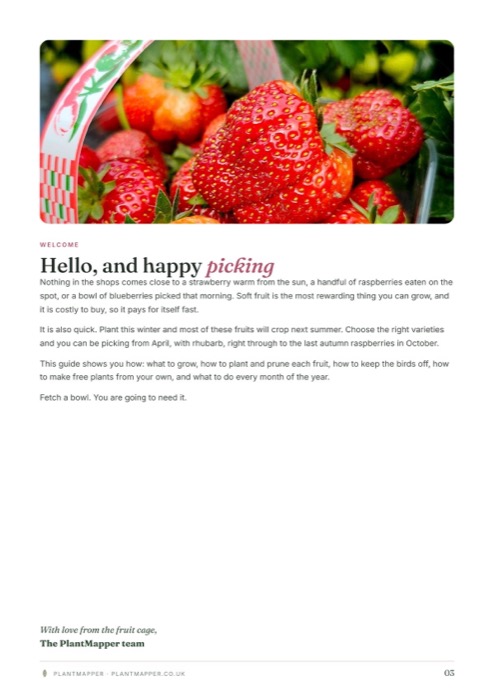
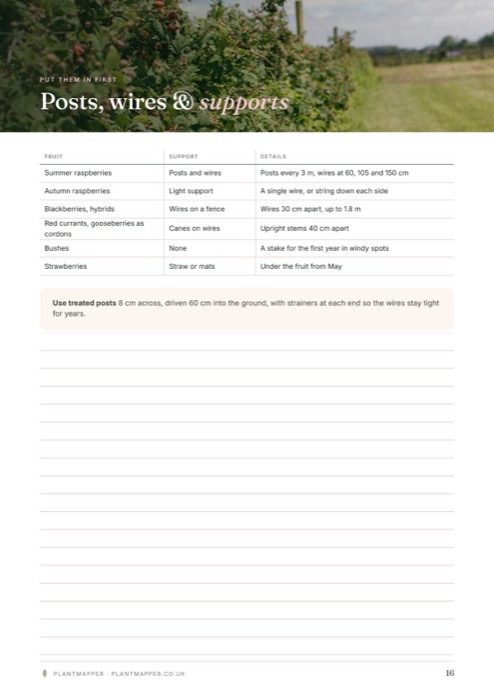
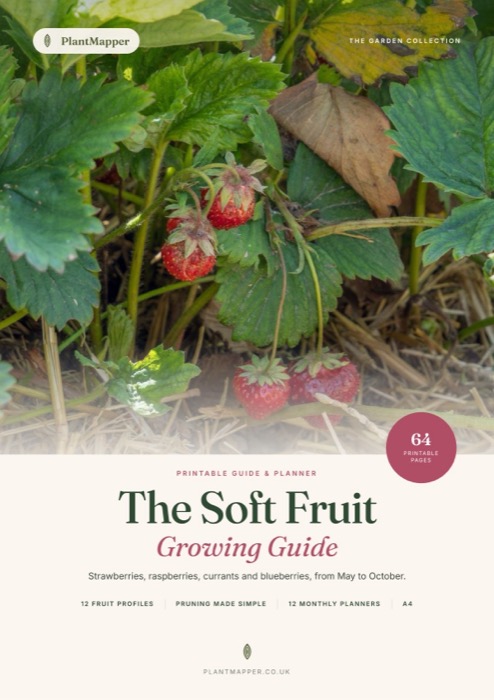 64-page printable workbook · A4 & US Letter
Disclosures & disclaimers
Affiliate disclosure
Some links on this page are affiliate links. If you buy through them, PlantMapper may earn a small commission at no extra cost to you. It never changes which products we suggest.
Gardening disclaimer
All advice is general guidance for home gardens in the United States. Results vary with your zone, chill hours, soil and season, so check that a variety suits your area before you buy.
Food-safety note
Blueberries are wholesome straight from the bush. Rinse homegrown fruit before eating, eat only ripe berries and throw out any that are damaged or moldy.