

Quick answers
- When should I plant a plum tree?
- Plant bare-root trees in early spring as soon as the ground can be worked in zones 3-6, and from late fall through winter in mild zones 7-9. Container trees can go in any time the soil isn’t frozen, if you keep them watered.
- When should I prune a plum tree?
- In late winter or early spring, just before or as the buds break, on a dry day. Avoid fall pruning. In the rainy Pacific Northwest, many growers prune in summer instead to cut the risk of bacterial canker.
- Which plum tree is best for a small yard?
- A self-fertile variety such as ‘Stanley’ or ‘Methley’ on a dwarfing or semi-dwarf rootstock like Krymsk 1 or Citation, which keeps the tree to roughly 8-14 ft and fruits without a partner.
- Do plum trees need a pollinator?
- Many European plums (‘Stanley’, ‘Italian’, ‘Damson’) and the Japanese plum ‘Methley’ are self-fertile. Most other Japanese plums and all the cold-hardy hybrids need a compatible partner of the same group blooming nearby.
Why grow plums?
Plums ask for less than apples or peaches and give back a great deal. They come into bearing quickly, most need little pruning, and the range of types is wide enough that gardeners from zone 3 to zone 9 can find one that thrives. A ripe plum eaten straight off the tree is sweeter and juicier than anything that survives a trip to the grocery store.
Tree-ripened flavor
Store plums are picked hard so they ship well. Leave yours on the tree until they soften and the flavor turns rich and honeyed - that alone is reason enough to grow one.
Quick to crop
On a good rootstock, a plum usually gives its first real harvest within three to five years - sooner than many apples and pears.
A type for every zone
Hybrid plums shrug off zone 3 winters, low-chill Japanese plums fruit along the Gulf Coast, and European plums suit the long, cool seasons of the North and Northwest.
Fresh, dried or canned
Juicy Japanese plums for eating fresh, dense European “prune plums” for drying and baking, and tart damsons for jam - one family, many uses.
Plums in the Fruit Trees & Bushes collection
Plum Trees
Quick-cropping stone fruit, with types for every zone from 3 to 9.
You are hereApple Trees
America’s favorite home fruit tree - varieties for cold, heat and everything between.
Pear Trees
Apple’s graceful cousin - long-lived, productive and easy to grow in much the same way.
Cherry Trees
Sweet or tart cherries on dwarfing rootstocks for yards of any size.
Grow Your Own
Vegetables, herbs and salad greens to grow alongside your fruit.
Best plum varieties for US gardens
In the US, plums fall into three groups that behave very differently. European plums bloom later, ripen in late summer and suit zones 4/5-8. Japanese plums bloom very early, ripen in early to midsummer and range from zone 5 into the low-chill South. Hybrid plums, bred from native American plums, are the choice for the coldest states. Choose the group first, then the variety.
‘Stanley’ - the classic prune plum
A self-fertile European plum, hardy into zone 5, with dark blue freestone fruit in late summer. Excellent fresh, dried or baked, and one of the most dependable plums for the Northeast and Midwest.
‘Methley’ - early and easy
A self-fertile Japanese plum with sweet red-purple fruit in early summer. Low chill (roughly 250 hours) and adaptable from zone 5 to 9 - a favorite across the South and a good pollinator for other Japanese plums.
‘Santa Rosa’ - the California favorite
The best-known Japanese plum: tangy red skin, amber flesh, superb flavor. Partly self-fertile but crops better with a partner. Moderate chill; widely grown in zones 6-9, especially in the West.
Cold-hardy hybrids
‘Toka’, ‘Superior’, ‘Alderman’ and ‘Pipestone’ come from northern breeding programs and survive zone 3-4 winters. They need a hybrid or native plum partner - ‘Toka’ is a well-known pollinator.
Damsons & gages
Damson and ‘Green Gage’ types are European plums for jam and connoisseurs. Self-fertile damsons are tough and reliable in zones 5-7; gages need a warm, sunny site to sweeten fully.
Low-chill picks for the Deep South
Along the Gulf Coast and in north Florida, choose varieties bred for short winters and the local disease called plum leaf scald - look for Gulf-series and Auburn (AU) plums recommended by your state extension service.

New to plums? In the North and Northwest, start with a self-fertile ‘Stanley’. In the South and California, start with ‘Methley’ or ‘Santa Rosa’. In zones 3-4, plant two cold-hardy hybrids such as ‘Toka’ and ‘Superior’ together. Not sure of your zone? Find your growing zone by ZIP code.
Plum rootstocks for American yards
Nursery plums are a named variety grafted onto a rootstock, and the rootstock decides how big the tree gets, how well it copes with your soil and how soon it fruits. The label should tell you which one you are buying - if it doesn’t, ask. Heights below are rough guides; soil, climate and pruning all change them.
Krymsk 1 - dwarf
A dwarfing stock that keeps most plums to roughly 8-10 ft, fruits early and handles heavy soils better than many dwarfs. A good choice for small yards and easy netting.
Citation - semi-dwarf
A widely sold semi-dwarfing stock giving a tree of about 10-14 ft. It tolerates wet soils reasonably well and is common in mail-order and West Coast nurseries.
Myrobalan - standard
A vigorous, adaptable seedling stock that makes a full-size tree of 15-20 ft. Long-lived and drought-tolerant, but slow to crop and big to manage.
Marianna 2624
A popular California stock for heavier, wetter soils and for resistance to root-knot nematodes. Makes a medium to large tree.
Peach seedling stocks
In the South and California many plums are grafted on peach seedlings such as Lovell or Nemaguard. They suit sandy, well-drained soils but dislike wet feet.
How to choose
Small yard or patio: Krymsk 1. Average yard: Citation. Poor, dry soil or lots of room: Myrobalan. Heavy, wet clay: Marianna 2624 or Citation - and improve drainage first.
Check the rootstock, not just the variety. The same ‘Santa Rosa’ can be a 9 ft tree on Krymsk 1 or a 20 ft tree on Myrobalan. Choose the stock that fits your space and soil before anything else.
Plum pollination made simple
Plum pollination comes down to one rule: partners must be from the same group. European plums pollinate European plums; Japanese plums pollinate Japanese plums; hybrid plums need another hybrid or a native American plum. A European and a Japanese plum planted side by side usually won’t help each other.
Self-fertile choices
‘Stanley’, ‘Italian’, ‘Mount Royal’, damsons and the Japanese ‘Methley’ all set fruit on their own - ideal when there’s only room for one tree.
Japanese partners
Most Japanese plums and pluots need a second Japanese-type plum blooming at the same time. ‘Methley’ and ‘Santa Rosa’ are good all-round pollinators.
Hybrids need hybrids
Cold-hardy hybrids such as ‘Superior’ and ‘Alderman’ set best with ‘Toka’ or a wild American plum (Prunus americana) within a few hundred feet.
Bees and weather
Plums bloom very early, often on cool, windy days. Native bees such as mason bees fly in cooler weather than honeybees, so a yard with spring flowers and nesting spots helps fruit set.

Short on space? Plant a self-fertile variety, or look for a multi-graft tree that carries two compatible Japanese plums on one trunk. Either way, plant out of low frost pockets so the early blossom survives.
Planting a plum tree
Bare-root trees are cheaper and establish fast. In zones 3-6 plant them in early spring as soon as the ground thaws and dries enough to dig; in zones 7-9 plant from late fall through winter while the tree is dormant. Container-grown trees can be planted any time the ground isn’t frozen - just avoid the peak of summer heat in the South and Southwest.
Pick a sunny, frost-safe spot
Plums need at least 6-8 hours of sun. Plant on a gentle slope or higher ground so cold air drains away on spring nights - never in a low hollow.
Dig wide, not deep
Make the hole two to three times as wide as the roots but no deeper. Spread the roots, backfill with the native soil, and keep the graft union 2-3 in above the soil line.
Protect the trunk
Wrap the base in a hardware-cloth or plastic tree guard against rabbits and voles, and paint or wrap the trunk of young trees in hot, sunny regions to prevent sunscald.
Water in and mulch
Soak the root zone, then spread 2-3 in of wood-chip mulch in a wide ring, kept a few inches off the trunk. Water deeply every week or so through the first two summers.
Fence before you plant if you have deer. Deer browse young plum shoots all year and can strip a small tree overnight. A cylinder of welded wire around each tree, or a proper 8 ft fence, is far easier than repairing the damage.
Soil & sun for plums
Plums are less fussy than peaches or cherries, but they still crop best in full sun with deep, well-drained soil. Good drainage matters more than fertility - plum roots rot in soil that stays soggy.
Full sun
Six hours of direct sun is the minimum; eight or more ripens sweeter fruit and dries the leaves quickly after rain, which helps keep diseases down.
Well-drained loam
A deep loam is ideal. On heavy clay, plant on a low mound or wide raised berm so the roots never sit in water; on sand, work in compost to hold moisture.
Avoid frost pockets
Japanese plums can bloom in February in the South and March to April further north. Planting on higher ground is often the difference between a crop and none.
pH around 6.0-7.0
Plums like slightly acidic to neutral soil. A soil test through your county extension office will tell you whether lime or sulfur is needed before you plant.

Growing plums across the US
Plums grow from about USDA zone 3 to zone 9 - the trick is picking the right group for your region’s winters, summers and diseases.
Northeast & Midwest
European plums like ‘Stanley’ and ‘Mount Royal’ are reliable in zones 4-7. Plum curculio and black knot are the main threats, so keep up with cleanup and prune out knots every winter. Deer pressure is high - fence young trees.
Southeast & Gulf Coast
Grow low-chill Japanese plums such as ‘Methley’ or regionally bred varieties resistant to bacterial spot and plum leaf scald. Early bloom plus spring cold snaps can cost a crop, so pick a site with good cold-air drainage.
Southwest & California
Japanese plums and pluots love the long, dry summers. Plan on drip irrigation and mulch, and choose varieties to suit your chill hours - coastal and low-desert gardens get far fewer than the Central Valley or high desert.
Pacific Northwest
Prune-plum country: ‘Italian’ and ‘Stanley’ thrive west of the Cascades. Wet springs bring brown rot and bacterial canker, so prune in dry weather (many growers prefer summer) and keep the canopy open.
Mountain West & Plains
Cold winters, late frosts and drying winds favor tough hybrid plums and native American plums in zones 3-5. Plant a windbreak, protect trunks from sunscald, and choose two compatible hybrids for pollination.
Native alternatives
For wildlife hedges and tough sites, consider native plums: American plum (Prunus americana) across much of the country, Chickasaw plum in the South and beach plum on the Northeast coast. Their spring flowers feed early native bees.
Chill hours matter as much as zone. Plums need a certain number of winter hours between about 32°F and 45°F to bloom properly. Southern and coastal growers should check a variety’s chill requirement before buying - your county extension office can tell you the typical figure for your area.
Watering & feeding
Established plums in rainy parts of the East need little help; in the dry West they need regular deep irrigation. Young trees everywhere need steady water for their first two or three seasons.
Deep, regular water
Give young trees a deep soak about once a week in dry weather. In the Southwest and California, mature trees need deep irrigation every one to two weeks through summer - drip lines or a soaker hose work well.
Even moisture as fruit swells
A dry spell followed by heavy rain or a big watering makes plums crack. Keep the soil evenly moist from bloom until harvest.
Feed lightly
A balanced fertilizer in early spring is usually plenty, based on a soil test. Too much nitrogen gives lush, disease-prone growth and fewer plums.
Mulch every spring
Top up a ring of wood-chip mulch each spring to hold moisture, keep roots cool and stop lawn grass competing with the tree.
Under watering restrictions? Water deeply and less often, early in the morning, straight onto the root zone through drip irrigation. A thick mulch can cut watering needs noticeably in hot, dry summers.
Pruning plum trees
Most US extension services recommend pruning plums in late winter or early spring, just before or as the buds begin to swell, on a dry day - late enough to avoid the worst cold, early enough to shape the tree before growth. Avoid fall pruning. In the wet Pacific Northwest, many growers prune in dry summer weather to reduce bacterial canker. Our fruit tree pruning guide covers each tree form step by step.
Japanese plums: open center
Train Japanese plums to an open, vase-shaped center with three or four main limbs. They grow vigorously and fruit on spurs and one-year wood, so they take more thinning cuts than European types.
European plums: central leader
European plums grow more upright and do well as a central or modified central leader. They need lighter pruning - mainly removing crowded and crossing branches.
Cut out dead and diseased wood
Remove dead, broken and crossing branches each year, and prune out black knot galls as soon as you see them (see Problems).
Thin the fruit
When fruitlets are about the size of a marble, thin them to roughly 3-5 in apart. You’ll get bigger plums, fewer broken limbs and a steadier crop every year.
Keep it reachable
Head back over-tall limbs to an outward-facing side branch so you can pick, net and spray from the ground or a short orchard ladder.
Support heavy limbs
Even after thinning, loaded branches can split. Prop them with forked boards or a padded stake before they bend too far.
Late winter, dry weather, light cuts. That’s the recipe for a healthy plum in most of the US. Heavy pruning in any season just triggers a flush of water sprouts.
Common plum problems in the US
Plums are tougher than peaches, but American gardens have a few pests and diseases you need to know about. Good sanitation - picking up dropped fruit and pruning out infected wood - prevents a lot of trouble. Ask your county extension office for the spray schedule that fits your region.
Plum curculio
East of the Rockies, this small snout beetle leaves crescent-shaped scars on young fruit and its grubs make plums drop early. Pick up fallen fruit daily, shake beetles onto a sheet in the cool of the morning, or use kaolin clay sprays after petal fall.
Black knot
A fungal disease of European plums and cherries, common in the Northeast and Midwest: hard black swellings on twigs. Cut them out in winter at least 4 in below the knot and throw them in the trash or burn them where allowed.
Brown rot
Fuzzy gray-brown rot on ripening fruit, worst in humid summers. Remove rotten and mummified fruit, thin the crop so plums don’t touch, and keep the canopy open.
Bacterial spot & leaf scald
In the Southeast, Japanese plums suffer from bacterial spot and plum leaf scald. Choose resistant varieties recommended for your state rather than relying on sprays.
Japanese beetles & aphids
Japanese beetles skeletonize plum leaves in midsummer - knock them into soapy water each morning. Aphids curl spring leaves; hose them off and let lady beetles and lacewings do the rest.
Birds, deer & frost
Birds and squirrels take ripe fruit, deer browse shoots, and a late frost can wipe out the bloom. Net small trees, fence against deer, and cover small trees with frost cloth on cold nights at bloom time.
Clean up and you cut your problems in half. Most plum pests and diseases spend the winter in dropped fruit, mummies and infected twigs. Clearing them away, plus pruning out black knot promptly, does more than most sprays.
Harvesting plums
Plums ripen over several weeks, so plan to pick the same tree several times. Japanese plums come first - late May to July in the South and California, July into August in the North. European plums follow from mid-August into September.
Know your type
Japanese plums such as ‘Methley’ and ‘Santa Rosa’ ripen in early to midsummer; ‘Stanley’ and other prune plums usually ripen from late August.
Feel for softness
Ripe plums have full color, a slight give when pressed gently, and come off with a light twist. A whitish bloom on European plums is natural.
Pick Japanese plums slightly early
Japanese plums can be picked when colored but still firm and ripened on the counter. European plums are best left on the tree until fully ripe.
Go over the tree often
Pick every few days during the season. Removing ripe fruit promptly keeps yellowjackets, birds and brown rot from getting a foothold.

Storing & using plums
Ripe plums keep only a few days at room temperature and a week or two in the refrigerator, so a good harvest usually means canning, freezing or drying. European prune plums are especially good for drying.
Refrigerate ripe fruit
Store fully ripe plums in the crisper drawer and use them within a week or two. Let firm fruit soften at room temperature first.
Freeze the extra
Halve and pit plums, freeze them on a tray, then bag them for pies, crisps, smoothies and sauces through the winter.
Can jam and preserves
Plums make excellent jam, butter and canned halves. Follow a tested recipe from the USDA or the National Center for Home Food Preservation for safe canning times.
Dry your own prunes
Freestone European plums such as ‘Stanley’ and ‘Italian’ dry beautifully in a dehydrator or low oven - homemade prunes are a different thing from store-bought.
Plan for the glut. A mature plum tree in a good year can fill several bushel baskets. Have jars, freezer space or a dehydrator ready before harvest starts.
Plum trees - frequently asked questions
The questions American plum growers ask most, answered simply.
How long does it take a plum tree to bear fruit?
Most grafted plum trees start fruiting three to five years after planting, a little sooner on dwarfing rootstocks such as Krymsk 1. Full crops usually follow a couple of years later.
Do I need two plum trees to get fruit?
Not always. ‘Stanley’, ‘Italian’, damsons and ‘Methley’ are self-fertile. Most other Japanese plums and all cold-hardy hybrid plums need a partner from the same group blooming at the same time.
What zone do plum trees grow in?
Plums as a group grow from about USDA zone 3 to zone 9. Cold-hardy hybrids such as ‘Toka’ and ‘Superior’ take zone 3-4 winters, European plums suit zones 4/5-8, and low-chill Japanese plums such as ‘Methley’ fruit into zone 9.
Can I grow plums in Texas or Florida?
Yes, in many areas, if you choose low-chill Japanese plums. ‘Methley’ and Gulf-series plums are grown across much of Texas and the Gulf Coast. Central and south Florida have too little winter chill for most plums, so check your extension service’s variety list.
Why does my plum tree flower but not fruit?
The usual causes are a late frost killing the blossom, no compatible pollinator, or cold, wet weather that kept bees away during bloom. Plant on higher ground, add a compatible partner, and cover small trees with frost cloth on frosty nights.
What are the black lumps on my plum branches?
That is black knot, a fungal disease common on European plums in the East and Midwest. Cut out each knot in winter, at least 4 in below the swelling, and dispose of the wood away from the tree. Remove badly infected wild plums and cherries nearby too.
Practical tips
If you remember just a few things about growing plums in the US, make it these.
Match type to zone
Hybrids for zones 3-4, European plums for the North and Northwest, low-chill Japanese plums for the South and California.
Mind the partners
Plant a self-fertile variety, or two compatible plums from the same group.
Plant high, not low
Keep the tree out of frost pockets so the early blossom survives.
Prune in late winter
Light cuts, dry weather, just before bud break - and never in fall.
Thin the crop
Thin fruitlets to 3-5 in apart for bigger plums and unbroken branches.
Keep it clean
Pick up dropped fruit and cut out black knot to keep curculio and disease in check.
Helpful garden calculators
Work out the soil, spacing and materials your trees need with our free calculators, so you plan and plant with confidence.
Useful for growing plums
Our picksAs an Amazon Associate, PlantMapper may earn from qualifying purchases. Prices and availability are set by Amazon.
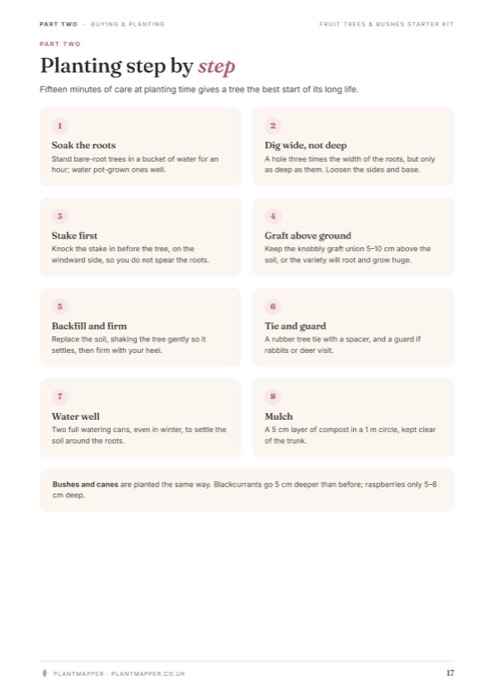
The Fruit Trees & Bushes Starter Kit
This plum guide is part of our growing Fruit Trees & Bushes collection. Everything you need to choose, plant, prune and harvest a healthy plum tree is free on this page - the optional printable workbook is the calm next step for planning a whole orchard, away from the screen.
Download the Fruit Trees & Bushes Starter Kit
An instant digital download in A4 and US Letter - print it as often as you like and plan, plant and care for fruit trees and bushes. Inside you will find the Orchard Formula, rootstock and pollination planners, orchard layout grids, a fruit directory and seasonal trackers, all in the calm PlantMapper style. Part of the wider PlantMapper Collection.
Download the Starter Kit on Etsy (UK edition)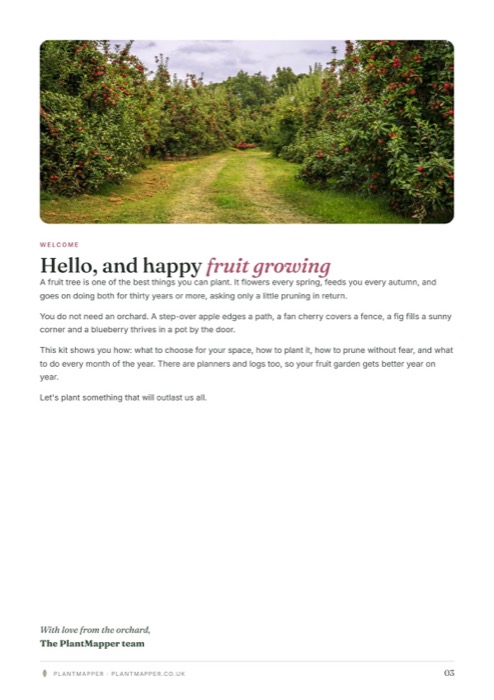
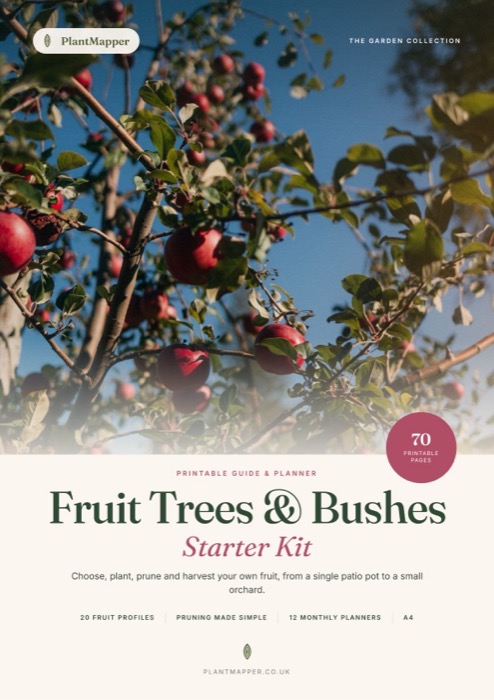 70-page printable workbook · A4 & US Letter
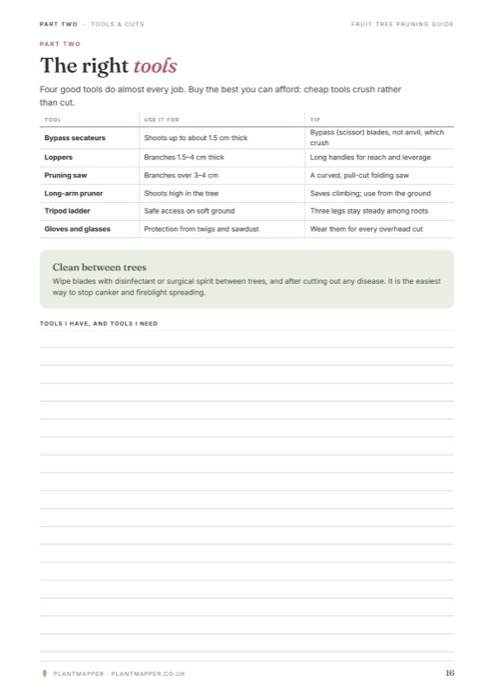
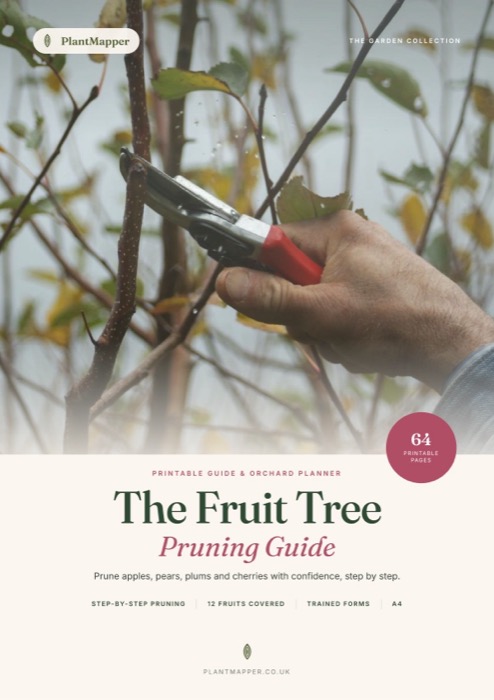
Download the Fruit Tree Pruning & Training Guide
An instant digital download in A4 and US Letter - print it as often as you like and prune and train healthy, productive fruit trees. Inside you will find the PlantMapper Pruning System, the Branch Priority Matrix, training-system selectors and formative-pruning timelines, plus field logs and trackers, all in the calm PlantMapper style. Part of the wider PlantMapper Collection.
Download the Guide on Etsy (UK edition)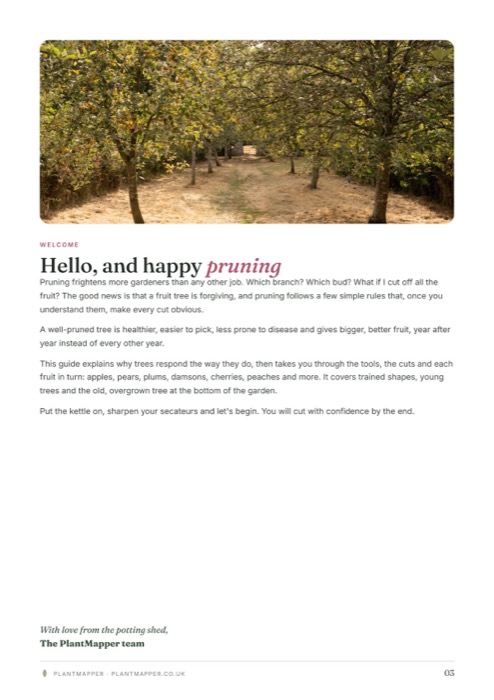
 64-page printable workbook · A4 & US Letter
Disclosures & disclaimers
Affiliate disclosure
Some links on this page are affiliate links. If you buy through them, PlantMapper may earn a small commission at no extra cost to you. It never affects which products we suggest.
Gardening disclaimer
All advice is general guidance for home gardens in the United States. Results vary with your zone, chill hours, soil and season - check variety, rootstock and pollination needs with a local nursery or your county extension office before you buy.
Food-safety note
Plum pits, leaves and bark contain compounds that are toxic if chewed or eaten in quantity - never eat the pits, and keep pets and livestock from browsing wilted leaves. Wash homegrown fruit before eating, and follow label directions for any spray.