

Why grow your own raspberries?
Raspberries are one of the best-value crops in a home garden. The plants are cheap, they start bearing within a year, and a healthy patch keeps going for a decade or more. Store-bought berries are picked early to survive shipping; homegrown ones are picked dead ripe, which is where all the flavor is. Plant an early summer-bearing variety alongside an everbearing one and you can pick from early summer until the first hard frost.
Flavor you can't buy
A raspberry starts to lose its perfume within hours of picking. The ones you pick warm from your own canes, especially black and yellow types that rarely reach stores, are a different fruit altogether.
Fast and forgiving
Plants are self-fertile, fruit within a year and are very cold hardy. Give them sun, decent drainage, a simple trellis and one pruning session a year.
A long picking season
Combine a summer-bearing variety with an everbearing one and the harvest can stretch from June or July right through to fall frost in many zones.
Fits small yards
A single 10 foot row, a bed along a fence or a big container on the patio is enough to keep a household in berries for breakfast all summer.
More in the Fruit Trees & Berries collection
Raspberries
Summer-bearing and everbearing canes for bowls of berries in almost any yard.
You are hereBlueberries
Acid-loving bushes for beds or containers, with highbush, rabbiteye and southern types for every zone.
Apple Trees
America's favorite backyard fruit tree, with a variety and rootstock for most zones.
Pear Trees
Long-lived, productive and easier than apples, if you choose fire blight resistant varieties.
Grow Your Own
Vegetables, herbs and salad crops to grow alongside your berry patch.
Best raspberry varieties for American gardens
First decide between summer-bearing and everbearing, then choose a color. Reds are the most widely grown, but black, purple and yellow raspberries are well worth a spot. Your local extension office can tell you which varieties do best in your area - the list below covers proven favorites.
‘Heritage’ & ‘Caroline’ - everbearing reds
‘Heritage’ is the long-time standard everbearing red: tough, upright and reliable in zones 4 to 8. ‘Caroline’ is larger and richer-flavored, and ripens a little earlier in fall.
‘Polka’ & ‘Joan J’
Two early-ripening everbearing reds, handy where fall frost comes soon. Both give big, firm, sweet berries, and ‘Joan J’ has nearly thornless canes for easy picking.
‘Boyne’, ‘Nova’ & ‘Killarney’
Very hardy summer-bearing reds for the North, down to zone 3. They handle harsh Midwest and Northern Plains winters well and produce heavy midsummer crops.
‘Latham’ & ‘Prelude’
‘Latham’ is an old, cold-hardy summer red still grown across the North. ‘Prelude’ is one of the earliest reds to ripen and often gives a light fall crop too.
Black, purple & yellow
Black raspberries (‘Jewel’, ‘Bristol’, ‘Mac Black’) have an intense, deep flavor. Purple ‘Royalty’ is a big, vigorous red-black cross. Yellow ‘Anne’ is a sweet, mild everbearer that birds tend to ignore.
Picks for the warm South
Most raspberries struggle with mild winters and hot, humid summers. ‘Dormanred’ and ‘Bababerry’ are the heat-tolerant, low-chill options most often suggested for the Southeast and Gulf states.

Starting out? Plant everbearing ‘Heritage’ or ‘Caroline’ and grow them for a single fall crop. You will pick berries the first year, and pruning is simply cutting every cane to the ground in late winter.
Summer-bearing vs everbearing raspberries
Raspberry roots live for years, but each cane lives just two seasons. In its first year a cane is a green primocane; in its second it becomes a woody floricane, fruits, then dies. Which of those canes carries the crop is the difference between the two types.
Summer-bearing (floricane)
Fruits once, in early to midsummer, on canes that grew the previous year. Plants are taller and need a trellis and a two-step prune, but give a big, concentrated crop.
Everbearing or fall-bearing (primocane)
Fruits on the tips of this year’s canes from late summer until frost. If you leave those canes over winter, they fruit again lower down the next summer.
One crop or two?
With everbearers you can mow everything down each winter for one large fall crop (simple, fewer disease problems), or keep the canes for a small summer crop plus the fall crop.
Easiest for beginners
Everbearing reds are the simplest to manage: a light trellis, one cut per year and no need to tell old and new canes apart.
Short seasons favor summer types
In zones 3 and 4, fall frost can arrive before late everbearers finish ripening. There, summer-bearing reds or early everbearers like ‘Polka’ and ‘Joan J’ are safer.
Black and purple are summer-bearing
Nearly all black and purple raspberries fruit on floricanes and are pruned differently from reds: pinch the new canes in summer to make them branch.
Write the type on the plant label. The classic mistake is cutting a summer-bearing row to the ground in winter and losing the whole crop. A tag on the end post saying “summer” or “everbearing” saves the guesswork years later.
Pollination and fruit set
Every raspberry variety is self-fertile, so there are no pollination partners to worry about. Each berry is a cluster of tiny fruits called drupelets, though, and each drupelet needs its own pollinated flower part, so busy bees mean bigger, fuller berries.
No partner needed
A single variety sets a full crop on its own, so you can plant one kind or mix several purely for flavor and season.
Bees love them
Honeybees, bumblebees and many small native bees work raspberry flowers heavily. A sunny, sheltered row draws them in.
Full berries vs crumbly berries
Well-pollinated flowers give plump, intact berries. Patchy pollination gives crumbly fruit that falls apart, often after a cold, rainy bloom period.
Help the pollinators
Never spray insecticide on open flowers, and plant native bloomers such as bee balm, coneflower, mountain mint and goldenrod nearby to keep bees around all season.

Crumbly fruit every year? If one cold spring is to blame, it will sort itself out. If it happens year after year on the same plants, a virus such as raspberry bushy dwarf may be the cause, and replacing the row with certified virus-free plants is the fix.
Planting raspberries
Most nurseries ship raspberries as dormant bare-root canes in early spring, which is the ideal planting time across most of the country - as soon as the soil can be worked, usually a few weeks before your last frost. In mild zones 7 and 8 you can also plant in late fall or winter. Choose the site carefully: a healthy patch will be there for ten years or more.
Buy certified stock
Order certified virus-free plants from a reputable nursery rather than digging suckers from a neighbor’s old patch, which may carry viruses and root rot.
Spacing
Set red raspberries about 2 to 3 feet apart in the row and black or purple types 3 to 4 feet apart, with 6 to 8 feet between rows so you can mow and pick easily.
Plant at the same depth
Raspberry roots stay shallow. Set plants at the depth they grew in the nursery, firm the soil, water well and mulch with 2 to 3 inches of wood chips or straw.
Containers work too
Short everbearers and compact types bred for pots grow well in a container of at least 15 to 20 gallons filled with potting mix. In zones 3 to 5, move the pot into an unheated garage for winter.
Avoid old tomato and potato ground. Don’t plant where tomatoes, potatoes, peppers or eggplant grew in the last few years, because they can leave verticillium wilt in the soil. Keep black raspberries several hundred feet from wild brambles if you can, since wild plants often carry viruses.
Sun, soil and drainage
Raspberries want full sun on their leaves and cool, moist, well-drained soil around their roots. Drainage matters more than anything else: soggy soil invites Phytophthora root rot, which kills more raspberry patches than any pest.
Full sun, with good air flow
At least 6 to 8 hours of sun gives the sweetest fruit. A breezy, open site dries the canes quickly after rain and cuts down on fungal disease. In the hottest zones, a little afternoon shade helps.
Raised rows for heavy clay
On clay or slow-draining ground, build a raised bed or a mounded row 8 to 12 inches high before planting. It is the best defense against root rot.
Slightly acidic soil
Aim for a pH of about 5.6 to 6.5. A soil test through your county extension office tells you whether you need lime or sulfur. Alkaline Western soils may need sulfur and plenty of compost.
Shelter from strong wind
Tall canes whip around in Plains winds and snap or rub. A trellis, a fence line or a windbreak on the windward side keeps them steady.

Growing raspberries across the US
Raspberries do best in USDA zones 3 to 8, where winters are cold enough to satisfy their chill needs and summers are not too hot. A few heat-tolerant types stretch into zone 9. Find your growing zone before you order plants.
Northeast & Midwest
Prime raspberry country. Hardy summer reds such as ‘Boyne’, ‘Nova’ and ‘Latham’ shrug off cold winters, and everbearers do well where fall frost holds off until October. Japanese beetles and spotted wing drosophila are the main summer pests, and deer browse unfenced rows.
Southeast & Gulf Coast
The hardest region. Heat, humidity and mild winters shorten plant life and invite disease. Try ‘Dormanred’ or ‘Bababerry’, give afternoon shade and plant in raised rows. In the upper South (zones 6 and 7), ‘Heritage’ and ‘Caroline’ can succeed. Many gardeners here find blackberries easier.
Southwest & California
Intense sun, low humidity and alkaline soil are the challenges. Use drip irrigation, thick mulch, shade cloth in midsummer and sulfur or compost to lower pH. Coastal and northern California suit raspberries far better than the low desert.
Pacific Northwest
One of the best raspberry-growing regions in the country, with mild summers and long, steady ripening. Wet winters are the risk, so raised rows and good drainage are essential to avoid root rot.
Mountain West & Plains
Choose the hardiest summer reds for zones 3 and 4, and early everbearers like ‘Polka’ or ‘Joan J’ where the frost-free season is short. Wind, hail and dry air are the challenges: shelter the row, water deeply and keep a thick mulch.
Watering and fertilizing
Raspberries are shallow-rooted, so they feel dry spells quickly, especially while berries are swelling. They need only modest feeding. Steady moisture and a good mulch do most of the work.
About an inch a week
Give roughly 1 inch of water a week from bloom through harvest, more in hot, dry weather. Drip irrigation or a soaker hose keeps the leaves and fruit dry, which means less disease.
Mulch every spring
Top up 2 to 3 inches of wood chips, shredded bark, straw or compost each spring. Mulch keeps the roots cool, holds moisture and smothers weeds that compete with shallow roots.
Feed lightly in early spring
Apply a balanced fertilizer or a dose of compost as growth starts in spring. Avoid heavy nitrogen and late-summer feeding, which push soft growth that winter can kill.
Containers need more
Potted raspberries can need watering daily in summer heat. Feed every two to three weeks with a liquid fertilizer during the growing season, and refresh the top few inches of potting mix each spring.
Water deeply, not often. A long soak once or twice a week wets the whole root zone. Frequent light sprinkles from overhead keep the surface wet, encourage fungal disease on fruit and never reach the roots. During watering restrictions, drip lines under the mulch stretch every gallon furthest.
Trellising, pruning and cane management
Once you know which type you have, raspberry pruning is quick. A simple trellis keeps canes upright, makes picking easier and lets air and light into the row.
Build a T-trellis
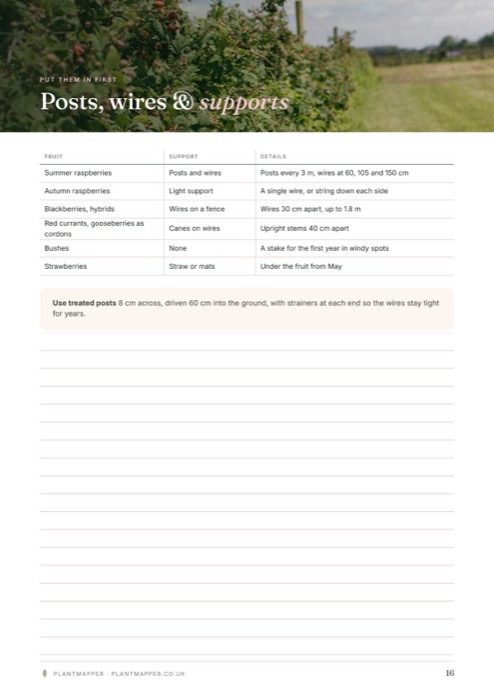
Set sturdy posts every 15 to 20 feet with a crossbar about 2 to 3 feet wide near the top, and run wires along each side at about 3 to 4 feet high. Canes grow between the wires and are held upright without tying.
Pruning summer-bearing reds
Right after harvest, cut the canes that just fruited down to the ground. In late winter, thin the remaining canes to the strongest 4 to 6 per foot of row and trim any winter-killed tips.
Pruning everbearers
For one big fall crop, cut every cane to the ground in late winter while dormant, about February in zones 6 to 8 and March in zones 3 to 5. A mower works on a large patch.
Black & purple raspberries
In summer, pinch new canes when they reach about 3 feet (black) or 3 to 4 feet (purple) so they branch. In late winter, shorten those side branches to about 8 to 12 inches and remove canes that fruited.
Keep the row narrow
Red raspberries spread by root suckers. Mow or dig out any that come up outside a row about 12 to 18 inches wide. A narrow row dries faster and is easier to pick.
Clean up after pruning
Remove all cut canes from the patch and put them in the trash or a yard waste collection rather than the compost pile, since they can carry disease and cane borer larvae.
Unsure? Grow everbearers for a fall crop only. Then the whole pruning job is one late-winter cut to the ground. No telling old canes from new, and less overwintering disease too.
Common pests and diseases
A well-drained, open row of certified plants stays healthy most years. These are the problems US raspberry growers run into most often, and how to manage them with the least spraying.
Spotted wing drosophila
An invasive fruit fly that lays eggs in ripening berries, leaving soft fruit and tiny white larvae. Late-summer and fall crops suffer most. Pick every day or two, chill fruit at once, remove overripe berries and consider fine insect netting.
Japanese beetles
Metallic green beetles that skeletonize leaves and chew fruit in early to midsummer, mainly east of the Mississippi. Hand-pick them into soapy water in the cool of the morning. Traps tend to attract more beetles than they catch.
Raspberry cane borer
If cane tips suddenly wilt in early summer and you see two rings of punctures about half an inch apart, a cane borer has laid eggs. Cut the cane off a few inches below the lower ring and destroy it.
Phytophthora root rot
Canes wilt and die in patches, usually on wet, heavy soil. There is no real cure once it takes hold, so prevent it with raised rows, good drainage and careful watering.
Viruses & cane diseases
Viruses cause mottled leaves, crumbly fruit and slow decline; anthracnose and cane blight leave spots and dead canes. Start with certified virus-free plants, keep the row thinned and remove spent canes promptly.
Birds, deer & gray mold
American robins, catbirds and cedar waxwings will strip ripe berries, so net the row as fruit colors. Fence out deer. In wet weather, pick often and remove moldy fruit to limit gray mold (botrytis).
Start clean, in fresh ground. Most serious raspberry problems arrive on infected plants or build up in old, wet soil. Buy certified stock, plant in well-drained ground that hasn’t grown cane fruit recently, and replace a declining patch rather than nursing it along.
Harvest timing and planning
Harvest timing depends on your zone and variety. Summer-bearing reds usually ripen from June in warmer zones to July in the North; everbearers start in August and keep going until a hard frost. Go over the plants every day or two once picking starts.
Summer crop
Summer-bearing varieties give one heavy flush over three to four weeks in early to midsummer, ideal for jam, freezing and pies as well as eating fresh.
Fall crop
Everbearers ripen from about August until frost. In zones 4 and 5 the first frost may cut the crop short, so choose early-ripening everbearing varieties there.
Pick ripe, pick gently
A ripe berry slips off the core with the lightest pull. If you have to tug, leave it another day. Pick into shallow containers so the berries at the bottom don’t get crushed.
Pick everything ripe
Leaving overripe berries on the plant feeds spotted wing drosophila and gray mold. A clean pick every time keeps the next flush healthier.

Storing, freezing and using raspberries
Fresh raspberries last only a couple of days in the refrigerator, so plan to freeze or cook any extra quickly. They are among the easiest fruits to preserve.
Chill right away
Get berries into the refrigerator within an hour or two of picking, in a single layer on a paper towel if you can. Leave them unwashed until you eat them.
Freeze the extras
Spread berries on a baking sheet, freeze until firm, then pour into freezer bags. They stay separate and are perfect for smoothies, muffins and sauces all winter.
Jam, syrup & pie
Raspberries make a fast-setting jam, a bright syrup for pancakes and a classic pie or crisp. Black raspberries are especially prized for jam.
Summer in a jar
A shelf of homemade jam or a freezer bag of berries brings back the taste of July on a January morning.
Wash just before eating. Raspberries soak up water like sponges, and wet berries turn moldy within a day. Store them dry and cold, and rinse only the portion you are about to eat.
Raspberry questions, answered
The questions American gardeners ask most about growing raspberries.
How long do raspberry plants take to produce fruit?
Everbearing (fall-bearing) raspberries planted in spring usually give a small crop that same fall. Summer-bearing types fruit the following summer, on canes that grew the year before. Both settle into full production by the second or third season.
Do I need two raspberry varieties for pollination?
No. Raspberries are self-fertile, so one variety crops fine on its own. Bees still do the pollinating, though, so plant enough canes to make it worthwhile - a 10 to 15 foot row is a good start for a family.
What is the easiest raspberry for beginners?
An everbearing red such as ‘Heritage’, ‘Caroline’ or ‘Polka’. Grown for a single fall crop, they need only a simple trellis and you prune them by mowing or cutting every cane to the ground in late winter.
What is the difference between summer-bearing and everbearing raspberries?
Summer-bearing (floricane) raspberries fruit once, in early to midsummer, on second-year canes. Everbearing or fall-bearing (primocane) raspberries fruit on first-year canes from late summer until frost, and can give a second, smaller crop the next summer if you leave the canes standing.
When should I prune raspberries?
Cut summer-bearing canes that have just fruited to the ground right after harvest, then thin the new canes in late winter. For everbearing types grown for one fall crop, cut every cane to the ground in late winter while the plants are dormant - roughly February in zones 6 to 8 and March in zones 3 to 5.
What are the tiny white worms in my raspberries?
Almost always spotted wing drosophila larvae. This fruit fly lays eggs in ripening berries, and it hits late-summer and fall crops hardest. Pick every day or two, pick everything ripe, chill the fruit straight away and remove overripe or dropped berries. Fine insect netting over the row also helps.
Can I grow raspberries in Texas or Florida?
It is hard but not impossible. Most raspberries need cold winters and dislike hot, humid summers. In the warm South, try heat-tolerant, low-chill varieties such as ‘Dormanred’ or ‘Bababerry’, give afternoon shade and mulch heavily. In much of Florida and South Texas, blackberries are usually the more reliable cane fruit.
Are raspberries deer resistant?
No. Deer browse raspberry leaves, young canes and fruit, and rabbits nibble new shoots in winter. Where deer pressure is high, a fence about 8 feet tall around the berry patch is the only dependable protection.
Quick tips for a great raspberry patch
The handful of habits that make the difference between a tangled, sickly patch and a productive one.
Know your type
Summer-bearing or everbearing decides how you trellis and prune. Write it on the plant tag.
Drainage first
Plant in a raised row on heavy soil. Wet feet lead to root rot, the number one killer of raspberry patches.
Match the variety to your zone
Hardy summer reds for the far North, early everbearers for short seasons, heat-tolerant types for the South.
Mulch and water steadily
Wood chips or straw plus about an inch of water a week keep shallow roots happy and berries plump.
Prune at the right time
Summer types right after harvest, everbearers in late winter. Get that right and the job takes minutes.
Pick often, net early
Picking every day or two beats spotted wing drosophila; netting as berries color keeps birds off.
Handy garden calculators
Plan your row, soil and mulch before planting day with these free calculators.
Handy for growing raspberries
Our picksAs an Amazon Associate, PlantMapper may earn from qualifying purchases. Prices and availability are set by Amazon.
The Fruit Trees & Berries Starter Kit
This raspberry guide is part of our Fruit Trees & Berries collection. Everything you need to choose, plant, prune and pick raspberries is free on this page. If you like planning on paper, the optional printable workbook helps you map out a whole berry patch.
Download the Soft Fruit Growing Guide
An instant digital download in US Letter and A4 sizes - print it as often as you like. Inside are a soft-fruit growing cycle, a strawberry runner and renewal system, netting and protection planners, harvest logs and seasonal trackers, all in the calm PlantMapper style.
Get the Guide on Etsy (UK edition)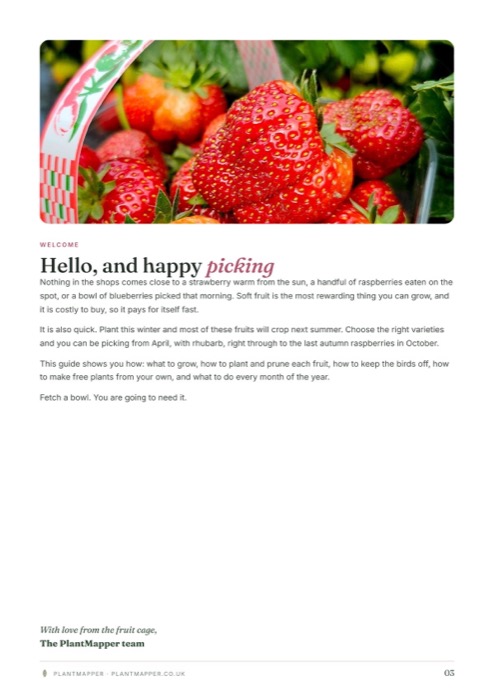
 64-page printable workbook · US Letter & A4
Disclosures & disclaimers
Affiliate disclosure
Some links on this page are affiliate links. If you buy through them, PlantMapper may earn a small commission at no extra cost to you. It never affects which products we suggest.
Gardening disclaimer
All advice is general guidance for home gardens in the United States. Results vary with your zone, soil, rainfall and season - check variety suitability with a local nursery or your county extension office before you buy.
Food-safety note
Homegrown raspberries are safe to eat fresh from the plant. Rinse them just before eating, eat only ripe, sound berries, and throw away any that are moldy or show signs of insect damage.