

Quick answers
- Which cherry tree is best for a small yard?
- A self-fertile tart cherry such as ‘North Star’ (a natural dwarf), or a self-fertile sweet cherry like ‘Lapins’ or ‘Stella’ on a Gisela 5 rootstock, which keeps it to roughly 8-12 ft.
- When should I prune a cherry tree?
- In late winter just before bud break, in dry weather, or in summer right after harvest. Avoid fall pruning. In the rainy Pacific Northwest, summer pruning is often preferred to reduce bacterial canker.
- When is the best time to plant a cherry tree?
- Bare-root trees go in during early spring as soon as the soil can be worked in cold zones, or late fall to winter in mild zones 7-9. Container trees can be planted any time the ground isn’t frozen.
- How do I stop birds eating my cherries?
- Cover the tree with bird netting as the fruit starts to color, tucked in at the base. Robins, cedar waxwings and starlings can strip an unprotected tree in a day or two.
Why grow cherries?
Cherries are expensive in the store for a reason: they bruise easily, ripen fast and don’t keep. Grow your own and you get them at their absolute best, along with a cloud of spring blossom. Sweet cherries are for eating out of hand; tart (sour) cherries are the ones for pies, jam and juice - and they’re much easier to grow.
Picked at peak ripeness
Cherries don’t sweeten after picking, so store fruit is often harvested early. A cherry left on your own tree until it’s fully colored is a different experience.
Spring blossom bonus
A fruiting cherry is as pretty in bloom as many ornamental trees, and its early flowers feed native bees when little else is open.
Tart cherries are easy
Pie cherries like ‘Montmorency’ are self-fertile, cold-hardy to zone 4, tolerate more humidity than sweet cherries and fit a small yard.
Small trees now possible
Dwarfing Gisela rootstocks and natural dwarfs like ‘North Star’ keep cherries small enough to net and pick from the ground.
Cherries in the Fruit Trees & Bushes collection
Cherry Trees
Sweet or tart cherries on dwarfing rootstocks for yards of any size.
You are hereApple Trees
America’s favorite home fruit tree - varieties for cold, heat and everything between.
Pear Trees
Apple’s graceful cousin - long-lived, productive and easy to grow in much the same way.
Plum Trees
Quick-cropping stone fruit, with types for every zone from 3 to 9.
Grow Your Own
Vegetables, herbs and salad greens to grow alongside your fruit.
Best cherry varieties for US gardens
Sweet cherries (Prunus avium) grow best in zones 5-8 where summers are dry - the Pacific Northwest, the intermountain West, California and the Great Lakes fruit belt. Tart cherries (Prunus cerasus) are hardier, more forgiving of humidity and self-fertile. Low-chill sweet cherries now exist for Southern California, but the humid Southeast remains tough sweet-cherry country.
‘Bing’ & ‘Rainier’
The famous Northwest pair. ‘Bing’ is dark red and rich; ‘Rainier’ is yellow blushed red and very sweet. Both need a pollinator and both crack in rain at harvest, so they suit dry-summer climates best.
‘Lapins’ & ‘Stella’ - self-fertile sweets
Dark red sweet cherries that set fruit on their own and pollinate many others. ‘Lapins’ resists cracking better than ‘Bing’ - a smart single-tree choice.
‘BlackGold’ & ‘WhiteGold’
Self-fertile sweet cherries from Cornell that bloom late, so they dodge more spring frosts - a good fit for the Northeast and Great Lakes.
‘Montmorency’ - the pie cherry
The classic bright-red tart cherry grown across Michigan and the Great Lakes. Self-fertile, hardy into zone 4, and the best all-round choice for pies and preserves.
‘North Star’ & bush cherries
‘North Star’ is a self-fertile tart cherry that stays around 8-10 ft. For zones 3-4, the Canadian-bred bush cherries such as ‘Carmine Jewel’ and the Romance series are extremely hardy.
Low-chill sweets for the Southwest
In mild-winter Southern California, ‘Minnie Royal’ and ‘Royal Lee’ are sold as a low-chill pair that pollinate each other. Check your chill hours before you buy.

Where you live decides the type. In a humid summer climate, or zones 3-4, start with a tart cherry like ‘Montmorency’ or ‘North Star’. In the dry West, a self-fertile ‘Lapins’ is the easy sweet-cherry start. Find your growing zone by ZIP code.
Cherry rootstocks explained
A grafted cherry is only as big as its rootstock allows. Traditional seedling stocks make huge trees that are impossible to net; the Gisela series, developed in Germany and now standard in Washington and Michigan orchards, made backyard cherries practical. Sizes below are approximate.
Gisela 5 - dwarf
Keeps a sweet cherry to roughly 8-12 ft and brings it into bearing in two to four years. It needs good, fertile soil, regular water and usually a stake or support.
Gisela 6 & 12 - semi-dwarf
A little larger and more vigorous than Gisela 5 - around 12-15 ft - and a better choice on average soils. Still crop early and heavily.
Krymsk 5 & 6
Russian-bred dwarfing to semi-dwarfing stocks with good cold-hardiness and tolerance of heavier soils. Increasingly sold in the US.
Mazzard - standard
The traditional seedling stock: a 25-35 ft tree, slow to bear but long-lived and more tolerant of heavy, damp soil than Mahaleb.
Mahaleb - for dry, cold sites
Common in the West and under tart cherries. Drought-tolerant and cold-hardy, but it hates wet feet and fails on heavy clay.
How to choose
Small yard: Gisela 5. Average soil and a little more room: Gisela 6 or Krymsk. Dry, cold, well-drained ground: Mahaleb. Large property: Mazzard.
Small trees are easier to protect. On a dwarfing stock you can throw a net over the whole tree and pick from the ground. On a 30 ft Mazzard tree, the birds win.
Cherry pollination
All the common tart cherries are self-fertile. Sweet cherries are trickier: many classic varieties, including ‘Bing’ and ‘Rainier’, need another compatible sweet cherry blooming at the same time. Modern self-fertile varieties take the guesswork out.
Tart cherries: one is enough
‘Montmorency’, ‘North Star’, ‘Meteor’ and the bush cherries all set fruit alone.
Self-fertile sweets
‘Lapins’, ‘Stella’, ‘BlackGold’, ‘WhiteGold’, ‘Sweetheart’ and ‘Benton’ crop on their own and also act as universal pollinators for other sweet cherries.
Bing needs a partner
‘Bing’, ‘Rainier’ and ‘Van’ won’t pollinate each other in every combination. The simplest fix is to plant one of the self-fertile varieties nearby.
Help the bees
Cherries bloom in early spring. Mason bees and other native bees work well in cool weather - a few spring-flowering natives and a mason bee house can noticeably improve fruit set.

Only room for one sweet cherry? Make it a self-fertile variety such as ‘Lapins’ or ‘Stella’. If a neighbor already grows sweet cherries within a few hundred feet, a ‘Bing’ may set fruit too - but don’t count on it.
Planting a cherry tree
Plant bare-root cherries in early spring as soon as the soil can be worked in zones 3-6, and in late fall or winter in zones 7-9. Container trees can go in whenever the ground is workable. Choose the spot carefully: cherries live for decades and dislike being moved.
Sun, air and drainage
Pick a spot with full sun and good air movement, on higher ground rather than a low frost pocket. Cherries bloom early and their roots rot quickly in waterlogged soil.
Plant at the right depth
Dig wide but no deeper than the root ball, spread the roots, and keep the graft union 2-3 in above the soil.
Stake dwarf trees
Trees on Gisela 5 have smaller root systems and benefit from a permanent stake or post. Tie loosely with a flexible tree tie.
Guard, water and mulch
Fit a trunk guard against rabbits and voles, water deeply, and spread 2-3 in of wood-chip mulch in a wide ring kept off the trunk.
Give it a well-drained site above all. More home cherry trees die from wet roots and root rot than from any pest. On heavy clay, plant on a raised mound or berm 12 in or more high.
Soil & sun for cherries
Cherries need full sun, a deep, well-drained soil and - for sweet types - a climate with dry weather at harvest. They’re less forgiving of wet soil than apples or plums.
Full sun
At least 8 hours of sun gives the sweetest fruit and dries leaves quickly after rain, which helps prevent leaf spot and brown rot.
Sharp drainage
A sandy loam or gravelly soil is ideal. Avoid any spot where puddles stand after rain.
Dry summers for sweets
Rain on ripening sweet cherries makes them split. That’s why the big commercial crops are in the dry West - in wetter regions, choose crack-resistant varieties or tart cherries.
pH 6.0-7.0
Slightly acidic to neutral soil suits cherries. Test before planting through your county extension office.

Growing cherries across the US
Tart cherries grow in roughly USDA zones 4-7 (bush cherries to zone 3) and sweet cherries in zones 5-8 - but summer rain and humidity matter as much as winter cold.
Northeast & Midwest
Tart cherries are the reliable choice; Michigan’s fruit belt grows most of the nation’s crop. For sweet cherries, try late-blooming, self-fertile ‘BlackGold’ or ‘WhiteGold’. Watch for leaf spot, black knot and plum curculio, and fence against deer.
Southeast & Gulf Coast
Humid heat, disease and short winters make sweet cherries a gamble. In the upper South (zones 6-7) tart cherries can work on well-drained ground; further south, consider native or ornamental alternatives.
Southwest & California
California’s Central Valley grows superb sweet cherries. In mild-winter Southern California, choose low-chill pairs such as ‘Minnie Royal’ and ‘Royal Lee’. Drip irrigation and afternoon shade on trunks help in desert heat.
Pacific Northwest
East of the Cascades is classic sweet-cherry country - ‘Bing’, ‘Rainier’ and ‘Lapins’. West of the Cascades, wet springs bring bacterial canker and cracking, so choose resistant varieties and prune in dry weather.
Mountain West & Plains
Cold winters, late frosts and wind favor tart cherries and the ultra-hardy bush cherries (‘Carmine Jewel’, Romance series), which shrug off zone 3 winters. Mahaleb rootstock suits dry, alkaline soils.
Native alternatives
For wildlife plantings, native chokecherry (Prunus virginiana) and sand cherry (Prunus pumila) are tough, cold-hardy and feed birds - though chokecherries can host black knot, so keep them away from your fruit trees.
Check chill hours in mild-winter areas. Most sweet cherries need several hundred to over a thousand winter hours between about 32°F and 45°F. If your winters are short, ask your county extension office what your area typically gets before buying.
Watering & feeding
Cherries crop early and fast, so the critical watering window is spring and early summer, when the fruit is swelling. In the dry West, irrigation is essential all season; in the East, water during dry spells.
Water deeply, not often
Give a deep soak once a week in dry weather rather than frequent light sprinkles. Drip irrigation keeps water off the fruit and leaves.
Keep moisture even
Uneven watering - dry, then a sudden soaking - is a common cause of cracking. Mulch and steady irrigation help.
Feed lightly
A modest spring application of balanced fertilizer is usually enough. Too much nitrogen means soft growth, more aphids and fewer flower buds.
Water after harvest too
Next year’s flower buds form in late summer, so keep watering trees in dry regions after the cherries are picked.
Dwarf trees are thirstier. Gisela 5 trees have small root systems and heavy crops, so they need more regular watering than standard trees, especially in hot, dry summers.
Pruning cherry trees
Prune cherries in late winter, just before bud break, in dry weather - or in summer right after harvest. Avoid fall and early-winter pruning, when wounds heal slowly. In the Pacific Northwest and coastal California, many growers prune in dry summer weather to reduce bacterial canker. Our fruit tree pruning guide walks through each tree form.
Sweet cherries: open or leader
Sweet cherries are trained as a modified central leader, or as a low open-center tree on dwarfing stocks to keep fruit within reach.
Tart cherries: open center
Tart cherries are smaller and spreading; an open, vase-like center with four or five main limbs lets in light and air.
Thin, don’t shear
Remove crowded, crossing and inward-growing shoots back to their origin. Cherries fruit on long-lived spurs, so avoid shortening every branch.
Clean cuts, dry days
Cut just outside the branch collar with sharp, clean pruners or a saw, and avoid pruning in wet weather when canker bacteria and fungi spread most easily.
Keep height in check
Cut over-tall leaders back to a side branch in summer to keep the tree low enough to net.
Remove black knot
Cut out any black knot galls (see Problems) as soon as you spot them.
Late winter or summer - never fall. Prune in dry weather, keep cuts light, and focus on keeping the tree small and open enough to net and pick.
Common cherry problems in the US
Cherries face a few serious pests in North America - and birds are still the biggest thief. Sanitation, netting and choosing the right type for your climate prevent most trouble. Your county extension office can give you a spray schedule if you need one.
Birds
American robins, cedar waxwings, starlings and mockingbirds love cherries. Netting is the only reliable defense; drape it over the tree as the fruit colors and fasten it at the trunk.
Spotted wing drosophila
This invasive fruit fly lays eggs in ripening (not just overripe) fruit, so the cherries go soft and maggoty. Pick promptly and completely, remove dropped fruit and use fine insect netting in hot spots.
Cherry fruit fly & plum curculio
Cherry fruit flies (in both East and West) and, east of the Rockies, plum curculio leave larvae inside the fruit. Yellow sticky traps help you time controls; clean up fallen fruit.
Brown rot & cracking
Rain at harvest splits sweet cherries and lets in brown rot. Pick ripe fruit quickly, remove mummies, and grow crack-resistant or tart varieties in humid areas.
Leaf spot & black knot
Cherry leaf spot defoliates tart cherries in wet Midwest and Eastern summers - rake up fallen leaves. Black knot causes hard black galls; cut them out well below the swelling in winter.
Bacterial canker & deer
Bacterial canker causes gummy cankers and dieback, especially in the Northwest. Deer browse young shoots - fence or cage trees until they’re well above browse height.
Net early, pick clean. Netting beats birds, and picking every ripe cherry promptly is the best defense against spotted wing drosophila and brown rot.
Harvesting cherries
Cherries don’t ripen further once picked, so taste before you harvest. Sweet cherries ripen from late May in California to June and July in the Northwest and North. Tart cherries generally follow in late June and July.
Taste test
Ripe sweet cherries are fully colored, firm and sweet. Tart cherries are bright red and come away easily, leaving the pit behind when ripe for processing.
Pick with stems
For eating fresh, pick sweet cherries with the stem attached and hold them by the stem to avoid tearing the fruiting spur.
Harvest quickly
The whole tree ripens within a week or two. Pick everything once it’s ready, before birds and spotted wing drosophila move in.
Pick in the cool
Harvest in the morning and refrigerate right away - cherries soften fast in summer heat.

Storing & using cherries
Fresh cherries keep about a week in the refrigerator, so a good crop is best frozen, canned or dried. Tart cherries are almost always cooked or preserved.
Refrigerate unwashed
Store cherries unwashed in a shallow container in the refrigerator, and rinse just before eating.
Pit and freeze
A cherry pitter makes fast work of a big harvest. Freeze pitted cherries on a tray, then bag them for pies and smoothies.
Pie filling and jam
Tart cherries make the classic cherry pie, jam and canned pie filling. Follow tested canning times from the National Center for Home Food Preservation.
Dried cherries
Dried tart cherries are a favorite in trail mix and baking. Pit, then dry in a dehydrator until leathery.
Get the pitter ready. A tart cherry tree can give 20 or 30 lb of fruit in a good year, and pitting is the slow part. Have the freezer bags and jars ready before picking starts.
Cherry trees - frequently asked questions
The questions American cherry growers ask most, answered simply.
How long does a cherry tree take to fruit?
On a dwarfing Gisela rootstock, sweet cherries often fruit in their third or fourth year. Tart cherries and natural dwarfs like ‘North Star’ are similar. Trees on standard Mazzard stock can take five to seven years.
Do I need two cherry trees?
Not for tart cherries, which are self-fertile. Many sweet cherries, including ‘Bing’ and ‘Rainier’, need a compatible partner, but self-fertile sweets such as ‘Lapins’, ‘Stella’ and ‘BlackGold’ fruit alone.
What zone do cherry trees grow in?
Sweet cherries grow best in USDA zones 5-8 where summers are fairly dry. Tart cherries are hardier, roughly zones 4-7, and Canadian bush cherries such as ‘Carmine Jewel’ take zone 3. Chill hours matter too in mild-winter areas.
Can I grow cherries in the South or in Florida?
Sweet cherries struggle in the humid Southeast and Gulf Coast because of heat, humidity, disease and too little winter chill, and they are not practical in most of Florida. Low-chill varieties such as ‘Minnie Royal’ and ‘Royal Lee’ are grown in dry, mild Southern California instead.
Why are my cherries splitting?
Rain or heavy watering on nearly ripe sweet cherries makes them absorb water and crack. Keep soil moisture even, use drip irrigation, and choose crack-resistant varieties such as ‘Lapins’ or tart cherries where early summer is wet.
Why are there worms in my cherries?
Small white larvae are usually spotted wing drosophila or cherry fruit fly. Pick fruit as soon as it ripens, clear up every dropped cherry, and ask your county extension office about timing controls for your area.
Practical tips
The habits that make the difference between a basket of cherries and a tree full of happy birds.
Match type to climate
Tart cherries for humid summers and cold zones; sweet cherries where summers are dry.
Go self-fertile
‘Lapins’, ‘Stella’, ‘BlackGold’ or any tart cherry gives fruit from a single tree.
Choose a dwarf stock
Gisela 5 or 6 keeps the tree small enough to net and pick.
Plant on a mound
Drainage is everything - raise the planting on heavy soil.
Net before color
Have the net on before the first cherries blush.
Pick every last one
Clean harvesting keeps spotted wing drosophila and brown rot down next year.
Helpful garden calculators
Work out the soil, spacing and materials your trees need with our free calculators, so you plan and plant with confidence.
Useful for growing cherries
Our picksAs an Amazon Associate, PlantMapper may earn from qualifying purchases. Prices and availability are set by Amazon.
The Fruit Trees & Bushes Starter Kit
This cherry guide is part of our growing Fruit Trees & Bushes collection. Everything you need to choose, plant, prune and harvest a healthy cherry tree is free on this page - the optional printable workbook is the calm next step for planning a whole orchard, away from the screen.
Download the Fruit Trees & Bushes Starter Kit
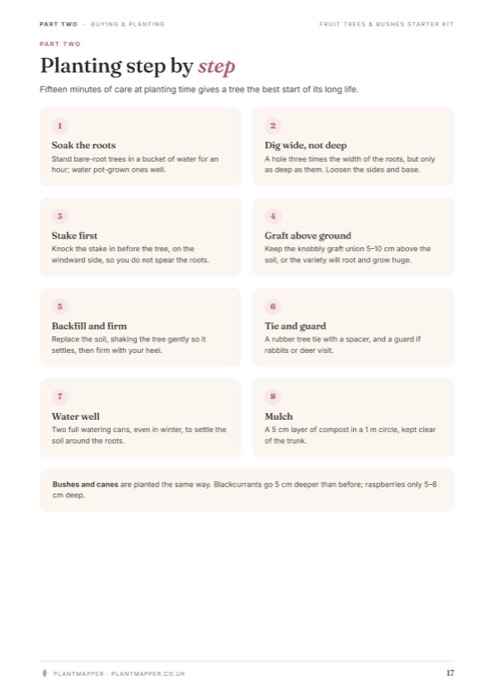
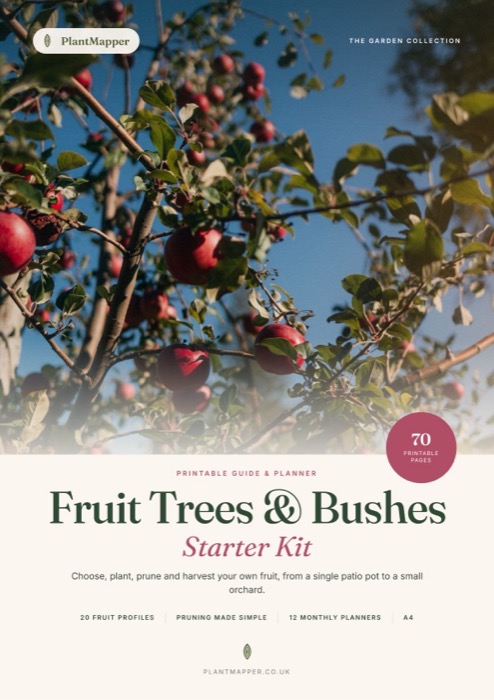
An instant digital download in A4 and US Letter - print it as often as you like and plan, plant and care for fruit trees and bushes. Inside you will find the Orchard Formula, rootstock and pollination planners, orchard layout grids, a fruit directory and seasonal trackers, all in the calm PlantMapper style. Part of the wider PlantMapper Collection.
Download the Starter Kit on Etsy (UK edition)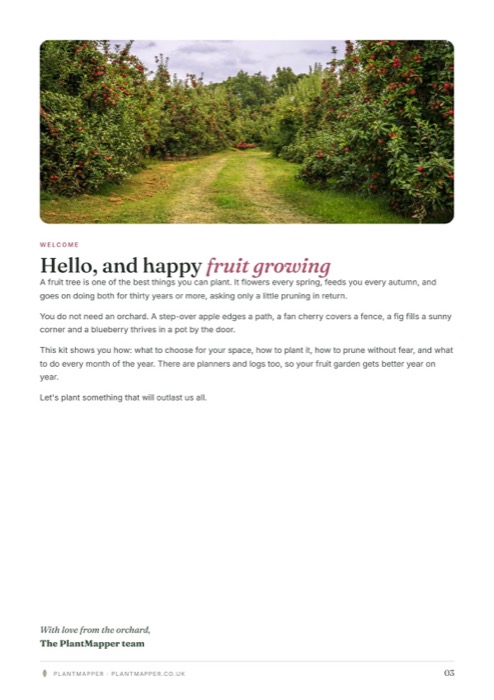
 70-page printable workbook · A4 & US Letter
Download the Fruit Tree Pruning & Training Guide
An instant digital download in A4 and US Letter - print it as often as you like and prune and train healthy, productive fruit trees. Inside you will find the PlantMapper Pruning System, the Branch Priority Matrix, training-system selectors and formative-pruning timelines, plus field logs and trackers, all in the calm PlantMapper style. Part of the wider PlantMapper Collection.
Download the Guide on Etsy (UK edition)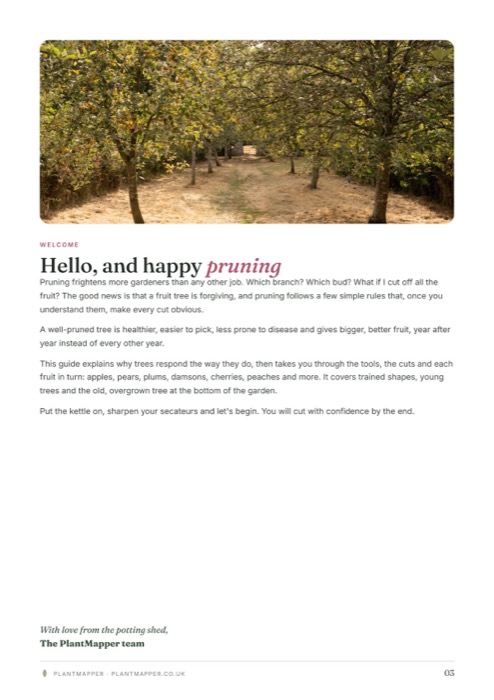
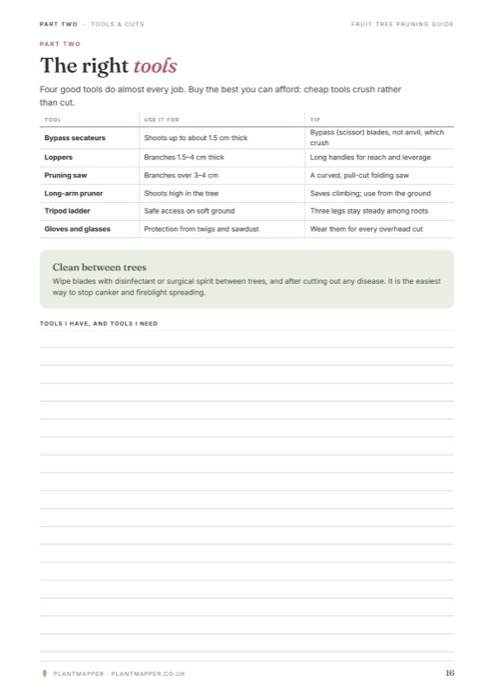
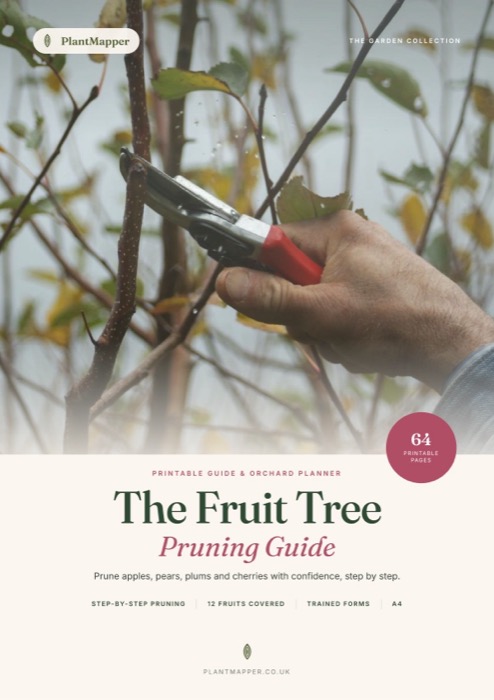 64-page printable workbook · A4 & US Letter
Disclosures & disclaimers
Affiliate disclosure
Some links on this page are affiliate links. If you buy through them, PlantMapper may earn a small commission at no extra cost to you. It never affects which products we suggest.
Gardening disclaimer
All advice is general guidance for home gardens in the United States. Results vary with your zone, chill hours, soil and season - check variety, rootstock and pollination needs with a local nursery or your county extension office before you buy.
Food-safety note
Cherry pits, leaves and bark contain compounds that are toxic if chewed or eaten in quantity - never eat the pits, and keep pets and livestock away from wilted cherry leaves. Wash homegrown fruit before eating, and follow label directions for any spray.