

Quick answers
- How big should a chicken coop be?
- About 3-4 sq ft of floor per standard hen, 8-10 inches of roost bar each, one nest box per 4-5 hens, and a run of 8-10 sq ft per bird.
- Is a wooden or plastic coop better?
- Plastic hoses clean and gives mites nowhere to hide; wood is cheaper, easy to modify and repair. Build quality and ventilation matter more than the material.
- How many chickens should I start with?
- Three to five hens, if your local rules allow. Chickens are flock birds and get stressed alone, and three or four hens keep most families in eggs.
- How do I keep raccoons out of my chicken coop?
- Shut the pop door every night, use two-step or carabiner latches, cover every opening with ½-inch hardware cloth, and bury an apron around the run.
Introduction to chicken coops
The coop is the enclosed house where hens roost at night, lay their eggs and get out of the weather; the run is the fenced yard attached to it. In most of the country the coop also has to cope with real extremes - summer heat and humidity in the South, deep cold and snow load in the North, monsoon rain in the Southwest, wet winters in the Pacific Northwest. And everywhere, suburbs included, something will test it at night: raccoons, opossums, foxes, coyotes, owls, snakes or a neighbor's dog. Pick a coop that is roomy, airy, easy to clean and genuinely predator-resistant and almost everything else about keeping hens gets easier. Still deciding whether chickens are for you? Start with Chicken Keeping Basics and come back when you're ready to shop.
Why a good coop matters
A bargain coop is rarely a bargain. Lost birds, sick birds and mite infestations usually trace straight back to a house that was too small, too stuffy or too easy to break into.
Safe after dark
Most losses happen at night. Raccoons, opossums, weasels and owls go for weak latches, gaps and thin wire - a solid coop shut every evening stops nearly all of them.
Dry, fresh air
Damp air, not cold, causes respiratory illness and frostbite. Good high ventilation and a tight roof keep hens healthy in both a Minnesota winter and a Georgia summer.
A place to lay
Dim, clean nest boxes mean clean eggs in one predictable spot - not hidden under the deck or broken in the run.
Fewer mites and lice
Smooth surfaces and few cracks give chicken mites and lice fewer places to breed, and a coop that's easy to clean gets cleaned more often.
Less stress, less pecking
Enough floor and roost space keeps the pecking order calm. Crowded, dark coops lead to bullying, feather-pulling and fewer eggs.
Money well spent
A sturdy coop lasts ten years or more; a thin flat-pack one may not see three winters. Buying well once is cheaper than replacing it twice.
Chicken coops in pictures
Raised houses with ramps, coops with attached runs and rustic backyard builds - the styles you'll be choosing between.


Types of chicken coops
Most coops fall into a few styles. The right one depends on how many birds you're allowed and want, how much yard you have, and how harsh your winters or summers are.
Raised coop with run
The familiar backyard setup: a house on legs with a ramp down to an attached run. Good for three to eight hens, and the raised floor keeps it drier and denies rats a hiding spot underneath.
A-frame coop
Roosting space up top, a small run below, all in one triangular unit. Light and easy to move on a small lot, but cramped for more than two or three birds and short on headroom for cleaning.
Walk-in coop
Shed-style, tall enough to stand in. The easiest to clean and the best choice for larger flocks or where snow keeps birds indoors for days - many keepers convert a garden shed.
Chicken tractor
A bottomless pen on wheels or skids that you drag to fresh grass every day or two. Great for lawns and pasture; it needs reasonably level ground and a secure floor or skirt at night.
Plastic or composite coop
Molded plastic and recycled-plastic coops (Omlet's Eglu is a well-known example) hose clean, never rot and resist mites. Look for light colors and good venting in hot, sunny regions.
Kits & DIY builds
Flat-pack kits are sold everywhere from farm stores to big-box retailers; quality varies hugely. Building your own from plans is popular too - see DIY vs ready-made below.

Wooden vs plastic coops
It's the first thing most new keepers ask. Neither is automatically better - it depends on your climate, your budget and how much maintenance you're happy to do.
Wooden coops
- Looks at home in any backyard
- Moderates temperature better than thin plastic
- Easy to repair, add vents or extend
- Widest choice of sizes and prices
- Watch: needs paint or sealer; cracks and joints can hide mites; cheap softwood can rot in humid climates
Look for solid lumber or exterior-grade plywood rather than thin panels, then seal or paint the outside with a product labeled safe for animal housing.
Plastic coops
- Hoses clean in minutes
- Very mite-resistant - few seams to hide in
- Rot-proof in wet or humid climates
- No painting or sealing, ever
- Watch: higher price; can get hot in full sun; fewer large sizes
A strong pick for the humid Southeast and the Pacific Northwest, or anyone who hates scrubbing. In hot, sunny places, site it in shade and check the vents are generous.
Build quality beats material. A well-made wooden coop outperforms a flimsy plastic one, and the reverse is true too. Check wall thickness, latches, vent area and how easily you can reach every corner before you worry about what it's made of.
Choosing the correct coop size & space per hen
Most beginners buy too small, partly because coop capacity claims assume tiny birds packed in tight. Use the figures below for standard-size hens like Rhode Island Reds or Orpingtons, and take a box labeled "fits 10 chickens" to mean five or six.
| What | Minimum to allow (standard hen) |
|---|---|
| Coop floor space | 3-4 sq ft per hen (about 2 sq ft for bantams) |
| Roost bar length | 8-10 in per hen |
| Nest boxes | 1 box (about 12 × 12 in) per 4-5 hens |
| Run space | 8-10 sq ft per hen (more is better) |
| Rule of thumb | size for 2-3 more hens than you plan to keep |
Cold and hot climates need extra room. Where snow or extreme heat keeps hens inside for days at a time, aim for the top of these ranges or beyond - cooped-up, crowded birds pick on each other. Plan the run at the same time with our Chicken Runs guide.

Inside the coop: ventilation, nest boxes, perches & flooring
Open the doors and check these before you buy - they decide whether a coop is pleasant to live with or a damp, awkward headache.
Ventilation
Hens breathe out a lot of moisture overnight. Vents near the roof, above roost height, let damp air and ammonia escape without a draft on the birds. A common guide is about 1 sq ft of vent per hen - more in the South, where hot, still nights are the bigger danger.
Insulation
Helpful at the extremes - it slows overnight heat loss in zone 3 winters and keeps the afternoon sun out in Texas - but never at the expense of airflow. Insulate the walls and roof, not the vents.
Nest boxes
One dim box roughly 12 inches square per 4-5 hens, mounted lower than the roosts. Boxes you can open from outside make egg collection quick and keep you out of the bedding.
Roost bars
A 2×4 laid flat (wide side up) makes an ideal roost: hens can cover their toes with their feathers on cold nights. Set roosts higher than the nest boxes and about 12 inches from walls.
Flooring
A slide-out droppings tray or a board under the roosts saves hours. Wood floors can be covered with vinyl or linoleum for easy scraping; whatever you choose, it must stay dry under the bedding.
Easy access
A people-size door, hinged roof or removable side panel makes cleaning a quick weekly job. If you can't comfortably reach the back corner at the store, you won't in January either.
Ventilation is the feature to fuss over. Far more hens get sick from damp, ammonia-laden air than from cold. When you open the coop in the morning you should smell bedding, not ammonia - and frost on the inside walls in winter means you need more venting, not less.
Security & predator protection
Across the US the usual night raiders are raccoons, opossums, foxes, coyotes, skunks, weasels, owls and rats, with hawks by day, snakes after eggs and chicks, and bobcats or bears in some areas. Loose dogs kill a lot of backyard hens too. Our predator protection guide goes deeper; these are the coop basics.
No gaps, no weak spots
A weasel can slip through a 1-inch gap and a raccoon will pry at anything loose. Check corners, eaves, vents and the floor edge, and cover every opening.
Raccoon-proof latches
Raccoons open hook-and-eye latches and simple bolts with ease. Use two-step latches, spring-loaded carabiners or padlockable hasps on every door, lid and pop door.
Hardware cloth, not chicken wire
Chicken wire keeps chickens in, not predators out. Cover windows, vents and the run with ½-inch galvanized hardware cloth, screwed down with washers, and add a buried apron around the run.
Automatic pop door
A light-sensor or timer door that closes at dusk covers the night you're late home - when most flocks are lost. Check the hens are inside before it shuts.
Electric poultry netting
Portable electric netting is very effective against foxes, coyotes, dogs and raccoons around a free-range area. Check local rules on electric fencing in town.
A trail camera
An inexpensive trail camera shows exactly what's prowling at night, so you can fix the weak spot before you lose a bird.
Security & predator-proofing
Amazon picksAs an Amazon Associate, PlantMapper may earn from qualifying purchases. Prices and availability are set by Amazon.
Cleaning & maintenance
The easier a coop is to clean, the more often it gets cleaned. Choose one designed for quick routine jobs and it never becomes a dreaded weekend project. Our cleaning and bedding guides cover the routines in detail.
Trays & removable parts
Slide-out droppings trays, lift-off roofs and roost bars that lift out make the weekly clean a ten-minute job.
Routine clean-out
Scrape the droppings board every day or two and refresh soiled bedding weekly (or run deep litter). Used pine shavings and manure are excellent for the compost pile - let it age before it goes on the vegetable garden.
Deep clean
A few times a year, and after any illness, empty everything, scrub with soap and water, let it dry fully in the sun, then use a disinfectant labeled for poultry housing.
Watch for mites
Check roost ends, seams and the birds themselves (under the vent) regularly, especially in warm weather. Smooth, sealed surfaces make chicken mites and northern fowl mites much easier to spot and treat.
Cleaning & bedding
Amazon picksAs an Amazon Associate, PlantMapper may earn from qualifying purchases. Prices and availability are set by Amazon.
Positioning your coop
Where the coop goes affects how dry, cool and safe it stays - and whether it's even legal. Many cities and counties set rules on hen numbers, roosters, permits and how far a coop must sit from property lines or neighbors' houses, and HOAs can add their own. Check your city or county code and any HOA covenants before you pick a spot.
High, dry ground
Avoid low spots where rain or snowmelt collects. A slightly raised, well-drained site keeps the run from turning into mud - and mud means sick feet and smelly hens.
Shade & shelter for your climate
In the South and Southwest, afternoon shade is essential - heat kills far more hens than cold. In the North, face the run toward winter sun and turn the solid back wall to the prevailing wind.
Mind the trees
A deciduous tree that shades in summer is a bonus, but keep the coop clear of branches raccoons can drop from and limbs that could fall in ice storms or high winds.
Close to the house
You'll visit at least twice a day in rain, heat and snow. Put the coop where you can reach it easily and run a hose or extension cord for a heated waterer - and where you'll hear a commotion at night.
Good neighbors
Even where no setback is required, keep the coop away from neighbors' windows and patios, and keep it clean. Hens are quiet, but smell and flies cause most complaints.
Room to grow
Leave space to extend the run or add a second coop. Most keepers want "just a few more" hens within a year - if your local limit allows it.
Mobile vs permanent coops
A coop that moves keeps grass fresh; one that stays put is bigger and easier to make fortress-tight. Your lot size and climate usually decide it.
Mobile coops
- Fresh forage every time you move it
- No bare, muddy patch on the lawn
- Spreads manure evenly as you go
- Best for small flocks and lighter builds
- Watch: heavy when full; hard to move in snow; gaps at the base on uneven ground let predators in
Ideal on a decent-sized lawn or pasture in mild weather. Move it every day or two, and make sure it locks down tight at night.
Permanent coops
- Larger & sturdier - walk-in sizes
- Easier to predator-proof with a buried apron
- Power on hand for a heated waterer or auto door
- Better for snow and big flocks
- Watch: the ground needs managing so it doesn't turn to mud
The usual choice for suburban lots and cold-winter areas. Cover the run floor with wood chips or sand and add more as it breaks down.
DIY vs ready-made coops
With lumber, hardware cloth and a weekend or two, a homemade coop can beat most store-bought ones. If you're short on time or tools, a well-built kit gets hens home quickly.
Ready-made coops
- Quick - often up in an afternoon
- Design done for you: nest boxes, roosts and doors in place
- Sold everywhere, from farm-supply stores to online
- Warranty on better brands
- Watch: many budget kits use thin wood, weak latches and chicken wire - plan to upgrade them
Read reviews from keepers who've had theirs through a winter. Expect to swap the wire for hardware cloth and the latches for raccoon-proof ones on cheaper models.
DIY builds
- Better value per square foot
- Built to fit your yard, flock and climate
- Sturdier with real lumber and hardware cloth
- Easy to repair and expand later
- Watch: time, tools and getting ventilation and predator-proofing right
Converting a garden shed or playhouse is a popular shortcut. Get the essentials right - space, high vents, hardware cloth, good latches and easy cleaning - and it will outlast any kit.
Common mistakes when buying a coop
Avoid these and you'll skip most of the regrets new keepers share.
!Trusting the box
A "fits 10 hens" coop usually fits five or six. Work it out from square feet per bird, not the label.
!Buying the cheapest kit
Thin wood warps, leaks and gives way to a raccoon. Replacing a cheap coop after one winter costs more than buying a good one first.
!Too little ventilation
Two tiny vent holes aren't enough. Damp, stale air leads to respiratory disease and frostbite - and in the South, heat stress.
!Chicken wire & hook latches
Raccoons reach through chicken wire and open hook-and-eye latches. Fit ½-inch hardware cloth and two-step latches from day one.
!Ignoring local rules
Hen limits, rooster bans, setbacks and HOA covenants catch people out. Check your city or county code before you buy, not after a neighbor complains.
!Forgetting the run
The coop is just the bedroom. Hens need a secure daytime run as well - plan and budget both together with our Chicken Runs guide.
Recommended coop features
Comparing coops side by side? These are the features that are worth paying a little more for.
Plenty of high ventilation
Large vents near the roof, covered in hardware cloth - the most important health feature a coop can have, in any climate.
Outside nest-box access
A hinged lid on the outside lets you grab eggs without stepping into the coop or disturbing the hens.
Droppings tray or board
A pull-out tray or board under the roosts catches most of the overnight mess, so the bedding lasts far longer.
Raccoon-proof latches
Two-step or lockable latches on every door, lid and pop door - never a plain hook or slide bolt.
Ready for an automatic door
A pop door sized to take an automatic opener - the add-on almost every keeper buys eventually.
Room to spare
More space than today's flock needs. Three hens has a habit of becoming six.
The coop & its fit-out
Amazon picksAs an Amazon Associate, PlantMapper may earn from qualifying purchases. Prices and availability are set by Amazon. Healthy adult hens rarely need added heat; never use a heat lamp in a coop, and use only purpose-made, fire-safe electrical products.
Chicken coop cost guide
Prices swing a lot with size, materials, brand and shipping, so take these as rough ranges for new coops in the US rather than quotes.
| Coop type | Typical price |
|---|---|
| Budget flat-pack kit (2-4 hens) | $150-$350 |
| Well-built coop & run (4-6 hens) | $300-$800 |
| Plastic / composite coop | $600-$1,500 |
| Walk-in or shed-style coop | $1,000-$3,000+ |
| Automatic pop door | $100-$250 |
| DIY build (lumber, hardware cloth, hardware) | $300-$900 |
| Beginner sweet spot | a sturdy $400-$800 coop & run |
Put the money into the house. Feeders and waterers can start simple, but a secure, well-vented coop is what keeps hens alive. Budget for hardware cloth and better latches if you buy a cheaper kit. Planning a run or fence too? Our free garden calculators help you estimate materials.
Chicken coop FAQs
What first-time coop buyers ask us most.
How many square feet does a chicken need in a coop?
Plan on about 3-4 square feet of coop floor per standard-size hen (around 2 square feet for bantams), 8-10 inches of roost bar per bird, and a run of at least 8-10 square feet per hen. If your birds are shut in for long stretches by snow or heat, give them more. Manufacturers' capacity claims are usually generous, so treat a "10-hen" coop as a home for five or six.
Are wooden or plastic chicken coops better?
Both can be excellent. Solid wood coops are easy to repair and modify, insulate reasonably well and suit most climates, but need sealing or painting and their cracks can hide mites. Plastic or composite coops hose clean, won't rot in humid Southern summers and give mites few hiding places, but cost more and can heat up in direct sun. Build quality, ventilation and secure latches matter more than the material.
Can a raccoon open a chicken coop door?
Yes. Raccoons have nimble hands and routinely open hook-and-eye latches, simple slide bolts and twist latches. Use two-step latches, spring-loaded carabiners or padlockable hasps on every door, nest-box lid and pop door, and cover any opening with ½-inch hardware cloth rather than chicken wire, which raccoons can tear or reach through.
Do I need permission to put a chicken coop in my backyard?
Often, yes. Many cities and counties limit how many hens you can keep, ban roosters, require a permit, or set a minimum distance between a coop and property lines or neighbors' homes, and HOA rules can be stricter still. Rules vary widely, so check your city or county code and any HOA covenants before you buy or build.
Should I put a heat lamp in my chicken coop?
No. Heat lamps cause coop fires every winter, and healthy adult hens of cold-hardy breeds handle sub-freezing weather well if the coop is dry, ventilated and free of drafts at roost level. Spend the money on a heated waterer base so water doesn't freeze, and on good ventilation, which prevents the damp that causes frostbite.
How much does a good chicken coop cost?
As a rough guide, a well-built coop for three to six hens costs about $300-$800, while walk-in coops and premium plastic designs often run $800 to $2,000 or more. Cheap flat-pack coops under $200 tend to use thin wood and weak latches. Budget another $100-$250 for an automatic door and allow for hardware cloth and a run.
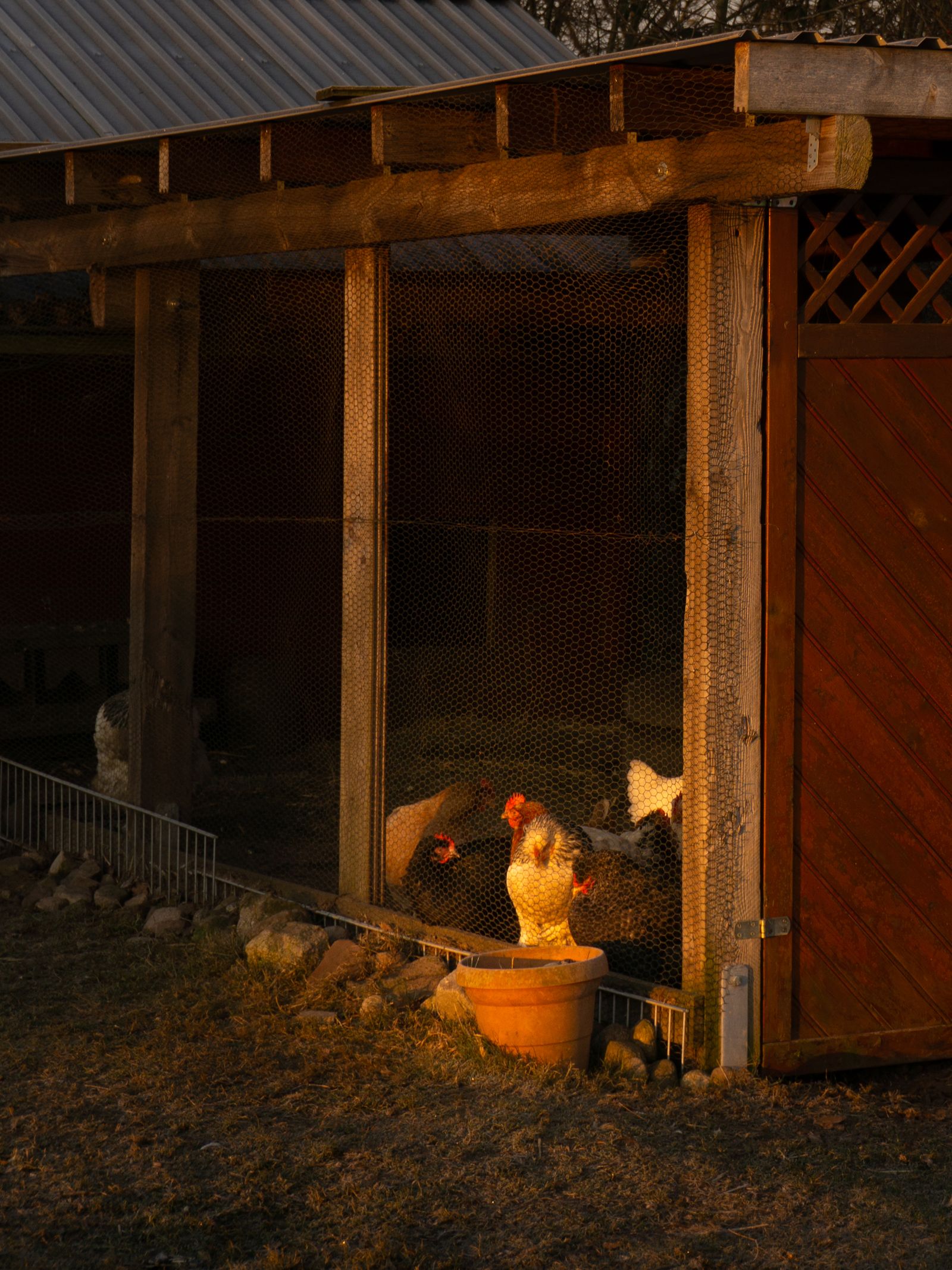
Summary & key recommendations
The short version, if you remember nothing else.
Size by square feet
3-4 sq ft inside and 8-10 sq ft in the run per hen, and ignore optimistic labels. Extra space prevents most behavior problems.
Air before heat
Generous high vents and no drafts at roost level. Dry air prevents frostbite in the North and heat stress in the South; heat lamps prevent nothing and start fires.
Predator-proof every opening
½-inch hardware cloth, raccoon-proof latches, a buried apron and a door that's shut every night.
Easy to clean
Trays, big doors and lift-out roosts mean the coop actually gets cleaned - the key to keeping mites and smells down.
Site it (legally) well
High, dry ground, shade where summers are hot, close to the house - and within your city, county and HOA rules.
Buy quality once
A well-built coop lasts a decade. Pay a little more up front and you won't be rebuilding after the first hard winter.
More from the Chickens guides
The coop is one part of the picture. These guides cover everything else, from the run to winter care.
Get the coop right and the rest falls into place
A roomy, airy, predator-tight coop is the best thing you can buy your hens. Pair it with a secure run, learn the daily routine in Chicken Keeping Basics, and turn the used bedding into garden gold on your compost pile. There's more in the Chickens hub.
Roomy, dry, well vented, predator-proof and easy to clean - check all five and you've found the right coop.

Disclosures & disclaimers
Affiliate disclosure
Some links on this page are affiliate links. If you buy through them, PlantMapper may earn a small commission at no extra cost to you. It never affects which products we suggest.
General guidance
This is general guidance for backyard keepers, not professional advice. Space figures and prices are typical ranges, and chicken-keeping rules differ by state, county, city and HOA - check your local rules and each product's specifications before you buy.
Safety note
Never use a heat lamp in a coop. Use only purpose-made, fire-safe electrical products such as heated waterer bases and flat-panel heaters, keep cords protected from pecking and moisture, and follow the manufacturer's instructions.