

Chickens are not afraid of the cold. They are afraid of damp.
Most of the winter trouble backyard keepers write in about - black-tipped combs, runny eyes, coughing birds, a coop that stinks of ammonia by February, hens that quit laying and lose weight - comes back to moisture rather than cold. Under her outer feathers a hen wears a thick down layer; she fluffs it, tucks her head and roosts pressed against her neighbors. With dry bedding, still air and enough feed she can take a northern-tier cold snap far better than most keepers expect.
What she can’t handle is a coop where her breath and droppings have nowhere to go. Every bird gives off a surprising amount of water vapor overnight, and if it can’t escape it condenses on the coldest surfaces: the roof, the walls and the tips of combs and wattles. That is why a cold, airy coop in Vermont often has no frostbite while a snug, sealed one a few miles away does.
This guide takes winter in the order you meet it: fall preparation before your first hard freeze, the myths to ignore (starting with heat lamps), breeds that cope, ventilation and insulation together, bedding and deep litter, keeping water liquid, feeding, eggs and lighting, frostbite, snow, ice and mud, boredom, predators, health checks, and what to have ready before an ice storm or a power outage. There is a region-by-region guide too, because winter in Florida and winter in North Dakota are different jobs.
Severe weather warnings - act before it arrives
Most winter care is slow, steady housekeeping. These situations are not. If any of the following applies, deal with it now rather than at the end of the page - and where a bird is involved, contact a vet who treats poultry.
Nine winter situations that need action today
Cold weather turns small problems into serious ones quickly, and a short winter day gives you very little time to notice and put things right.
!Water frozen all day
A flock with no liquid water for a full day is dehydrating, and dehydration stops laying, thickens the crop contents and makes impaction likely. Snow is not a substitute. Break the ice and refill now, then fix the system before tonight.
!Blackened, spreading frostbite
Whitened comb tips often heal alone. Tissue that is turning black and spreading, or that is swollen, weeping or smells foul, has become infected and needs veterinary attention. Never rub, massage or cut frostbitten tissue at home.
!Wet birds with no shelter
A chicken soaked to the skin with nowhere dry to retreat loses heat fast. Bring her into a dry, sheltered, draft-free space, let her dry naturally in still air, and never use a hot hairdryer or a naked heat source.
!Ammonia you can smell
If your eyes sting when you open the coop, ammonia is already damaging the birds' airways and paving the way for respiratory infection. Strip the wet bedding out today and open up the high ventilation - do not simply add more bedding on top.
!A hunched, shivering bird
Occasional fluffing in a cold wind is normal. A hen who stays hunched, shivering and still all day, or who sits on the ground instead of perching at dusk, is unwell as well as cold. Isolate her somewhere dry and warm and get advice.
!Snow load on a run roof
Wet snow is heavy, and a sagging tarp or a flat run roof can collapse onto the birds beneath it. Clear it before it builds, and keep sheeting tensioned so water and snow shed rather than pooling.
!Heat lamp in a wooden coop
Bulb heaters in dusty, bedding-filled coops start fires every winter, and a bird that has acclimatized to heat is in real danger if the power fails. If you use any heat, use a purpose-made low-temperature product exactly as the manufacturer instructs, guarded and securely mounted.
!Storm or flood warning
Secure or remove anything that could become airborne, anchor the coop, move birds off ground that floods, and shut them in early. Have somewhere - a shed, a garage, a spare crate - identified in advance in case the coop is damaged overnight.
!Reportable disease suspicion
Winter is the high-risk season for avian influenza. It and virulent Newcastle disease are reportable by law. Call your State Veterinarian or USDA APHIS (1-866-536-7593) immediately. You report a suspicion - you do not wait for proof.
Everything on this page is general guidance for keepers, not veterinary advice, and it is not a substitute for diagnosis or treatment by a qualified poultry or avian veterinary professional. No dosages are given here deliberately. Where a product, supplement or treatment is mentioned, use only items sold for poultry, follow the manufacturer's instructions exactly, and take veterinary advice before treating a laying flock. If you are unsure whether something needs a vet, call and ask - poultry go downhill fast in cold weather, and an early call costs nothing.
What a well-run winter flock looks like
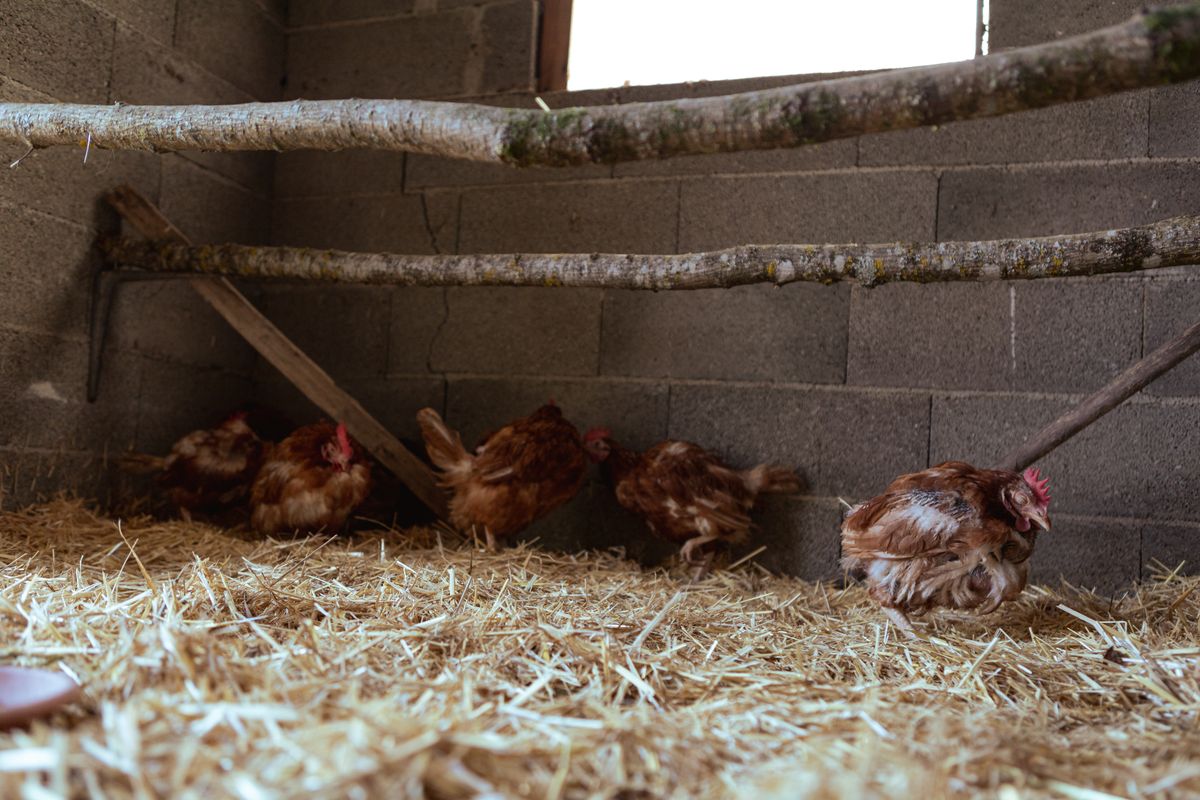
Birds out and busy, a dry patch to stand on, combs in good color and a coop that is cold inside but never wet - four things worth looking for every winter morning.


Preparing your chickens for winter
Nothing on this list is urgent in early fall and all of it is miserable in January. Winterising a coop is a couple of hours of unglamorous work done while the weather is still kind: clean it out, find the draft, open the vents, fix the roof, sort the ground, and get feed and bedding stored dry before you need them.
Work through it in this order. Each step makes the next one easier, and the sequence is deliberate - there is no point sealing draft before you have found out where the water is getting in.
Strip the coop and deep clean it
Empty everything out, scrape the perches, corners and floor, and wash down with a disinfectant sold for poultry, used exactly as the manufacturer instructs. This is also the moment to deal with red mite while you can still see what you are doing - a mite population that survives into winter, when the coop is shut up longer, becomes a serious drain on birds that are already working hard to stay warm. Let everything dry completely before you re-bed.Find the draft - but only the low ones
On the first windy day, shut yourself in the coop with the pop-hole closed and let your eyes adjust. Any daylight or moving air at perch height or below is a draft, and it needs sealing. A lit candle or a strip of tissue held at roosting height shows air movement you cannot feel. Seal those gaps and leave every vent above the birds' heads wide open. That distinction is the single most important thing on this page.Check the roof, gutters and the ground beneath
Fix leaks now. Make sure rain running off the roof is thrown clear of the walls rather than down them, and that the coop is not sitting on ground that turns into a puddle. Raising a coop on blocks, adding a short strip of guttering, or simply moving it two meters onto better-draining ground can transform a damp building.Swap to wide, flat perches
A hen on a narrow round bar grips it and leaves her toes exposed all night. On a flat board 2-4 in wide with the sharp edges rounded off, she settles down and covers her feet with her breast feathers - which is how chickens are designed to keep their toes warm. This costs almost nothing and prevents most cases of frostbitten feet.Sort the water plan before the first frost
Decide now whether you are going with a heated drinker, a heated base, or a manual routine of refilling two or three times a day. Work out where the drinker will sit - out of the wind, off frozen ground, and where birds cannot splash their wattles. Buying and testing kit in mild weather beats discovering at 7am in a hard frost that the cable does not reach.Get bedding and feed under cover
Buy bedding ahead and store it somewhere genuinely dry: damp bedding put into a coop is worse than none. Move feed into metal or hard plastic bins with tight lids, because rodents move indoors as soon as the weather turns and a winter rat problem is far harder to solve than a winter rat prevention.Cover part of the run and lay fresh chip
Roof or sheet a section of the run so there is always dry, snow-free ground, and top up the surface with fresh wood chip while it is still easy to spread. Doing this in fall means the birds have somewhere to stand in December instead of a churned bog.Do a condition check on every bird
Feel the keel bone on each hen before winter starts. Birds coming out of a molt, older hens and anything light going into the cold season needs watching closely. Weighing birds on poultry scales in fall gives you a baseline that makes a January weight loss obvious - thick winter feathering hides a lot.
One job worth doing twice: repeat the draft hunt after the first real gale. Wind from a different direction finds gaps that a calm fall day never revealed, and five minutes with a flashlight after a storm often explains why one end of the perch is always empty.
Winterising the coop
Amazon picksAs an Amazon Associate, PlantMapper may earn from qualifying purchases. Prices and availability are set by Amazon. Always follow the manufacturer's instructions on any product you use around poultry.
Cold-weather myths, including the heated coop question
Winter attracts more well-meaning bad advice than any other part of chicken keeping. Most of it comes from imagining how we would feel in an unheated shed, which is not a useful guide to how a bird wearing several thousand feathers experiences the same night.
×The myth
What gets repeated every December on forums and at farm stores.
- “Hens need a heated coop.” The single most common and most dangerous piece of winter advice.
- “Seal the coop up to keep them warm.” Treats a chicken coop like a house.
- “Put a sweater on her” or fit hen coats routinely. Well meant, and usually counterproductive.
- “They will stop laying because they are cold.” Confuses temperature with day length.
- “Snow is fine, they can eat it.” A reliable way to end up with dehydrated hens.
- “Feed them lots of corn to keep them warm.” Half true, and the half that is wrong causes problems.
✓What is actually true
What experienced keepers and poultry vets consistently say instead.
- Dry and draft-free beats warm. Healthy adult birds handle hard frost comfortably; heat lamps cause coop fires and leave birds unable to cope when the power fails.
- Ventilation is non-negotiable. Moisture must leave the coop overnight or it condenses on combs and roof boards. Cold and dry is healthy; mild and wet is not.
- Feathers work better than fabric. A coat flattens the down layer that traps air and can rub. Coats have a place for a bird bare from molt or feather-pecking, not for a healthy flock.
- Laying is driven by light. Hens wind down below roughly 12-14 hours of daylight, and pick up again as the days lengthen.
- Liquid water, all day. Melting snow costs a bird body heat and supplies far too little water.
- Corn is a supplement. A small handful in the afternoon is useful; a diet of it unbalances the ration and puts fat on inactive birds.
If you do decide to add heat
There are legitimate cases: chicks, a sick or injured bird, a bird bare from a hard molt, very old or very light hens, and genuinely extreme climates. In those situations:
- Use a product designed and certified for poultry - a flat radiant panel or brooder plate rather than a bulb heat lamp - exactly as the manufacturer instructs.
- Mount it so it cannot fall, be knocked, or be reached by birds, and keep it well clear of bedding, cobwebs and dust.
- Aim to take the edge off, not to make the coop warm. A large difference between coop and outdoors leaves birds unable to cope the moment they step outside.
- Have a plan for a power outage, because that is exactly when the temperature drops.
- Check the cable regularly - chickens peck at anything, and a chewed cable in a bedding-filled coop is a fire waiting to happen.
If you are considering heat because a particular bird seems to be struggling, that bird probably needs examining rather than warming. Speak to a vet.
Cold tolerance by breed
All chickens handle cold better than heat, but they are not equal. Three things decide how a breed copes: the size and shape of the comb, whether the plumage is dense and tight or loose and open, and body size. Large single combs stick out into cold air and are the first thing to freeze; small rose, pea and walnut combs sit close to the head and rarely suffer.
Use the table below as a guide rather than a rule. A hardy breed in a wet, drafty coop still gets frostbite, and a large-combed hybrid in a dry, well-ventilated one usually comes through a hard winter untouched. If you are choosing birds with cold in mind, our Best Egg Laying Breeds guide covers temperament and output alongside hardiness.
| Breed / type | Comb | Cold hardiness | What to watch in winter |
|---|---|---|---|
| Wyandotte | Rose | Excellent | Dense plumage and a low rose comb make this one of the best cold-climate breeds. Watch only for damp reaching the skin under that thick feathering. |
| Plymouth Rock | Single, moderate | Excellent | Heavy, calm and well feathered. Comb is single but not large; a little petroleum jelly on the points in a hard frost is ample. |
| Orpington | Single, moderate | Excellent | Very fluffy plumage that traps air well but soaks up water readily - shelter and dry ground matter more than usual. |
| Sussex | Single | Very good | Robust all-rounder. Roosters and larger hens can catch comb tips in a severe frost. |
| Rhode Island Red | Single | Very good | Hardy and steady layer; the classic large single comb needs the usual frostbite precautions. |
| Brahma & Cochin | Pea / single small | Excellent | Built for cold, but the feathered legs and feet ball up with mud and ice. Dry footing is essential, not optional. |
| Chantecler | Cushion | Exceptional | Bred in Quebec specifically for hard winters; tiny comb and wattles. Uncommon, but some US hatcheries and breeders offer it. |
| Australorp | Single | Very good | Dense black plumage, steady winter layer. Standard comb care applies. |
| Hybrid brown layers | Single, often large | Good | Productive and generally robust, but big floppy combs are the most frostbite-prone of all. High-output birds also carry less reserve, so check condition. |
| Leghorn | Single, very large | Moderate | Light Mediterranean breed with a huge comb. Manages cold better than expected but frostbite risk is high; roosters especially. |
| Silkie | Walnut | Poor when wet | Fluff has no locking barbs, so it is not waterproof at all. Silkies must have dry, sheltered housing and cannot be left out in cold rain. |
| Frizzle & feather-curled types | Varies | Poor | Curled feathers cannot trap an insulating air layer. These birds genuinely need extra shelter and, in hard weather, indoor housing. |
| Bantams (most) | Varies | Good, with care | Small bodies lose heat faster relative to size and they eat less at a sitting. Keep feed available all day and shelter generous. |
| Naked Neck / Transylvanian | Single | Reduced | Bare neck skin has no feather cover. Surprisingly robust in dry cold, but exposed and unsuited to prolonged wet freezing weather. |
Scroll the table sideways on a phone. Hardiness assumes a dry, draft-free, well-ventilated coop - housing matters more than breed.
Winter for chickens across the US
“Winter” ranges from a few frosty nights in zone 9 to months below freezing in zone 3. The rules on this page stay the same - dry, ventilated, watered, fed - but what you prepare for first depends on where you live. Find your growing zone to see your average first and last frost dates.
Northern tier & Upper Midwest (zones 3-5)
Deep coldWeeks below 0°F in Minnesota, the Dakotas, Wisconsin, northern New England and upstate New York. Frostbite on single combs and wattles is the classic problem here.
PriorityA heated waterer or heated base, wide flat roosts, high ventilation, a windbreak and cold-hardy breeds with small combs.
WatchLong dark nights: lock up early, test the automatic door in the cold, and store feed for a week of closed roads.
Mid-Atlantic, Ohio Valley & lower Midwest (zones 6-7)
Freeze, thaw, iceSwings between hard freezes and wet thaws, plus ice storms that bring down limbs and power lines.
PriorityDamp and mud control, a covered run, a non-electric water plan for power outages.
WatchIce-loaded trees over the coop, and run roofs under wet snow.
South & Gulf Coast (zones 8-10)
Damp, not coldMostly mild, wet winters with the odd hard freeze - and those freezes catch flocks out because nobody owns a heated waterer.
PriorityDry bedding and runs, mite checks (they rarely get a winter break here), and a plan for the occasional sub-20°F night.
WatchBurst pipes and frozen hoses during a rare cold snap; keep spare water indoors.
Pacific Northwest
Rain for monthsWest of the Cascades winters are wet rather than frigid: mud, damp litter and gray days are the enemy.
PriorityRoof as much of the run as you can, deep wood chips, drainage, and generous coop ventilation.
WatchBumblefoot, respiratory problems and coccidiosis from constantly wet ground.
Mountain West & Great Plains
Wind & big swingsDry cold, brutal wind chill and 40-degree temperature swings in a day, from Montana and Wyoming to Colorado and Kansas.
PriorityA solid windbreak on the prevailing-wind side, anchored coops, heated water and dry, draft-free roosts.
WatchBlizzards drifting over pop doors and runs, and frostbite on birds roosting in the wind.
Desert Southwest & California
Cold nightsMild days but nights that drop below freezing in the high desert, and a wet season in much of California.
PriorityShelter from cold desert nights and wind, dry footing in the rainy months.
WatchPredators are hungrier in winter here too; lock up at dusk.

Coop insulation and draft prevention
Insulation and ventilation sound like opposites and they are not. Insulation slows heat leaving through the fabric of the building. Ventilation lets moist air out through openings you put there on purpose. You can - and should - have both. What you must never do is buy warmth by closing the vents.
Be honest about how much insulating a small coop actually needs. In much of the South and the Pacific Northwest, a sound wooden coop with no low drafts, deep dry bedding and a full complement of birds needs nothing more. Insulation earns its place in thin single-wall plastic or metal coops, in zones 3-5 where weeks below 0°F are normal, and where a coop is exposed to wind on all sides, as on the Plains.
Seal the low gaps
Do firstEverything at or below perch height that lets air move across a roosting bird: warped boards, gaps around the pop-hole, split panels, and the join between wall and floor.
HowWeatherstripping, lumber battens, exterior filler or an offcut screwed over the gap. Anything solid and pecking-proof.
WatchDo not seal the ridge, gable vents or soffit gaps. Those are doing the most important job in the building.
Add a windbreak
High valueWind chill is what actually strips heat from a coop and a run. A solid panel, panel, straw-bale stack or board fence on the prevailing-weather side transforms both.
HowStand it a little away from the coop wall rather than hard against it, so the lumber can still dry out behind.
WatchAnything free-standing must be anchored. Storm winds turn a loose panel into a missile.
Line thin walls
SometimesRigid foam board, reflective bubble insulation or even thick cardboard behind a ply lining raises the surface temperature of a cold wall, which reduces condensation on it.
HowAlways cover the insulation completely with a hard lining. Bare foam is pecked to pieces within days and eaten.
WatchAny cavity you create is a red mite hotel and a rodent nest. Seal the edges properly or leave it out.
Insulate the roof, not the vents
EffectiveThe roof is where most heat is lost and where condensation forms and drips onto the birds. Insulating the roof panel while leaving ridge venting open is the best of both.
HowBoard and insulate between the rafters, leaving a clear air path to the ridge or gable vents.
WatchIf you find drips on the perch in the morning, the roof is under-insulated, under-ventilated, or both.
Get it off cold ground
Easy winA coop sitting on wet earth wicks moisture up into the floor and stays cold. Raising it also removes the rodent harborage underneath.
HowConcrete blocks, treated bearers or purpose-made legs. Aim for enough clearance that air moves under the floor.
WatchCheck the gap is not too small - a low crawl space that rats can use but you cannot reach is worse than none.
Fill the coop, sensibly
FreeBirds heat their own coop. A large coop with three hens in it is a cold coop; the same birds in a right-sized house stay noticeably warmer.
HowSection off part of an oversized coop for winter, or lower the roost area so the warm air pocket sits around the birds.
WatchNever solve this by overcrowding. Crowding raises humidity and ammonia and starts feather-pecking. See Chicken Coops for space figures.
The candle test: on a windy evening, hold a lit candle or a lighter flame at perch height inside the closed coop and walk it slowly along the walls. Where the flame leans, you have a draft. Where it stands still, you do not. Do the same at head height and the flame should move - that is your ventilation working. Take obvious care with a naked flame near dry bedding, and use a flashlight and tissue strip instead if in any doubt.
Ventilation without draft
If you take one idea away from this page, make it this one. A closed coop full of chickens overnight is a humidity generator: breath, droppings and any spilled water all release moisture into a small volume of air. Warm moist air rises. If it can leave through a vent above the birds, it takes the humidity with it. If it cannot, it cools at the roof, condenses, and falls back down as damp - onto the bedding, the lumber and the birds.
Damp is what causes frostbite, not cold. It is also what drives ammonia, respiratory disease, mold and mite populations. Cold and dry is a healthy coop. Mild and wet is a sick one.
✓Good winter ventilation
Air leaves the building, above the birds, all night, every night.
- Vents high - at the ridge, in the gable ends, or under a generous roof overhang, well above roosting height.
- Open all winter, not closed “because it is cold”. The colder the night, the more moisture the air needs to shed.
- Covered with mesh - welded mesh of ½ in or finer, to keep out rodents and wild birds without blocking airflow.
- Sheltered from driving rain by a hood, baffle or overhang, so the vent does not become a water inlet.
- Cross-flow above the birds, so air actually moves through rather than sitting in a pocket.
- Roughly proportionate - as a working rule of thumb, aim for around a tenth of the floor area as open vent, more in a mild damp climate.
×A draft, or a sealed box
Both are common, and both cause the problems keepers blame on the weather.
- Openings at perch height - air moving across a roosting hen all night, stripping warmth and chilling her comb.
- Vents taped up for winter. The most common single mistake, and the direct cause of most backyard frostbite.
- A wet roof interior in the morning. Condensation on the underside of the roof means the moisture is not getting out.
- Ammonia you can smell at chicken height when you open the door - you are already past the point of harm.
- Windows left open low down, which feels like ventilation and behaves like a draft.
- Damp, matted bedding that never dries between top-ups.
Ventilation advice box
The test: go out first thing on a cold morning, before you open anything up, and use your eyes and nose. Dry lumber, no smell, dry bedding and dry combs mean the coop is breathing. Beads of water on the roof, a sharp ammonia catch at the back of your throat, or bedding that feels cold and heavy mean it is not.
The fix, in order: open more high vent first; reduce the moisture going in second (move drinkers out of the coop, remove wet bedding, stop leaks); reduce bird numbers or increase coop size last.
Never respond to a damp coop by closing it up further, and never seal vents to stop a draft - find the low gap that is actually causing the draft and seal that instead.
Bedding options for winter
Winter bedding does three jobs at once: it absorbs droppings and moisture, it insulates the floor, and it gives the birds something dry to stand on and dig through on days when outside is unappealing. Depth matters more in winter than at any other time - a thin scatter that works fine in July becomes a cold, damp mat in December.
Whatever you use, the rule is the same: it goes in dry, it comes out the moment it stops being dry, and it gets topped up more often than you think. A full comparison of materials lives on the Bedding page; this is the winter-specific view.
| Material | Absorbency | Winter verdict | Notes |
|---|---|---|---|
| Large-flake softwood shavings | High | Excellent | The default for good reason: cheap, widely sold, stays loose in cold weather and composts well. Buy dust-extracted grades. |
| Chopped hemp | Very high | Excellent | The most absorbent option and very low dust, so it suits birds with any respiratory history. Costs noticeably more per bag. |
| Chopped, dust-extracted straw | Medium-high | Very good | Warm, springy and ideal for deep litter. Must be chopped and dry - long damp straw mats and molds. |
| Shredded cardboard / paper | High | Good | Warm and absorbent but goes to mush quickly once wet, so it needs changing more often in a damp winter. |
| Dried leaves | Medium | Good as a top-up | Free, and superb for scratching and enrichment. Best mixed into deep litter rather than used alone. |
| Wood chip (run, not coop) | n/a | Best for runs | Free-draining surface for the run. Use bark or chip, not fine mulch, and top up as it breaks down. |
| Fine sawdust | High | Avoid | Very dusty. Irritates airways and makes respiratory problems considerably more likely in a shut-up winter coop. |
| Hay | Medium | Avoid | Molds readily in a damp coop, and moldy bedding is a genuine respiratory risk. Hay is food, not bedding. |
| Sand | Low | Avoid in winter | Works well in hot, dry climates like the Southwest. In a northern or wet winter it holds cold, gets damp and offers no insulation at all. |
Scroll sideways on a phone. Nest boxes are the exception - a generous handful of clean chopped straw or shavings, refreshed often, is ideal in any season.
Droppings boards change everything. A removable board under the perch catches the large majority of the night's droppings - and with them, most of the moisture and ammonia. Scrape it every morning into the compost and the bedding underneath stays dry for weeks instead of days. It is the highest-value five minutes in winter chicken keeping.
The deep litter method
Deep litter is a way of managing coop bedding as a slow compost pile rather than a consumable. Instead of stripping the coop weekly, you build the material up through the season, turn it regularly, and let the droppings break down in place. Done properly it smells earthy, generates a little warmth, hosts microbes that outcompete the ones you do not want, and produces excellent compost in spring.
Done badly it is a wet, ammonia-heavy mat that makes birds ill. The difference is entirely down to moisture, carbon and turning - and to being honest about whether your coop is dry enough to attempt it in the first place.
Getting it started
- Start clean. Strip, clean, disinfect and dry the coop completely first.
- Lay it deep. 4-6 in of dry carbon material - shavings, chopped straw, or a mix with dried leaves.
- Solid floor only. Wood or vinyl over plywood works; bare earth wicks moisture up and defeats the whole system.
- Sprinkle a handful of soil from the run to introduce the microbes that get composting going.
Do not start deep litter in an already-damp coop. Fix the damp first, or use a fresh-bedding routine instead.
Keeping it right
- Turn it. Fork or rake the top through once or twice a week so droppings are buried and air gets in.
- Let the birds help. Scattering a little scratch on the litter gets the flock to turn it for you.
- Top up, do not replace. Add fresh dry material whenever the surface looks soiled or feels damp.
- Build to about 8-12 in by midwinter, then simply maintain it.
Scrape the droppings board separately every day - deep litter handles what falls during the day, not the concentrated overnight load.
Reading the litter
- Good: smells of earth or nothing at all, feels dry and crumbly, and stays loose when you rake it.
- Warning: patches that clump, a faint sharpness in the air, or a surface that packs down flat.
- Stop: any ammonia smell, visible mold, or litter that is wet rather than dry - strip it out and go back to fresh bedding.
- Never add water to deep litter. Poultry deep litter is a dry system, unlike a garden compost pile.
Ammonia damages the lining of a bird's airway before you can smell it clearly. If in doubt, strip it out.
Clearing it out
- Empty in spring when the weather allows a full clean and dry-out.
- Leave a little behind if you plan to run the system again - it seeds the next batch.
- Compost it properly. Chicken droppings are strong and need to rot down before going near growing plants.
- Deep clean and treat for mite while the coop is empty and the weather is kind.
See Composting for how to stack and rot coop litter safely for the garden.
Deep litter is not for every coop
It needs depth, a dry solid floor, generous high ventilation and regular turning. Small plastic coops, coops on bare earth, damp sites and any coop you cannot stand up in to fork the litter are all better served by a simple routine of shallow fresh bedding changed often.
There is no shame in that. A coop stripped and re-bedded every week is a perfectly good system and is considerably more forgiving than a deep litter bed that has gone wrong.
Preventing damp conditions
Damp is the thread running through every winter problem on this page. It causes frostbite by putting water on a comb in freezing air. It causes respiratory disease by releasing ammonia and growing mold. It causes bumblefoot and scaly leg irritation by keeping feet permanently wet. It keeps red mite populations alive through the cold. Fix damp and most of the rest looks after itself.
Water in the coop
Move it out
Drinkers indoors are a major and avoidable moisture source, and birds splash far more than they drink.
- Site drinkers outside under cover wherever the weather and predators allow.
- If it must be indoors, stand it on a spill tray or a raised platform away from bedding.
- Never let a leaking or overflowing drinker soak bedding overnight.
Water on the coop
Throw it clear
Roof water running down walls soaks lumber, which then never dries in winter.
- Extend the roof overhang or fit a short length of guttering with a downpipe well away from the base.
- Check roofing felt and joints before winter and again after any storm.
- Look for green algae on a wall - it marks exactly where water runs.
Water under the coop
Lift and drain
A floor sitting on saturated ground draws moisture upward all winter.
- Raise the coop on blocks or bearers so air can move underneath.
- Re-site it if it stands in a hollow - two meters uphill often solves it entirely.
- Avoid laying plastic sheeting under a coop; it traps water rather than draining it.
Water in the air
Vent it out
The birds themselves are the biggest source, and only ventilation removes it.
- Open high vents and keep them open all winter.
- Watch the roof underside on a cold morning - condensation there is your warning light.
- Never reduce ventilation to make the coop feel warmer.
Water in the bedding
Take it out today
Wet bedding does not dry out in a winter coop - it stays wet until you remove it.
- Scrape the droppings board daily and the bedding lasts many times longer.
- Spot-remove wet patches rather than burying them under fresh material.
- Never put damp bedding into the coop from a leaky store.
Water in the run
Drain and cover
Mud carries worm eggs and coccidia and keeps feet wet all day, undoing everything you fix indoors.
- Cover part of the run so there is always dry ground available.
- Lay deep wood chip and top it up as it breaks down.
- Divert roof water away from the run rather than into it. See Chicken Runs.

Water management and stopping drinkers freezing
A laying hen drinks roughly two to three times the weight of feed she eats, and she needs it spread through the day rather than in one go. In winter that becomes the hardest routine job on a backyard flock, because a drinker left out overnight is a solid block by dawn and stays frozen through a short, cold day.
Dehydration is quiet. A flock short of water eats less, lays less, loses condition, and becomes far more prone to impacted crop - and none of that looks like a water problem when you find it. Getting this right is worth more than every other winter measure combined.
Heated drinkers & heated bases
- Thermostatic products only switch on near freezing, so running costs are low.
- A heated base sits under a standard metal drinker and is often the cheapest route.
- Protect the cable in conduit or trunking - chickens peck at everything, and rodents chew.
- Use an outdoor-rated GFCI outlet and follow the manufacturer's instructions exactly.
Electricity, water and a wooden building need doing properly. If you are not confident, have it installed.
No power? Work with physics
- Bigger volume freezes slower. A deep bucket outlasts a shallow tray by hours.
- Black rubber bowls absorb any daylight warmth, and flex so the ice pops straight out.
- Site out of the wind and in whatever winter sun you get, up off frozen ground on a slab or block.
- Ping-pong balls floating on the surface break the skin as they move - a small help in a light frost.
Two smaller drinkers rotated from the house beats one big one you cannot lift when full.
The manual routine
- Refill morning, midday and dusk in a hard frost - birds drink most in the first hours of daylight.
- Take warm, not hot, water out. It stays liquid longer and hens drink it readily.
- Keep a spare drinker indoors so you can swap rather than stand chipping ice.
- Bring drinkers in at night to prevent freeze damage, and put them back out at first light.
Set a phone reminder for the midday refill. It is the one that gets missed.
Placement and hygiene
- Under cover, outside the coop where possible - it keeps moisture out of the house.
- At back height for the birds, which reduces splashing and stops bedding being kicked in.
- Away from wild birds, which spread disease at shared water in winter.
- Scrub weekly even in cold weather; biofilm still forms and drinkers still need cleaning.
Wattles dipped in water then exposed to freezing air is a classic frostbite route - nipple drinkers avoid it entirely.
Frozen water advice box
Water is the one winter job with no acceptable shortcut. Read this before improvising.
!Never add anything to the water
Salt, sugar, glycerine, antifreeze or alcohol - all of it is either toxic to poultry or harmful in the quantities needed to change the freezing point. Chickens are extremely sensitive to salt.
!Snow is not water
Melting snow costs a bird the body heat she is trying to conserve and provides a fraction of what she needs. Birds “managing on snow” are dehydrating slowly.
!Boiling water cracks drinkers
Hot water into a frozen plastic or galvanized drinker splits it. Use warm water, and thaw solid drinkers indoors rather than forcing them.
!Check it is actually reaching them
Nipple drinkers and cup drinkers freeze at the outlet while the reservoir stays liquid. Press every nipple yourself - do not assume.
!Watch for impacted crop
Dehydrated birds fed dry pellets are far more likely to impact. A crop still hard and full first thing in the morning needs attention - see Chicken Health.
!Electrical kit needs respect
Damaged cables, unrated extension cords and improvised heaters cause fires. Outdoor-rated equipment, GFCI protection, and the manufacturer's instructions - every time.
If a flock has had no liquid water for a day or more, offer clean water immediately and watch for birds that look hunched, have sunken-looking eyes or refuse food. A bird that will not drink after a period without water needs veterinary advice rather than home remedies.
Winter water kit
Amazon picksAs an Amazon Associate, PlantMapper may earn from qualifying purchases. Prices and availability are set by Amazon. Electrical products around poultry must be outdoor-rated and installed exactly as the manufacturer instructs.

Winter feeding and extra energy needs
Chickens keep warm by burning food. A hen in cold weather can eat noticeably more than she does in summer - commonly in the region of ten to twenty-five per cent more, and more again in a hard frost or a long spell of wind and rain. At the same time her natural foraging supply has collapsed: no insects, little green growth, and frozen ground she cannot scratch.
The response is simple and often overcomplicated. Feed the same complete layer ration, make sure there is plenty of it available all day, and add a modest evening carbohydrate so she has something digesting through the longest, coldest part of the night. That is the whole strategy. Our full Feeding Chickens guide covers rations, life stages and grit in depth.
Keep the pellets available all day
EssentialShort days mean fewer hours in which to eat everything a bird needs. Feed should be in front of them from first light until they go up to roost.
WhyBirds top up continuously; a feeder emptied at midday leaves them short for the coldest part of the day.
DoUse a large enough feeder, keep it dry and under cover, and check it in the afternoon rather than only in the morning.
An afternoon handful of corn
UsefulWhole maize or scratch grains late in the day gives the gizzard something slow to work on overnight, and the digestion itself generates a little heat.
How muchA small handful per bird, once a day, in the last hour or two of daylight - a treat-sized amount, not a meal.
WatchMore than that dilutes the balanced ration and puts fat on birds that are much less active in winter.
Keep feed dry, always
Non-negotiableDamp pellets go moldy quickly, and moldy feed causes serious illness. Winter rain and snow reach feeders that were fine all summer.
HowFeeder under a roof or in the coop, rain-hood fitted, and any wet or caked feed thrown away rather than dried out.
WatchFeed stored in a damp shed spoils in the sack. Keep it in sealed bins, off the floor.
Grit matters more, not less
Often missedWhen the ground is frozen or covered, birds cannot pick up the small stones they normally find for themselves - and without grit they cannot grind their food.
ProvideInsoluble granite grit in a separate dispenser, plus oyster shell for laying hens, free choice and under cover.
WatchGrit is especially important where birds are eating whole grain such as corn.
Feed where they can reach it
PracticalA flock that will not walk across snow will not walk to a feeder. Bring the food to them in bad weather.
HowMove or add a feeder under the covered part of the run, or just inside the pop-hole, during heavy weather.
WatchBullied birds get squeezed out at a single feeder. Two feeding stations solves most of it.
Store it against rodents
Winter priorityRats and mice move in as soon as the weather turns, and a feed store is exactly what they are looking for.
HowMetal or hard plastic bins with tight lids, feed lifted at dusk if rodents are active, and no spilled grain left lying.
WatchRodents foul feed, spread disease and will take eggs and chicks. Never use poison where poultry can reach it.
Protein and treats during winter
Winter treats are where good intentions do the most damage. A flock that is genuinely well fed on a complete ration does not need supplementing, and the more scraps and extras go in, the more the carefully balanced pellet gets diluted. The exception is a bird regrowing feathers after a molt, which really is working on a protein-hungry project.
✓Genuinely worth giving
In modest amounts, alongside - not instead of - the layer ration.
- A higher-protein ration during the molt. A growers or molting feed for a few weeks while feathers regrow is the single most useful winter change you can make.
- Scratch or scratch grains, late afternoon. A handful per bird for overnight fuel.
- Leafy greens hung up. A cabbage or kale head on a string is food and enrichment at once.
- Cooked, cooled egg or a little plain cooked fish or meat - excellent protein for a molting bird, in small amounts.
- Warm plain oatmeal or mash on a bitter morning. Gets birds eating and drinking; keep it small and never let it sour or freeze.
- A poultry vitamin or electrolyte supplement during a hard spell, used strictly per the label.
×Skip or strictly limit
Common winter treats that cause more harm than the pleasure is worth.
- Large quantities of corn. Fattening, unbalancing, and it displaces the ration that is actually keeping her going.
- Bread and baked goods. Almost no nutritional value and they fill a small bird up fast.
- Anything moldy. Mycotoxins are genuinely dangerous. If you would not eat it, it does not go in the run.
- Salty, sugary or heavily processed scraps. Chickens are very sensitive to salt.
- Avocado, raw dried beans, rhubarb leaves, chocolate, onion in quantity. Toxic - see Feeding Chickens for the full never-feed list.
- Milk in quantity. Chickens do not digest lactose well and it causes loose droppings.
The ninety-ten rule: if at least ninety per cent of what a hen eats is her complete ration, everything else you add is harmless fun. Once treats climb past that, you are no longer feeding a balanced diet - and winter, when she is relying on that diet to keep warm, is the worst time of year to get it wrong.

Maintaining egg production through winter
Most hens lay less in winter, and many stop altogether. This is normal, healthy and driven by day length rather than temperature: light entering the eye stimulates the hormone cascade that releases an ovum, and below roughly twelve to fourteen hours of daylight that cascade winds down. Add the fall molt - which redirects protein into feathers - and a quiet December nest box is exactly what you should expect.
There is plenty you can do to keep production as good as it naturally can be without resorting to lights, and a handful of things worth doing regardless.
What you can influence
- Feed and water first. A hen short of either will stop laying before she shows any other sign.
- Get the molt over efficiently with a higher-protein ration - birds that finish molting sooner come back into lay sooner.
- Keep them comfortable. Dry, draft-free, parasite-free birds lay better than cold wet ones.
- Reduce stress. Winter is the wrong time to introduce new birds or rearrange the flock.
Red mite is a hidden winter production-killer. Birds reluctant to enter the coop at dusk are telling you something.
What you cannot
- Day length. Only artificial light changes this, with the trade-offs set out below.
- Age. Hens lay best in their first two years and taper steadily after that.
- The molt itself. A hen in full molt will not lay, and forcing her is not possible or kind.
- Breed. Some breeds are simply better winter layers than others.
Pullets hatched in spring often lay right through their first winter without any intervention.
Winter nest boxes
- Extra clean bedding in the boxes, changed often - muddy feet make dirty eggs.
- Collect more often, not less. Eggs freeze and crack in a cold nest box.
- Keep boxes dark and private so birds are not tempted to lay outside where eggs freeze.
- Block boxes at night if birds start sleeping in them - droppings in the nest is a winter hygiene problem.
A cracked frozen egg is a food-safety risk and it teaches the flock to eat eggs. Discard it.
When production stops entirely
- Normal: a gradual fall tail-off, a molt, birds over two years old, and short December days.
- Investigate: a sudden stop in otherwise bright birds, especially with pale combs or reluctance to roost - think red mite, worms or lice.
- Investigate: stopped laying alongside hunching, fluffed feathers, or a bird off her food.
- Check for hidden nests if birds free-range - hens still lay somewhere, just not where you want.
Any bird that is both off lay and off color belongs on the Chicken Health page, not this one.
Winter egg production advice box
Expect less, and let them rest. A winter off is how a hen restores body reserves and grows a new set of feathers, and flocks that get one tend to lay well for more years.
Collect eggs at least twice a day in freezing weather. An egg that freezes expands, cracks the shell and lets bacteria straight in - a cracked frozen egg goes in the trash, not the kitchen.
Do not wash eggs unless you are about to use them. The natural bloom is the shell's defense, and washing - particularly in cold water - draws bacteria through the pores. Brush off dry dirt instead.
If laying stops suddenly rather than gradually, look for a cause: parasites, a fright, a change of feed, or illness. A gradual seasonal decline is expected; an overnight stop is a question worth answering.
Artificial lighting - advantages and disadvantages
Adding light to bring the coop day up to around fourteen hours will keep many hens laying through the darkest months. Commercial producers do it as standard. Whether a backyard keeper should is a genuine judgement call, and reasonable, experienced people land on both sides of it.
✓The case for
Why some keepers light their coop from November to February.
- Steady eggs all year instead of a three-month gap.
- More hours to eat and drink, which genuinely helps birds maintain condition in a cold snap.
- You can see the flock morning and evening, which makes health problems easier to spot in midwinter.
- Better for small households relying on their own eggs, and for anyone selling a few dozen.
- Gentle if done well - a low-level lamp on a morning timer is a long way from a floodlit shed.
×The case against
Why many backyard keepers choose not to.
- A hen is born with a finite number of ova. Laying through winter tends to bring the end of her productive life forward.
- No natural rest. The winter pause lets a bird rebuild reserves after a season of laying and a molt.
- It can delay or prolong a molt, leaving birds in poor feather in the coldest weather.
- Electrical risk in a dusty wooden building, and another thing to fail.
- Welfare questions some keepers are simply not comfortable with for a pet flock.
If you do use a light, do it this way
- Add it in the morning, never the evening. A light that switches off at night leaves hens stranded on the floor in sudden darkness, unable to find the perch. Morning light lets natural dusk do its job.
- Aim for about fourteen hours total of light including daylight. More is not better.
- Keep it dim. Enough to read a newspaper by is plenty; bright light increases pecking and aggression.
- Use a timer and check it weekly - an erratic schedule is worse than none.
- Use LED with a guard, mounted where birds cannot reach it, on protected outdoor-rated wiring.
- Do not light birds in molt, pullets not yet in lay, or birds in poor condition.
- Give them a break. Many keepers light only November to February and let the flock rest either side.
If you are not sure, do nothing. A flock that has a winter off is a completely normal, healthy flock, and eggs return by themselves in late January and February as the days lengthen.

Frostbite prevention for combs, wattles and feet
Frostbite happens when moisture on exposed tissue freezes and destroys the blood supply to it. The critical word is moisture. In a dry, well-ventilated coop, birds routinely come through hard frosts untouched; in a damp, sealed coop, frostbite appears at temperatures that should be harmless. When you see it in a backyard flock, treat it as a message about the building.
Large single combs, long wattles, roosters, and birds that dip their wattles in an open drinker are the most at risk. Feet are affected far less often, and almost always because of narrow perches or standing on wet ice.
Control the humidity
The number one measure
Ventilation above the birds, dry bedding, and no standing water in the coop.
- Open the high vents and leave them open all winter.
- Scrape the droppings board daily - it is the biggest moisture source in the coop.
- Condensation on the roof in the morning means frostbite risk tonight.
Wide, flat perches
Protects the feet
A hen settles down over a flat board and covers her toes with her breast feathers.
- Use a 2-4 in board with the edges rounded off, not a narrow round bar.
- Keep perches level so birds are not fighting for the highest spot.
- Never site a perch directly under a vent or beside a drafty gap.
Keep wattles out of water
A classic route in
A bird that dips her wattles in an open drinker then steps into freezing air is asking for trouble.
- Nipple or cup drinkers remove the problem entirely.
- Raise open drinkers to back height so birds drink rather than wade.
- Watch roosters especially - long wattles reach the water first.
A barrier in a hard frost
Helpful, not magic
A thin film of a chicken-safe petroleum-jelly product on large combs can reduce moisture contact.
- Apply thinly to the comb points and wattles before a forecast hard frost.
- Do it at dusk when birds are calm on the perch.
- Do not rely on it as a substitute for fixing ventilation.
Know what to look for
Check in a cold spell
Frostbite develops over days, and early tissue changes are easy to miss under a red comb.
- Pale or white tips first, then gray, purple or black over several days.
- Mild cases affect only the points and heal on their own.
- Swelling, weeping, spreading black or a bad smell means infection - call a vet.
Dry ground to stand on
Protects feet and hocks
Standing on wet ice or frozen mud all day does far more damage than air temperature.
- Lay straw, chip or bark on a cleared patch outside the pop-hole.
- Cover part of the run so there is always a dry area.
- Feathered-legged breeds need this most - ice balls form in foot feathering.
Frostbite advice box - what not to do
Well-meant first aid causes most of the additional damage in frostbite cases.
!Do not rub or massage
Rubbing frozen tissue tears it at a cellular level and makes the injury permanently worse. Never rub snow on a frostbitten comb.
!Do not thaw and refreeze
Warming tissue that then freezes again causes far more damage than leaving it cold. If you bring a bird in, keep her in.
!Do not cut anything off
Damaged tissue separates on its own. Removing it at home risks bleeding, pain and serious infection. That is a veterinary decision.
!Do not use direct heat
No hairdryers, no hot water bottles against the skin, no heat lamps aimed at a bird. Frostbitten tissue has no normal sensation and burns easily.
!Do not slather the comb
A thin film is protective; a thick coating traps moisture against the skin and can make things worse. Use products sold as poultry-safe.
!Do not ignore infection
Heat, swelling, discharge, a foul smell or a bird gone quiet and off her food means it is no longer just frostbite. That needs a vet.
What to do instead: move the bird somewhere dry, draft-free and only gently warmer, make sure she can reach food and water easily, leave the affected tissue alone, and call a vet if anything is blackening, spreading, swollen or smelling. Then fix the ventilation, because the coop caused it.
Cold-weather bird care
Amazon picksAs an Amazon Associate, PlantMapper may earn from qualifying purchases. Prices and availability are set by Amazon. Nothing here is recommended as a treatment for any condition - follow the manufacturer's instructions and take veterinary advice before treating a laying flock.

Snow, ice and muddy run management
Chickens are unimpressed by snow. Faced with a white surface that does not look or feel like ground, most flocks stand in the pop-hole and refuse to move - and a flock that will not come out stops eating, drinking, exercising and dust-bathing. Fixing that is a five-minute job with a shovel and a bale.
Ice and mud are the bigger long-term problems. Wet ground keeps feet permanently damp, which leads to bumblefoot and irritated scaly legs, and mud is where worm eggs, coccidial oocysts and bacteria persist and multiply. The run surface is not a cosmetic issue.
Snow
- Clear a patch outside the pop-hole down to the ground, even a small one.
- Throw down straw, bark or chip so the surface reads as normal footing.
- Extend the cleared area towards the feeder and drinker so they have a route.
- Brush snow off the run roof before it builds into a collapsing weight.
A flock shut in by snow for days gets bored and starts feather-pecking - getting them outside is a welfare job, not a nicety.
Ice
- Never use rock salt or de-icer anywhere birds walk, peck or drink. Salt is toxic to poultry.
- Break up ice sheets and cover with bedding or chip so birds are not skating.
- Watch pop-hole doors and latches - automatic doors freeze shut or fail to close.
- Check hocks and feet after a spell of standing on frozen ground.
Test an automatic pop-hole door manually during a freeze. A door that fails at dusk is an open invitation to a fox.
Mud
- Cover part of the run - the single most effective change you can make.
- Lay deep wood chip or bark, not fine mulch, and rake it over regularly.
- Divert roof and surface water away from the run rather than through it.
- Rotate the ground if you can, so a churned area gets a season to recover.
Chip needs topping up, not replacing. Rake it level whenever it starts to pack down and hold water.
Wind and rain
- Solid windbreak on the prevailing side of the run - panels, boards or straw bales.
- Shelter at ground level: a lean-to, a pallet roof, or a simple A-frame for birds to duck under.
- Check sheeting after every gale and re-tension anything sagging.
- Bring soaked birds in to dry in still air if they have nowhere dry to retreat to.
A wet, windy 37°F day is harder on a flock than a dry 23°F one. Judge the weather, not the thermometer.
Snow & ice advice box
Six things to check on any morning after snow or a hard overnight freeze.
!Is the water liquid?
First job, every time. Check nipple outlets individually - a full reservoir with a frozen nipple looks fine and delivers nothing.
!Can they get out?
Drifted snow blocks pop-holes and freezes automatic doors. Clear it and check the door cycles properly by hand.
!Is the roof loaded?
Clear snow off run covers and flat coop roofs before it accumulates. Wet snow is far heavier than it looks.
!No salt anywhere
Rock salt and driveway de-icers are toxic to chickens. Never spread them on a path birds can reach, and keep birds off treated paths.
!Are all the birds out?
Count them. A hen still sitting inside when the flock is out is either stuck, unwell or being bullied - check her over properly.
!Is the feed dry?
Blown snow gets into feeders that stayed dry all fall. Wet, caked feed goes moldy fast - discard it, do not dry it out.
Ponds, water butts and troughs freeze over and then thaw thinly. Chickens are poor swimmers and cannot get out of a steep-sided container. Cover, fence or fill anything a bird could fall into before the weather turns.

Exercise and enrichment during bad weather
A chicken's day is built around foraging: scratching, pecking, dust-bathing and exploring for most of her waking hours. Take that away for weeks - frozen ground, no insects, nothing green, and a run she will not walk into - and the behavior has to go somewhere. Usually it goes into her flockmates.
Feather-pecking that starts in a boring January is hard to stop and can escalate into serious injury. Prevention costs almost nothing and takes minutes a day.
Hang the greens
A cabbage, kale head or leafy brassica on a string at head height. Birds work at it for hours and it slows the eating down.
A deep leaf pile
A barrow of dry fall leaves or loose straw in the covered run gives a flock a whole morning of scratching for free.
A dry dust bath
Dry soil, sand and a little wood ash in a covered box or crate. Dust-bathing is how hens control parasites, and it stops entirely when the ground is wet or frozen.
Perches at different heights
Branches, a low bench or a couple of extra bars in the run give birds somewhere to get up off cold ground and somewhere to escape a bully.
Scatter, do not tip
Throwing the afternoon scratch widely across the litter turns two minutes of eating into an hour of foraging, and it turns the deep litter for you.
Space and sight-breaks
Pallets on end, a stack of logs, a propped board - anything a bullied bird can get behind. Visual barriers reduce pecking more than extra square meters do.
Watch for the first bare patch. Feather-pecking usually starts at the vent or the base of the tail on one bird. Deal with it immediately - more space, more to do, check protein and check for mites - because once blood is drawn the flock will keep going and the injured bird must be separated at once. Chicken Health covers wounds and reintroduction.

Winter predator awareness
Winter is the most dangerous season for a backyard flock, for three compounding reasons. Natural prey is scarce, so predators take more risks. Foxes and coyotes are especially active around their midwinter mating season. And the nights are long: in December a fox has fifteen or sixteen hours of darkness to work in, and dusk arrives before most people get home.
Full detail is on the Predator Protection page. These are the winter-specific points worth acting on now.
Lock up at dusk, without exception
CriticalThe pop-hole must be shut every single night. Most losses happen because it was left open once, on a night that got dark earlier than expected.
Winter twistDusk falls before the working day ends. An automatic door with a light sensor solves it - if you test it in the cold.
CheckFrozen mechanisms, iced runners and flat batteries are all winter failures. Test the door by hand weekly during a freeze.
Foxes are bolder now
Higher riskA hungry fox in January will dig, climb, squeeze and try in daylight in a way it would not in June.
CheckWalk the whole perimeter monthly. Look for fresh digging at the base of the fence and for gaps opened by frost heave.
FixBury or skirt mesh outward at ground level, and use welded mesh rather than chicken wire, which a fox can bite through.
Rats move indoors
Winter specialCold weather drives rodents into coops for food and shelter. They foul feed, spread disease, gnaw structures and will take eggs and young birds.
PreventFeed in sealed metal bins, no spillage left overnight, feeders lifted at dusk if rodents are active, and no gaps into the coop.
NeverPlace poison or traps where poultry, pets or wildlife can reach them. Take professional advice on a persistent problem.
Birds of prey and bare ground
SeasonalWinter strips the cover that hides a flock from above. An open run under a bare sky is a different proposition from the same run in summer.
ProvideOverhead cover - netting, a roofed section, low shelters, or something for birds to dive under.
NoteHawks and owls are federally protected under the Migratory Bird Treaty Act. Deterrence and cover only.
Frost damages your defenses
Check monthlyFreeze and thaw lifts fence posts, opens gaps under panels, splits lumber and rusts fixings. Storms finish the job.
CheckLatches, hinges, mesh staples and the ground line, especially after a hard frost or a major storm.
FixNow, in daylight, rather than after a loss. See Chicken Runs for construction detail.
Wild birds and disease
BiosecurityWinter concentrates wild birds around any available feed and water, and that is exactly how avian influenza reaches backyard flocks.
DoFeed and water under cover, clean up spillage, and keep wild-bird feeders well away from the poultry area.
FollowYour State Veterinarian’s and USDA APHIS guidance; report sick or dead birds to them promptly.

Winter health checks
Everything about winter conspires to make health problems harder to see. You visit in the dark at both ends of the day. Birds are fluffed up anyway, so a genuinely hunched bird blends in. Thick winter feathering hides a hen who has lost a quarter of her body weight. And the flock is spending far more time crowded together indoors, which is exactly how parasites and respiratory infection spread.
The answer is not more worrying but a slightly more deliberate routine: a proper look every day, a hands-on check monthly, and a short list of winter-specific things to look for. For the full inspection routine, see Chicken Health.
The daily winter look
Every morning, two minutes
- Count the birds as they leave the coop - and find any that do not.
- Posture: hunched, still and fluffed all morning is not the same as fluffed in a cold wind.
- Combs: good color, no white or blackened tips, no swelling.
- Water is liquid and feed is dry and available.
- Bedding is dry and there is no ammonia smell when you open up.
- Breathing: no rattle, gape, sneeze or bubbling from the eyes.
The monthly hands-on
After dark, when they are calm
- Feel the keel bone - sharp and prominent means she has lost condition under the feathers.
- Weigh her if you can, and compare with the fall baseline.
- Part the feathers at the vent and under the wings for lice eggs and mites.
- Turn the feet over for scabs, swelling or the dark plug of bumblefoot.
- Check leg scales are flat, not raised or crusted.
- Check the crop first thing in the morning - it should be flat and empty.
Winter-specific watch list
Problems that peak in the cold
- Frostbite on combs, wattles and, occasionally, toes.
- Respiratory infection - the direct consequence of a damp, under-ventilated coop.
- Impacted crop in birds short of water and eating dry feed.
- Red mite, which survives happily in a warm coop and drains birds all winter.
- Bumblefoot and scaly leg from standing on permanently wet ground.
- Bullying and feather-pecking in confined, bored flocks.
- Weight loss hidden by thick feathering - the one you will miss without handling birds.
Call a vet in winter if you see
- Laboured or open-mouthed breathing, gasping or audible rattling - respiratory disease moves fast in a cold, damp flock.
- Blackening, spreading or weeping frostbite, or any comb injury that smells or swells.
- A bird unable to stand, or one that has stopped perching and sits on the floor at night.
- Refusal to eat or drink beyond about 24 hours.
- Marked weight loss found at a hands-on check, especially with pale comb or loose droppings.
- Several birds off color at once, or any sudden unexplained deaths - and remember avian influenza is a reportable suspicion, not a diagnosis you have to prove.
Isolate any obviously sick bird somewhere dry, sheltered and draft-free with her own food and water while you make the call, and attend to her last on your rounds.

Emergency planning for severe weather and power outages
Storms, deep freezes, floods and power outages are all normal parts of winter somewhere in the US - ice storms in the South and Midwest, blizzards on the Plains - and every one of them is easier to handle if you decided what to do about it in advance. The planning takes an hour in fall. Improvising takes far longer, in the dark, in the rain.
Have a water plan that needs no electricity
Keep a couple of spare drinkers indoors, know where you will fill them if the power is off, and store several containers of water somewhere that will not freeze. If you are on a well with an electric pump, this is the single most important item on the list.Keep two weeks of feed in dry, rodent-proof storage
Roads close, deliveries stop and feed stores sell out. A sealed bin with a couple of extra sacks of layer pellets costs almost nothing and removes the worst kind of winter panic. Rotate it so nothing sits long enough to spoil.Identify a backup shelter now
A shed, garage, outbuilding or even a large dog crate in a laundry room or garage. If a tree comes down on the coop or the run floods overnight, you want to know exactly where the birds are going before you need to move them in the dark.Keep an emergency kit by the back door
Flashlight and spare batteries, headlamp, spare gloves, a bucket, a claw hammer, cable ties, a roll of strong tape, spare mesh, a tarp, and your vet's out-of-hours number written on paper rather than only in a phone.Storm-proof the setup before the warning
Anchor or weight the coop, remove or tie down anything that could become airborne, re-tension run sheeting, clear gutters, and shut the birds in early on the day a major storm is forecast. Check the run roof will shed rather than pool.Know your flood risk
If any part of the run sits low, work out in advance where the birds go when it floods. Water rises faster than people expect and chickens cannot swim. Never leave birds in a run that is filling.Plan for being away
Winter care is a twice-daily job. Whoever covers for you needs written instructions, a way in, a spare drinker, and a clear description of what “water is frozen” looks like on your setup. Leave a phone number for the vet as well as for you.Write it down and pin it up
One sheet of paper inside the shed door: feed amounts, lock-up time, vet number, where the spare drinkers are, and what to do if the power fails. In an actual emergency, nobody remembers where anything is.
If the power goes off
The three things that fail are heated drinkers, automatic pop-hole doors and coop lighting. Deal with them in that order.
!Water first
Switch straight to the manual routine: warm water out two or three times a day, in the biggest vessel you can carry, sited out of the wind.
!Check the pop-hole door
Automatic doors fail closed or open. Operate it by hand, and if in doubt shut the birds in manually at dusk and open at first light.
!Do not improvise heating
Candles, camping stoves, kerosene heaters and unrated extension cords near bedding cause fires. Birds are safer cold than in a burning coop.
!Feed a little extra
Cold birds burn more energy. Keep pellets available all day and give the afternoon scratch without fail during the cold spell.
!Check every bird by flashlight
Go up at roost and look along the perch. Birds on the floor, apart from the group, or breathing noisily need attention that night.
!Birds acclimatized to heat
If you had been heating the coop, the flock is now the most vulnerable it will be all winter. Add dry bedding, block low draft and watch them closely.
Chickens survive power outages perfectly well. What they do not survive is no water, an open pop-hole overnight, or a coop fire. Get those three right and the rest is inconvenience rather than emergency.
The winter care checklist
Everything on this page, condensed into the jobs that actually get done - by season, by day and by month. Work through the fall column before daylight saving time ends and the rest of the winter looks after itself.
Fall preparation
Before your first hard freeze
- Deep clean the coop and treat for red mite.
- Hunt the draft at perch height and seal them.
- Open up high ventilation and mesh it against rodents.
- Fix the roof and throw rainwater clear of the walls.
- Lift the coop off wet ground if it needs it.
- Fit wide flat perches and check spacing.
- Order bedding and feed and store both dry.
- Buy and test the heated drinker or heated base.
- Cover part of the run and lay fresh wood chip.
- Weigh and condition-score every bird as a baseline.
Every day, all winter
Morning and dusk
- Check water is liquid - and refill at midday in a frost.
- Top up feed and check it is dry and under cover.
- Scrape the droppings board.
- Look at every bird as she comes out; count them.
- Clear snow from the pop-hole area and lay straw.
- Collect eggs at least twice in freezing weather.
- Scatter the afternoon scratch before dusk.
- Lock the pop-hole at dusk, every night, no exceptions.
Every week
One slot, half an hour
- Turn the deep litter and top up with dry material.
- Scrub the drinkers properly, cold weather or not.
- Remove wet bedding and any caked feed.
- Test the automatic door by hand during a freeze.
- Check nest boxes and refresh the bedding in them.
- Rake and top up the run surface where it is packing down.
- Look for the first bare patch of feather-pecking.
Every month
Pick a dry afternoon
- Hands-on check every bird: keel, vent, feet, legs, crop.
- Weigh birds and compare with the fall baseline.
- Walk the perimeter for digging, frost heave and gaps.
- Check for red mite at the perch ends after dark.
- Inspect the roof, felt and fixings.
- Restock feed, bedding and first-aid supplies.
Before a major storm or freeze
When the forecast lands
- Anchor the coop and remove loose items from the run.
- Re-tension sheeting so it sheds snow and water.
- Fill spare water containers and bring them indoors.
- Petroleum-jelly large combs if a hard frost is forecast.
- Shut the birds in early rather than late.
- Check the backup shelter is clear and usable.
- Charge the flashlight and put it by the door.
End of winter
As the days lengthen
- Strip the deep litter and compost it properly.
- Deep clean and mite-treat before the weather warms.
- Repair storm damage to run, mesh and fencing.
- Condition-score the flock after the cold season.
- Expect laying to restart as the days lengthen.
- Rest or rotate the worst of the churned ground.
Winter chicken care: frequently asked questions
The questions keepers ask most often about heated coops, frozen water, frostbite, winter eggs and getting a flock safely through to spring.
Do chickens need a heated coop in winter?
Almost never, even in the northern states. A healthy adult chicken in full feather is far better insulated than most keepers imagine, and a dry, draft-free, well-ventilated coop matters more than any heat source. Heat lamps are the cause of many coop and barn fires every winter: a 250-watt bulb in a dusty building full of shavings is a real fire risk, and birds used to heat suffer badly when the power fails. Exceptions are chicks, sick or injured birds and very old or light birds - and then the answer is a radiant brooder plate or flat-panel heater made for poultry, not a heat lamp.
What temperature is too cold for chickens?
There is no single number. Healthy adult hens of cold-hardy breeds - Wyandottes, Plymouth Rocks, Orpingtons, Brahmas, Australorps - come through nights well below 0°F in zones 3-5, provided the coop is dry, ventilated above the roost and out of the wind, and they have liquid water and plenty of feed. Most standard breeds are comfortable down to around 14°F with no help at all. Damp, drafts and wind chill are what do the harm: a hen in a dry, still coop at 0°F is usually fine, while the same hen in a damp coop at 35°F with air moving across the roost can get frostbite or a respiratory infection. Bantams, Silkies and frizzles need more shelter.
Do chickens stop laying in winter?
Most hens slow down or stop, and that is normal. Laying is triggered by day length, and below roughly 12 to 14 hours of light the reproductive system winds down. Many hens also molt in fall, which diverts protein into growing feathers rather than making eggs. Point-of-lay pullets hatched in spring often lay right through their first winter, and some hybrids keep going too. Production usually returns naturally as the days lengthen in late January and February.
Should I use a light in the coop to keep hens laying?
It is a personal choice with real trade-offs. Adding light to bring the day up to about 14 hours will keep many hens laying through winter, and if you do it, add the light in the morning rather than the evening so birds are never plunged into sudden darkness away from the perch. The argument against is that a hen is born with a finite number of ova; pushing production through winter tends to bring forward the end of her laying life, and it denies her the rest that a molt and a quiet winter provide. Many keepers with small backyard flocks simply accept fewer eggs.
How do I stop my chickens’ water freezing?
In most of the northern half of the US the reliable answer is a heated poultry waterer or a heated base under a metal fount, plugged into a GFCI-protected outdoor outlet with the cord protected from pecking. Without power, refill with warm (not hot) water two or three times a day, use black rubber pans that absorb sunlight and flex so the ice pops out, keep water out of the wind and off frozen ground, and use the largest vessel you can. Never add salt, sugar, glycerin or antifreeze to poultry water.
Can chickens eat snow instead of drinking water?
They will peck at it, but never rely on it. Eating snow costs a bird body heat to melt it and delivers far less water than she needs, so hens on snow alone become quietly dehydrated. Dehydration in winter reduces laying, thickens the crop contents and makes impaction more likely. Liquid water, available all day, is one of the most important things you provide in a cold spell.
Should I insulate my chicken coop?
Insulation helps if - and only if - it does not cost you ventilation and cannot be pecked or soaked. Sealing air gaps at perch height, adding a windbreak on the prevailing-weather side and lining a thin-walled coop are all sensible. Sealing the coop up tight is not: the moisture chickens produce has to escape, and a warm sealed box becomes a damp box within a night. Any insulation must be fully covered so birds cannot peck at it, and kept dry so it does not harbor mold or mites.
How much ventilation does a coop need in winter?
More than most people leave. A chicken breathes out a surprising amount of moisture and her droppings release more overnight, and all of it has to go somewhere. The rule is ventilation high, no draft low: vents above the birds’ heads at the ridge or in the gable so warm damp air rises and leaves, and no moving air at perch level. If the inside of the roof is wet in the morning, or you can smell ammonia when you open the door, the coop is under-ventilated regardless of the temperature outside.
What is the difference between ventilation and a draft?
Ventilation is air leaving the building above the birds. A draft is air moving across the birds. The same vent can be either, depending on where it sits: high in the roof it exhausts moisture; at perch height it strips warmth from a hen and blows on her comb all night. In practice, block low-level gaps at and below roosting height and open up as much as you can above it.
What is the deep litter method?
Deep litter is a system where you build up bedding through the season rather than stripping it out each week. You start with a clean floor and roughly 4-6 in of dry carbon-rich material, turn it over regularly, and add fresh bedding on top when the surface looks soiled. The droppings compost slowly in place, generating a little warmth and a population of microbes that keeps the material sweet. It works beautifully in a dry, well-ventilated coop with a solid floor, and turns into a smelly, ammonia-heavy problem in a damp one.
What is the best bedding for chickens in winter?
Large-flake softwood shavings, chopped hemp or chopped straw all work well: they are absorbent, they stay loose in the cold and they compost afterwards. Hemp is the most absorbent and the least dusty but costs more. Avoid fine dusty sawdust, which irritates airways, hay, which molds readily, and anything already damp when it goes in. Whatever you choose, depth matters more than brand in winter - dry, deep and regularly topped up.
How do I stop my chicken coop getting damp?
Damp is nearly always a ventilation or drainage problem rather than a weather problem. Get moisture out at the ridge, keep the coop off wet ground, make sure rainwater from the roof is thrown clear of the walls rather than running down them, remove wet bedding the moment you find it, and keep drinkers outside the coop or on a spill-proof stand. A damp coop is where frostbite, respiratory disease and red mite all begin.
What should I feed chickens in winter?
The core of the diet stays exactly the same: a complete layer pellet, available all day, plus insoluble grit and fresh water. Birds burn more energy keeping warm in winter, so expect them to eat noticeably more of it. A modest handful of scratch grains or scratch late in the afternoon gives them something to digest overnight, which does generate a little body heat, but treat it as a supplement rather than a food - too much corn dilutes the balanced ration and puts weight on birds that are already less active.
Do chickens need extra protein in winter?
They need adequate protein, which is not the same as extra. A standard layer ration supplies enough for a hen in lay. Birds coming through a molt genuinely do benefit from a higher-protein feed while they regrow feathers, since feathers are largely protein. Beyond that, throwing lots of high-protein treats at a flock unbalances the ration. If you want to add something useful, a little cooked egg, a few dried mealworms, or a switch to a growers or molting ration for a few weeks does more good than a mountain of scraps.
Should I feed warm oatmeal or mash to my chickens?
It is a kindness rather than a necessity, and it does no harm as a small part of the diet. Warm oatmeal or moistened layer pellets on a bitter morning gets birds eating and drinking, which is useful. It should not replace the layer ration, must never sour or freeze in the feeder, and should be plain - no salt, no milk in quantity, nothing sugary.
How do I prevent frostbite on combs and wattles?
Control the moisture first: frostbite in a backyard coop is almost always caused by humidity condensing on a comb, not by air temperature. Ventilate high, keep bedding dry, keep drinkers where birds cannot splash their wattles, and eliminate draft at perch level. Wide, flat perches let a hen sit down over her feet and cover them with her breast feathers. In a hard frost, a thin film of a chicken-safe petroleum-jelly product on large single combs can help, though it is a minor measure compared with getting the air right.
What does frostbite on a chicken look like?
It starts as pale or whitish tips on the comb or wattles, which then darken to gray, purple or black over a few days, and the affected tissue eventually dries and separates. Mild cases affect only the tips of the points and heal on their own. Blackened tissue that is spreading, swollen, weeping or foul-smelling has become infected and needs veterinary attention. Do not rub, massage or apply snow to a frostbitten comb, and do not cut away tissue at home.
Do chickens’ feet get frostbite?
They can, particularly on narrow round perches that leave the toes exposed, or on birds standing on wet frozen ground or ice. A wide, flat perch - a 2-4 in board with the sharp edges taken off - lets a hen settle right down over her feet, and that alone prevents most cases. Keep the run surface dry and give the birds something dry to stand on: bark, wood chip, straw or a sheltered scratching area.
Will chickens walk in snow?
Some will, most hesitate, and a few refuse point-blank. Chickens dislike walking on a surface that does not look like ground, and a flock that will not leave the coop stops eating, drinking and moving. The fix is simple: clear a patch outside the pop-hole, throw down straw, bark or wood chip so they have something familiar underfoot, and roof or tarp part of the run so there is always a snow-free area. Once they have a dry path, most birds come out happily.
How do I manage a muddy chicken run in winter?
Get water off the surface and cover it. Divert roof water away with guttering, improve drainage where you can, and lay a deep, free-draining surface - wood chip is the usual answer - which you top up as it breaks down. Roofing part of the run keeps a dry zone available in any weather. Mud is not just unpleasant: it is where worm eggs, coccidia and bacteria persist, and it is a leading cause of bumblefoot and scaly leg irritation.
How do I keep chickens entertained in winter?
Give them things to work at. A hanging cabbage or greens, a treat block, a deep pile of leaves or straw to dig through, a covered dust-bath of dry soil and sand, a few sturdy perches and branches at different heights, and scattering their afternoon scratch rather than tipping it in a heap all help. Bored, confined birds start feather-pecking, and a winter pecking habit is much easier to prevent than to break.
Are chickens at more risk from predators in winter?
Yes. Natural prey is scarce, foxes are more active around the January to February mating season, and long nights give predators far more cover. Rats also move into coops for food and warmth and will take eggs and chicks. Check the whole perimeter before winter, replace chicken wire with welded mesh where anything could push through, secure the pop-hole every night without exception, store feed in metal bins, and never leave feed out overnight.
How often should I check my chickens in winter?
Every day, twice if you can, and with more attention than in summer. Look at each bird as she leaves the coop, check that water is liquid and feed is dry, feel the keel bone of any bird that looks fluffed up, and inspect combs and feet during a hard frost. Winter hides weight loss under thick feathers, so a hen can be well down in condition before she looks it - a monthly hands-on check matters more in winter than at any other time of year.
Should I let my chickens out in the rain and snow?
Give them the choice. A healthy chicken with somewhere dry to retreat to will regulate this herself, and confining a flock indoors for days creates boredom, pecking and damp bedding. What matters is that there is always a sheltered, dry, wind-free area available - a roofed run section, an open coop door onto dry ground, or a simple lean-to. Birds that get soaked to the skin with nowhere to dry off are a different matter, and they should be brought in.
What should I do in a power outage, ice storm or blizzard?
Plan before it happens. Keep a non-electric water plan, several days of feed in a dry, rodent-proof bin, a flashlight and spare batteries by the door, and a backup shelter such as a garage or shed. If you are on a well, store water in advance. Before an ice storm or blizzard, anchor the coop, remove anything that could blow around, clear snow off run roofs and shut the birds in early. Never improvise heat with kerosene heaters, candles or extension cords near bedding.
Do I need to worry about bird flu in winter?
Yes. Highly pathogenic avian influenza peaks in the US during the fall and spring waterfowl migrations and has reached backyard flocks in most states since 2022. Keep wild birds away from feed and water, feed under cover, keep your coop boots separate, and don’t share equipment with other flocks. Report sudden deaths or sick birds immediately to your State Veterinarian or USDA APHIS (1-866-536-7593); you report a suspicion, not a diagnosis.
Should I put a tarp over the run?
Over part of it, yes - a roofed or covered section is one of the most useful winter improvements, because it guarantees dry, snow-free ground. Cover part rather than all of the run so birds still get daylight and fresh air, fix the tarp tightly so it cannot flap or fill with water, and check it after every storm. In snow country, give it enough pitch and a strong frame: a sagging pocket of wet snow can collapse a run.
Are heat lamps safe in a chicken coop?
They are the single biggest winter fire risk in backyard chicken keeping. A heat lamp bulb runs extremely hot, clamp fixtures slip or get knocked down by birds, and dust, shavings and cobwebs ignite easily - coop and barn fires from heat lamps make the local news every winter. Healthy adult hens don’t need one. If you must provide heat for chicks or a sick bird, use a radiant brooder plate or a flat-panel coop heater designed for poultry, mounted securely and used exactly as the manufacturer instructs.
Which chicken breeds are best for cold winters?
Look for small combs, dense feathering and a solid body. Chanteclers, Wyandottes, Brahmas, Buckeyes, Plymouth Rocks, Orpingtons, Australorps and Dominiques all do well in zones 3-5. Rose and pea combs, as on Wyandottes, Brahmas and Buckeyes, rarely get frostbite. Leghorns and roosters with big single combs are the most frostbite-prone, and Silkies and frizzles need extra shelter because their feathers don’t keep out wet and cold.
Do chickens in the South need any winter care?
Yes, but it is about damp rather than cold. In zones 8-10 the main winter jobs are keeping bedding and runs dry through rainy spells, checking for mites (they rarely get a cold break), and being ready for the occasional hard freeze: have a spare waterer indoors, know how you will thaw water, and close up drafty gaps at roost height. Birds in the South grow less winter down, so a rare sub-20°F night can hit them harder than it would a Minnesota flock.
How do I know if a chicken is too cold?
A cold-stressed bird stands hunched with her feathers fluffed right out, tucks one foot up or holds a wing tight, shivers visibly, and stops moving around or eating. Occasional fluffing in a cold wind is normal; a hen who stays like that all day is not. Pale or dusky comb, a wet breast, and a hen sitting alone on the ground rather than perching are all warning signs - bring her somewhere dry and sheltered and check her over properly.

Summary & key recommendations
If you remember only a handful of things from this guide, make them these.
Dry beats warm
Damp, not cold, causes frostbite, respiratory disease and ammonia. A cold dry coop is a healthy coop; a mild wet one is not.
Vents high, no draft low
Open ventilation above the birds all winter, and seal every gap that lets air move across them at perch height.
Liquid water, all day
The hardest winter job and the most important. Snow is not water, and nothing goes in the water to stop it freezing.
Skip the heater
Healthy adult hens do not need heat. Heat lamps start coop fires and leave birds unable to cope when the power fails.
Same ration, more of it
Keep layer pellets available all day, add a handful of corn late afternoon, and always provide grit when the ground is frozen.
Handle them monthly
Winter feathering hides weight loss completely. A keel-bone check once a month finds what your eyes cannot.
Clear a patch and lock up
Straw over cleared snow gets a flock outside; shutting the pop-hole at dusk every night keeps them alive to enjoy it.
Plan the emergency in fall
Spare water, two weeks of feed, a backup shelter and a flashlight by the door. Storms and power outages are routine, not surprises.
More from the Chickens guides
Winter care sits on top of good housing, good feeding and healthy birds. These guides cover the rest.
Winter is when the predators come
Long nights, scarce prey and the midwinter fox and coyote mating season make the cold months the most dangerous time of year for a backyard flock - so the natural next step from here is Predator Protection. In the meantime, the winter-proofing on this page builds directly on Chicken Coops and Chicken Runs, the ration behind it is covered in Feeding Chickens, and anything that looks like illness belongs on Chicken Health. New to all of this? Take it from the top with Chicken Keeping Basics, or browse the whole Chickens hub.
Dry bedding, open high vents and liquid water - three habits that prevent most of this page.

Disclosures & disclaimers
Not veterinary advice
Everything on this page is general educational guidance for chicken keepers. It is not a diagnosis, not a treatment plan, and not a replacement for examination and treatment by a qualified poultry or avian veterinary professional. If a bird is unwell, injured or behaving abnormally, contact a vet. Where this page describes signs and possible causes, it does so to help you recognize when to seek help - not to help you treat at home.
Medicines, supplements and treatments
No dosages are given anywhere on this page, deliberately. Use only products sold and labeled for poultry, follow the manufacturer's instructions exactly, and observe every stated egg-withdrawal period. Never give a chicken a medicine intended for people or for another species, and take veterinary advice before treating a laying flock.
Heaters, lighting and electrical safety
Heat lamps, heated drinkers, coop lighting and extension cords are a recognized fire and electrocution risk around poultry. Use only outdoor-rated equipment designed for the purpose, install and mount it exactly as the manufacturer instructs, protect cables from pecking and rodents, use GFCI protection, and have any work done professionally if you are not confident. PlantMapper cannot advise on individual installations.
Reportable disease reporting
Winter is the higher-risk season for avian influenza. In the US, suspected highly pathogenic avian influenza and virulent Newcastle disease must be reported promptly to your State Veterinarian or USDA APHIS (1-866-536-7593). Some states also have their own registration, testing or poultry movement rules. Rules change: always check your state department of agriculture’s current guidance.
Affiliate disclosure
Some links on this page are Amazon affiliate links. If you buy through them, PlantMapper may earn a small commission at no extra cost to you. It never affects what we suggest, and no product here is recommended as a treatment for any condition.
Zoonoses and hand hygiene
Chickens can carry bacteria such as salmonella and campylobacter without appearing unwell. Wash your hands thoroughly after handling birds, eggs, bedding or equipment, keep coop footwear separate, and supervise children closely around poultry.