Garden Paths · Materials

Pavers, Flagstone, Gravel, Brick, Concrete and Mulch: Which Path Material Fits Your Yard

The right surface depends on the job, the climate and who walks on it. A mulch trail through a shade garden and a paver front walk can both be the perfect choice, but swap them and both fail. This guide compares every common walkway material on rough cost, lifespan, upkeep, traction in rain and snow, and how it copes with freeze-thaw or desert heat.

General guidance for American yards. Prices are very rough national ranges that vary widely by region and supplier. Some towns limit how much of a lot can be hard surface, regulate work where a walk meets the public sidewalk, or charge stormwater fees, and many HOAs approve hardscape materials and colors, so check locally before you buy. Part of the PlantMapper Garden Paths section.

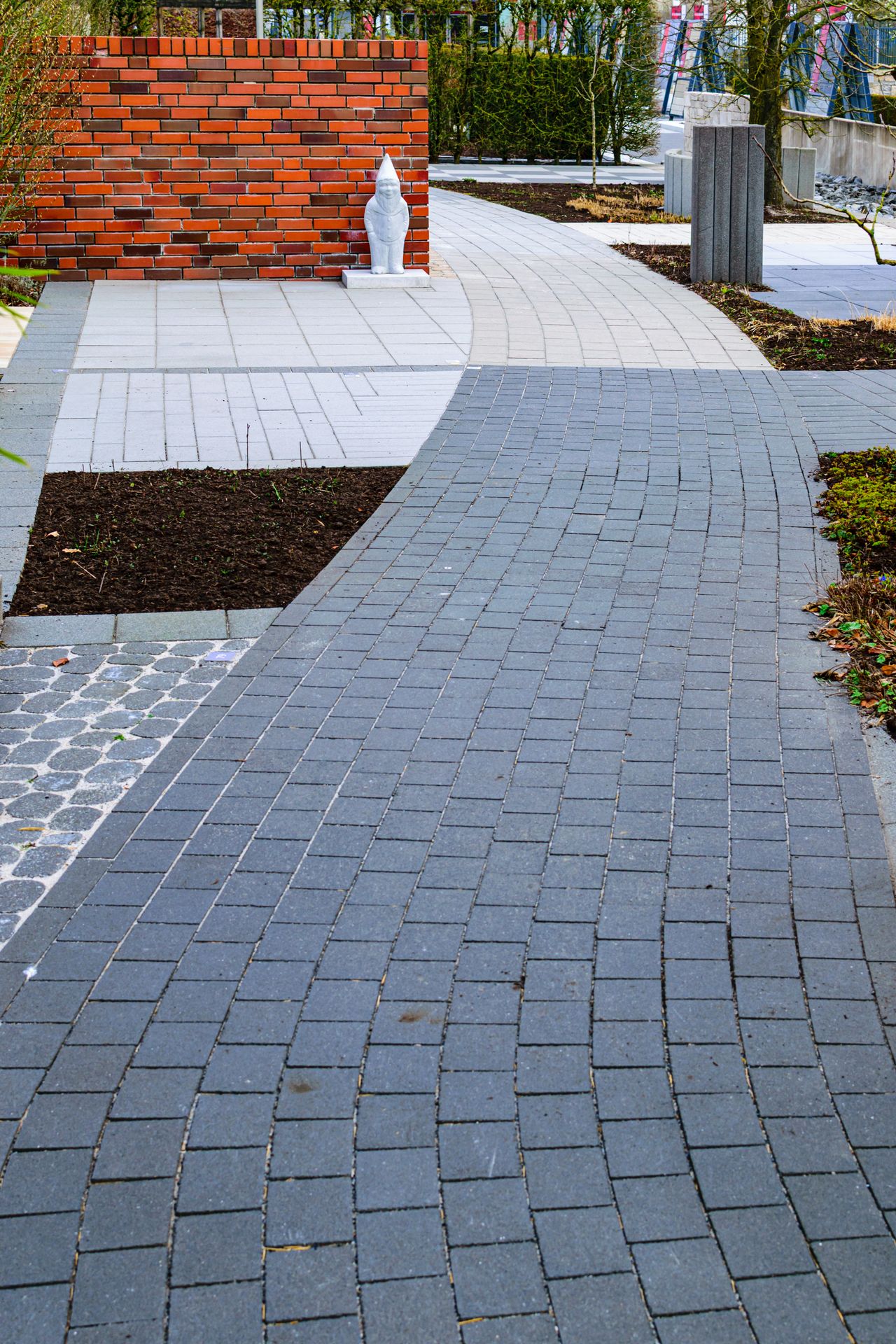
A curved brick walkway through a modern yard with planting on both sides
Choose for the job the path does, not the photo you saved · photograph via Pexels
How to choose

Five questions that narrow the choice

How much traffic does it get? The walk from the driveway to the front door, or the route to the trash cans, needs a firm, solid surface. A trail you stroll down a couple of times a month can be mulch.

Does it curve? Small pieces such as brick, pavers, gravel and decomposed granite follow curves easily. Big flagstones, large-format pavers and landscape timbers need lots of cutting and rarely look natural on a bend.

What are your winters like? In snow country you will be shoveling it, and possibly salting it. Pavers and broom-finished concrete shovel cleanly; pea gravel ends up in the lawn with the snow, and some soft stones and new concrete are damaged by de-icers.

Who uses it? Wheelchairs, strollers, walkers, canes and dark winter evenings all point toward firm, even surfaces with good traction rather than loose gravel or uneven flagstone.

What is the house made of? Repeating something already there, like the brick of the house, the stone on the chimney or the color of the driveway, ties a yard together better than introducing a new material.

At a glance

Every path material side by side

Very rough US prices per square foot for materials only; they vary a lot by region and supplier. Professional installation usually doubles or triples the figure.

Walkway and path materials compared on rough cost, lifespan, upkeep and where they work best.
MaterialRough cost / sq ftLifeUpkeepTractionBest for
Mulch / wood chips$0.50-$1.501-3 yrsTop up every year or twoGood when fresh, poor once it breaks downWoodland and shade gardens, informal or temporary trails
Pea gravel / crushed stone$1-$310 yrs +Rake, top up, weedGood on foot, poor for wheelsInformal paths, cottage-style beds, drainage-friendly routes
Decomposed granite (DG)$1.50-$410-15 yrsTop dress and recompact now and thenGoodFirm natural paths, especially in the West and Southwest
Stepping stones$3-$1025 yrs +Reset now and thenVaries - wet stone in grass is slickCrossing a lawn, light traffic, strolling paths
Concrete pavers$3-$625-40 yrsRe-sand joints, weedVery goodFront walks, curves, everyday routes, permeable builds
Clay brick pavers$4-$850 yrs +Occasional weedingVery goodTraditional and older homes, curves, front walks
Flagstone (bluestone, sandstone, slate)$4-$1050 yrs +Reset or regrout occasionallyDepends on the finish - thermal or natural cleft is bestNatural looks, formal walks, anywhere that should feel permanent
Poured concrete$6-$12 installed30-50 yrsAlmost none; seal decorative finishesGood with a broom finishUtility routes, side yards, wheelchair access
Resin-bound stoneSpecialist, installed only15-20 yrsSweep, occasional washVery goodAccessible paths, seamless curves, a gravel look without loose stone
Wood or composite boardwalk$5-$1510-25 yrsClean twice a yearPoor once algae builds - keep it cleanWet, boggy or uneven ground, wooded lots
Cobblestone / Belgian block$8-$2050 yrs +Repoint, weedGood but bumpy underfootBorders, accents, small areas, historic homes

The two cheapest surfaces, mulch and pea gravel, are also the two that need the most upkeep, are hardest to shovel and are least friendly to wheels. If the path is the main way into the house, or someone in the family uses a wheelchair or walker, spend more at the start on a solid surface. It costs far less than rebuilding in five years.

The informal options

Gravel, decomposed granite and mulch

Loose surfaces are cheap, let rain soak in, forgive a slightly uneven base and need no special skill. They are also the materials people most often regret on a main walkway, especially where it snows.

Pea gravel and crushed stone

Cheap, permeable, relaxed

Gravel over a compacted crushed stone base and landscape fabric. Inexpensive, fully permeable and pleasantly crunchy underfoot, which also tells you when someone is coming up the path.

  • Angular crushed stone (3/8 to 3/4 inch) locks together and stays put. Round pea gravel feels nice underfoot but rolls and wanders, so it needs a deeper edge.
  • Keep it 1 1/2 to 2 inches deep. Deeper is harder to walk on, not better.
  • It must have solid edging or it will be in the beds and the lawn within a season.
  • Hard going for wheelchairs, strollers and canes, and awkward to shovel or snowblow.
  • Rake it back into place a couple of times a year and top up every few years.

Decomposed granite

The firm natural surface

Granite weathered down to fine gravel and grit that packs into a firm, tan surface. It is the classic path of the Southwest and California, and it stays put far better than loose gravel.

  • Spread 2-3 inches over a compacted base, in thin lifts, misting and compacting each one.
  • Choose stabilized DG (with a binder mixed in) for walks, slopes and wheelchair use; natural DG stays dustier and softer.
  • Lets some water through rather than all of it.
  • Needs firm edging, and some top dressing and recompacting every few years.
  • Tracks indoors on shoes when it is wet or dusty, so add a doormat or a paved landing at the door.

Mulch and wood chips

Cheap, soft and short-lived

Shredded bark or wood chips over landscape fabric. The cheapest path you can build, soft underfoot and just right through a woodland or shade garden where pavers would look out of place.

  • Spread 3-4 inches over fabric; no crushed stone base is needed.
  • It breaks down: top it up every year or two and expect to redo it every few years.
  • Great for trails and access paths, poor as the main route to the house.
  • Turns slick once it rots to fine material, especially in shade.
  • Many cities and tree services give away wood chips free; in termite country, keep any mulch path away from the foundation.

What loose surfaces need

Two must-haves

Loose paths fail in the same two ways, and both are easy to avoid.

  • Solid, continuous edging. Without it, gravel and mulch drift into the lawn and beds until the path disappears.
  • Landscape fabric between the base and the top layer. It keeps the loose material from sinking into the stone and blocks weeds from below, though seeds still sprout in debris that lands on top.
  • Neither replaces the other, and both cost little next to rebuilding.
  • See Landscape Edging and Building a Path.
The hard-wearing options

Pavers, brick and flagstone

For a walk you use every day, individual pavers or stones are hard to beat: firm, level, easy to shovel and good for decades on a proper crushed stone base. Because they are separate pieces, they also flex with freeze-thaw rather than cracking like a slab.

Large-format pavers and concrete slabs

Big square or rectangular units, from 12x12 inches up to 24x24 or larger. Quick to cover a straight run, with a clean modern look, and today’s textured finishes are a long way from the plain gray squares of old.

  • Rough cost: $3-$8 per sq ft for materials. Life: 20-30 years or more.
  • Best on straight paths; on a curve they need a lot of cutting and rarely look right.
  • Pick a textured finish rather than smooth. Smooth concrete or porcelain in shade grows algae and turns slick, and is treacherous with a skim of ice.
  • Large units are more prone to rocking and cracking if the base settles, so the 4-6 inch compacted base matters even more.
  • Cheap thin slabs can fade and flake in freeze-thaw country. Look for products made for exterior paving in your climate.

Interlocking concrete pavers

Small, dense concrete units laid on an inch of sand with sand-filled joints. The workhorse of American walkways: they curve easily, can be lifted and relaid, single broken pavers can be swapped out, and permeable versions are widely sold.

  • Rough cost: $3-$6 per sq ft for materials. Life: 25-40 years.
  • The best unit paver for a curved walk and the easiest to install well as a DIY project.
  • Very good traction, helped by the joints, and they shovel and snowblow cleanly.
  • Handle freeze-thaw well because each paver can move a little without cracking; a heaved section can be lifted and reset.
  • Permeable pavers sit on clean open-graded stone with wider joints so rain soaks straight through.
  • Need solid edge restraint, usually plastic or aluminum spiked every 12 inches, or the field spreads.
  • Polymeric sand in the joints resists weeds and ants better than plain sand.

Clay brick pavers

The warmest-looking practical path material, and the one that ages best. The color runs all the way through the fired clay so it does not fade, and a well-laid brick walk looks better at forty years than at four. A natural match for Colonial, Craftsman and older brick homes.

  • Rough cost: $4-$8 per sq ft for materials. Life: 50 years and more.
  • Buy paving brick rated for exterior paving in your climate (in freezing areas, look for brick graded for severe weathering), not ordinary building brick, which can crumble and flake when water freezes in it.
  • Small units take a curve beautifully. The pattern - running bond, herringbone, basketweave - changes the whole character.
  • Herringbone interlocks best and resists shifting on a busy route.
  • Excellent traction in rain.
  • Slow to lay because there are so many pieces, which is where the labor cost goes.

Flagstone and cobblestone

Bluestone, Pennsylvania and Arizona flagstone, sandstone, limestone, slate and granite cobbles or Belgian block. Nothing looks more settled, and nothing costs more. It is the choice where a walk should look as if it has always been there.

  • Rough cost: $4-$10 per sq ft for flagstone, $8-$20 for cobbles and Belgian block. Life: effectively permanent.
  • The finish matters more than the stone. Honed and sawn faces are smooth and turn slick with algae or ice. Natural cleft, thermal (flamed) and tumbled finishes grip far better.
  • Limestone and some sandstones absorb water, stain and can be pitted by de-icing salt; granite and bluestone are harder and tougher.
  • Cobbles and small pieces curve well; big flagstones do not.
  • Lay it dry on stone dust over a compacted base, or in mortar on a concrete slab. Mortar straight on gravel cracks wherever the ground freezes.
  • Salvaged stone is often cheaper and better looking than new, if you can find enough.
The practical options

Poured concrete and resin-bound stone

Two seamless surfaces that are easy to overlook. Neither is glamorous, but both solve problems pavers and gravel do not.

✓Poured concrete - the honest utility walk

  • The cheapest truly permanent hard surface: roughly $6-$12 per sq ft installed for a plain broom finish, lasting thirty to fifty years.
  • No joints to weed or re-sand, and almost no upkeep.
  • A broom finish grips well; a smooth troweled finish turns slick when wet or icy.
  • The obvious answer for a side yard, the route to the shed or trash cans, or a wheelchair ramp where function beats looks.
  • Stamped, colored or exposed-aggregate finishes add character, but cost more and need resealing every few years.
  • Needs control joints about every 4-5 ft on a walk so cracks form in the joints, and no rock salt the first winter while it cures.

!Resin-bound stone - the accessible option

  • Small stone mixed with a clear resin and troweled over a solid base, giving a firm, seamless surface that lets water through.
  • Still a specialist product in the US, installed by a limited number of contractors, so get several quotes.
  • The best mix of a gravel look and wheelchair-friendly smoothness there is.
  • Permeable, which can help where a town limits hard surface or charges stormwater fees.
  • Follows curves with no cutting and no joints.
  • Needs a sound concrete or asphalt base and a professional installer. Do not confuse it with resin-bonded stone, which is scattered on top of a resin coat and is a different, weaker product.
Special situations

Boardwalks, timber steps, stepping stones and grass

Four approaches that solve particular problems rather than suiting every path.

Wood or composite boardwalk

For wet or uneven ground

Deck boards on joists raised off the ground. The best answer where the ground is soggy, rough or full of tree roots and you would rather not dig.

  • Use lumber rated for ground contact for anything touching or near the soil; cedar, redwood or composite for the boards.
  • Gap the boards as the maker recommends so water drains and air moves.
  • Grooves do not make boards less slippery - lay them smooth side up and keep them clean.
  • Algae is the real slip risk. Clean twice a year, or add grit strips on a shady run.
  • Ten to twenty-five years. See the Decks section for framing.

Landscape timber steps

Getting up a slope

Timbers set as risers with gravel or mulch behind each one turn a slope into easy, informal steps. Cheap, quick and effective on a gentle bank.

  • Use pressure-treated landscape timbers rated for ground contact, or naturally rot-resistant wood. Old creosote-treated railroad ties are not for food gardens or play areas.
  • Pin each timber with rebar driven well into the ground so it cannot shift or heave.
  • Make treads generous: at least 12 inches deep, and 14-16 inches feels easier outdoors.
  • Wood gets slick - a strip of galvanized mesh or grit tape on the front edge fixes it.
  • See the Landscape Timbers section.

Stepping stones

The lightest touch

Individual flagstones or pavers set into grass, gravel or groundcover. Cheap, quick and the least intrusive way across a lawn.

  • Set them flush with or a little below the sod so the mower passes straight over.
  • Space them to a natural stride - walk it and mark where your feet land, usually about 24 inches center to center.
  • Bed each stone on 1-2 inches of sand on firm ground, or they rock and sink.
  • Not for wheels, walkers or heavy daily traffic, and hard to shovel.
  • Wet stone surrounded by wet grass is slippery - choose a textured stone.

Mown grass paths

The cheapest path of all

A mown strip through taller grass or a native meadow planting. Free, natural and the best route through a wildflower area, but it is a seasonal surface.

  • Mow at your lawn’s normal height - often 3-4 inches for cool-season grasses - every week or so in the growing season.
  • It wears to mud on a daily route or through a wet spring.
  • Make it 3-4 ft wide so people do not walk in the same line every time.
  • Perfect through a meadow or orchard; useless for the trash cans.
  • Stepping stones set into the grass give a hard surface where the wear happens.
Safe in rain, snow and ice

Traction and winter safety

Most slippery paths are slippery for one of two reasons: a film of algae on a smooth surface in damp shade, or ice where water has been left to sit. The finish, the drainage and how often the path is cleaned matter more than the material itself.

Traction of common path surfaces, dry and wet.
SurfaceDry gripWet gripNotes
Clay brick paversExcellentVery goodTexture and joints both help
Concrete paversExcellentVery goodOne of the safest surfaces there is
Resin-bound stoneExcellentVery goodExposed stone gives constant texture
Natural cleft or thermal flagstoneExcellentGoodStays good if kept clean
Broom-finished concreteExcellentGoodAvoid a smooth troweled finish outdoors
Pea gravel / crushed stoneGoodGoodGrips feet, but rolls under wheels and canes
Decomposed graniteGoodGoodCan turn greasy where it stays wet in shade
Honed stone, porcelain or sealed stamped concreteGoodPoor to fairThe worst offenders - smooth surfaces in shade or under ice
Wood boardwalkGoodPoor once algae buildsCleaning is the fix, not grooves
Stepping stones in grassGoodPoorWet stone plus wet grass at the edges
Rotted mulchFairPoorFine when fresh, slick once it breaks down

✓Keeping a path safe underfoot

  • Clean it a couple of times a year - a stiff brush, water and an outdoor surface cleaner removes the algae behind most slips.
  • Choose textured, natural cleft, thermal or tumbled finishes over honed and sawn ones, especially in shade.
  • Let in light and air: cutting back overhanging shrubs dries a path faster than any product.
  • Clear wet leaves in fall - on pavers they are nearly as slick as ice.
  • Make sure water runs off instead of sitting in a low spot, where algae always comes back and ice forms first.
  • Light any path used after dark, especially at steps; see Landscape Lighting.

!Snow, ice and de-icers

  • Shovel early, before snow is packed into ice, and use a plastic blade or a shovel with a poly edge on pavers, stamped concrete and stone.
  • Rock salt (sodium chloride) stops working in hard cold and harms lawns and plants along the walk. Calcium or magnesium chloride work at lower temperatures; sand or grit adds traction without melting.
  • Keep all de-icers off concrete in its first winter, and avoid products containing ammonium nitrate or ammonium sulfate, which attack concrete.
  • Soft limestone and some sandstones are pitted by salt; bluestone, granite and good pavers hold up better.
  • Ice forms first where water sits, so fixing a puddle fixes an ice patch for good.
  • Keep a bucket of sand or a pet-safe ice melt by the door on a shaded walk - it actually gets used.
Letting water through

Permeable surfaces

Permeability decides what happens to rain that lands on your path. A path that lets water soak in needs no drainage plan, keeps runoff off the street and out of the basement, and in some towns counts in your favor on hard-surface limits.

How much water each path surface lets through.
SurfacePermeable?Notes
Pea gravel / crushed stoneFullyThe simplest permeable path there is
Mulch or wood chipsFullyFeeds the soil as it breaks down
Permeable paversFullyPurpose-made, on clean open-graded stone with wide joints
Resin-bound stoneFullyAs long as the base under it drains too
Grass or plastic grass-paver gridFullyGrids carry weight while grass grows through
Decomposed granitePartlyCompacted fines, especially stabilized DG, slow infiltration
Stepping stones in grass or gravelEffectively yesMost of the area is still open ground
Standard pavers on sandPartlySome water gets through the joints
Dry-laid flagstone with open jointsPartlyWider, planted joints let more through
Mortared stone or poured concreteNoWater runs off and needs somewhere to go
Resin-bonded (scattered) stoneNoNot the same as resin-bound - check which you are getting

There is no single national rule on paving your front yard. Some cities and counties cap how much of a lot can be impervious surface, some charge a stormwater fee based on it, some regulate work where a walk meets the public sidewalk, and many HOAs have their own rules on materials and colors. Permeable pavers, gravel and decomposed granite usually make these questions easier. Check with your town and HOA before committing to a large solid surface, and call 811 before you dig.

Making the decision

Which material suits your path

Find the row that matches the job, not the picture you pinned.

Choosing a path material by situation.
If this is youChooseWhy
Everyday route to the trash cans, shed or garageConcrete pavers or broom-finished concreteFirm, level, wheelbarrow-friendly and easy to shovel
Front walk that has to look good and lastClay brick, concrete pavers or flagstoneAges well, curves easily and adds curb appeal
Informal path through flower bedsCrushed stone or pea gravel with solid edgingCheap, permeable and the right relaxed look
Path for a wheelchair, walker or strollerConcrete, tight-jointed pavers, stabilized DG or resin-bound stoneFirm, even and smooth - loose gravel is exhausting
Woodland or shade garden trailMulch or wood chipsCheap, soft, natural, and pavers would look out of place
Crossing the lawn now and thenStepping stones flush with the sodMinimal, cheap, and the mower runs right over
Soggy or very uneven groundWood or composite boardwalkNo digging, and it keeps your feet dry
Dry Western or desert yardDecomposed granite or flagstoneSuits the landscape, handles heat and needs no water
Snowy climate and a walk you shovel dailyPavers or broom-finished concreteSmooth enough to shovel, textured enough to grip
A tight curve or a circleBrick, pavers, cobbles, DG or resin-bound stoneSmall pieces and seamless surfaces follow a curve; big slabs do not
Historic home or formal gardenBrick or natural stone with a textured finishNothing else looks as settled; avoid honed stone in shade
Avoid these

Six material mistakes

Each one is decided when you place the order, and each is expensive to undo.

1. Round pea gravel on a busy path with low edging

Round pea gravel rolls underfoot, never packs, and ends up in the lawn, on the sidewalk and in the snowblower. It is sold everywhere and is the wrong choice for a main route.

The fixUse angular crushed stone or decomposed granite for a path you use daily, 1 1/2 to 2 inches deep over a compacted base. If you love pea gravel, save it for a strolling path with edging that stands well above it.

2. A smooth, honed finish in shade or snow

Honed stone, porcelain and glossy sealed concrete look great in the showroom, then grow algae in a damp, shady spot or glaze over with ice, and become genuinely dangerous.

The fixChoose natural cleft, thermal, textured or tumbled finishes for walks, keep smooth surfaces for sunny spots, and clean whatever you lay a couple of times a year.

3. Using building brick instead of paving brick

Ordinary building brick is made for walls, not for lying flat where water sits on it. In freezing climates it flakes and crumbles within a few winters.

The fixBuy paving brick rated for exterior paving and for the weathering in your area. It costs more per brick, looks as good or better, and lasts for generations.

4. Large pavers or flagstones on a tight curve

Big units cannot follow a curve without heavy cutting, and the result looks like a compromise from day one.

The fixDecide the shape first. Curves call for small units such as brick, pavers or cobbles, or a seamless surface such as decomposed granite, poured concrete or resin-bound stone.

5. Loose gravel where wheels have to go

Deep gravel is hard work with a wheelchair, stroller, walker or wheeled trash can, and it is often chosen for exactly the front walk where those get used.

The fixUse pavers, concrete, stabilized decomposed granite or resin-bound stone for any route that has to work with wheels.

6. Choosing a material your winters will destroy

Soft limestone pitted by salt, mortared flagstone cracking off a gravel base, cheap slabs flaking after a few freeze-thaw cycles: in cold zones the climate picks out weak materials fast.

The fixIn freeze-thaw country, favor flexible systems (pavers, brick, dry-laid flagstone) on a deep, well-drained base, choose dense stone, and plan how you will shovel and de-ice before you buy. Check your growing zone if you are unsure how cold it gets.

Print or tick as you go

The materials checklist

Twelve things to confirm before you order. Your ticks are saved in this browser only.

Match it to the job

The details

Rules, winter and budget

Questions

Path materials: your questions answered

Straight answers to the questions people ask most.

What is the best material for a walkway?

It depends on the job. For a front walk or any route used daily, concrete pavers or clay brick: firm, level, easy to shovel, good grip in the rain, and they follow curves. For a natural look that lasts, flagstone laid on a proper base. For an informal path between flower beds, crushed stone with solid edging. In the dry West, decomposed granite. For a woodland trail, mulch. For a wheelchair route, poured concrete or tight-jointed pavers. There is no single best material, only the one that suits how the path is used.

What is the cheapest way to make a garden path?

Mulch or wood chips, often under $1.50 per square foot for materials and sometimes free from a city program or tree service, spread 3-4 inches deep over landscape fabric with no stone base. It is cheap and quick but breaks down, so expect to top it up every year or two. Pea gravel or crushed stone, roughly $1-$3 per square foot plus the base, is the next step up and lasts much longer. A mown grass path costs nothing and is the right answer through a meadow.

What walkway surface is least slippery in rain and ice?

Clay brick, concrete pavers and broom-finished concrete give the most reliable grip, because their texture and joints stay grippy when wet. Natural cleft or thermal-finish flagstone is close behind. The worst are honed stone, porcelain, glossy sealed stamped concrete and wood in shade, where algae builds up, and any surface where water sits and freezes. Good drainage, regular cleaning and a little sand or ice melt in winter matter more than the material.

Should I use gravel or pavers for a path?

Gravel if the path is informal, used now and then, should let rain soak in, and budget matters: it is cheap and easy to install. Pavers if the path is a daily route, has to work with a wheelbarrow, wheelchair or stroller, gets shoveled in winter, or needs to look crisp and permanent. A good middle ground in dry climates is stabilized decomposed granite, which packs into a firm surface with a natural gravel look.

Are pavers better than poured concrete for a walkway?

Pavers usually cost more up front but cope better with freeze-thaw and settling, because each piece can move slightly without cracking, and a damaged area can be lifted and relaid. Poured concrete is cheaper for a plain walk, has no joints to weed and is the smoothest choice for wheels, but when it cracks or heaves the repair is obvious. In cold climates and on clay soil, many homeowners choose pavers; for a simple utility walk in a mild climate, broom-finished concrete is hard to beat on value.

Can I use regular bricks for a walkway?

It is not a good idea where the ground freezes. Ordinary building brick is made for walls, and when laid flat it soaks up water that freezes and flakes the faces off within a few winters. Buy paving brick rated for exterior paving and the weathering in your area instead: it costs more per brick, is the right thickness, looks as good and lasts for generations. Salvaged street pavers are a great option if you can find enough of one kind.

How deep should gravel be on a path?

About 1 1/2 to 2 inches of gravel over a compacted crushed stone base of 3-4 inches. More is not better: gravel deeper than about 2 inches is tiring to walk on, nearly impossible with wheels and wanders more, which is a big reason people come to dislike a gravel path. The other must-haves are angular stone that locks together and solid, continuous edging to keep it out of the lawn.

What is the best path material for a hot, dry climate?

Decomposed granite and flagstone are the classic choices across the Southwest and California: they suit the landscape, need no water and handle heat well. Light-colored pavers and stone stay cooler underfoot than dark ones in full sun. Crushed stone works too, while mulch dries out, blows around and can be a fire concern close to the house in wildfire-prone areas, so keep it away from the foundation there.

Where to go from here

Next steps