
The things that decide whether a deck works
Most disappointing decks fail on structure, location or upkeep rather than looks. Each card opens a full guide - start with the one that matches where you are in the project. More guides are added as the section grows.
Planning a Deck
Deck or patio, compared honestly. Where to put it for your climate, sizing it around the furniture, height and the 30-inch guard rule, attached or freestanding, board direction, permits, HOA approval and rough US costs.
Location, size & permitsDecking Materials
Pressure-treated pine, cedar, redwood, composite, PVC and tropical hardwood compared without a sales pitch - plus above-ground vs ground-contact lumber ratings, heat and slip, and the hardware that makes or ruins a deck.
Wood, composite & ratingsBuilding a Deck
Site prep, footings below the frost line, the ledger and its flashing, joist sizes and spacing, clearance and airflow, laying and gapping the boards, and stairs, handrails and guards built to code.
Footings to finished surfaceCleaning & Maintenance
The spring and fall routine, cleaning properly, power washing without wrecking the wood, sealers versus stains, composite care, and common problems diagnosed - from mildew to popped screws.
Cleaning, staining & repairsWhat a deck gives you that a patio doesn’t
Three reasons a deck is the right choice for so many American backyards - and one honest catch.
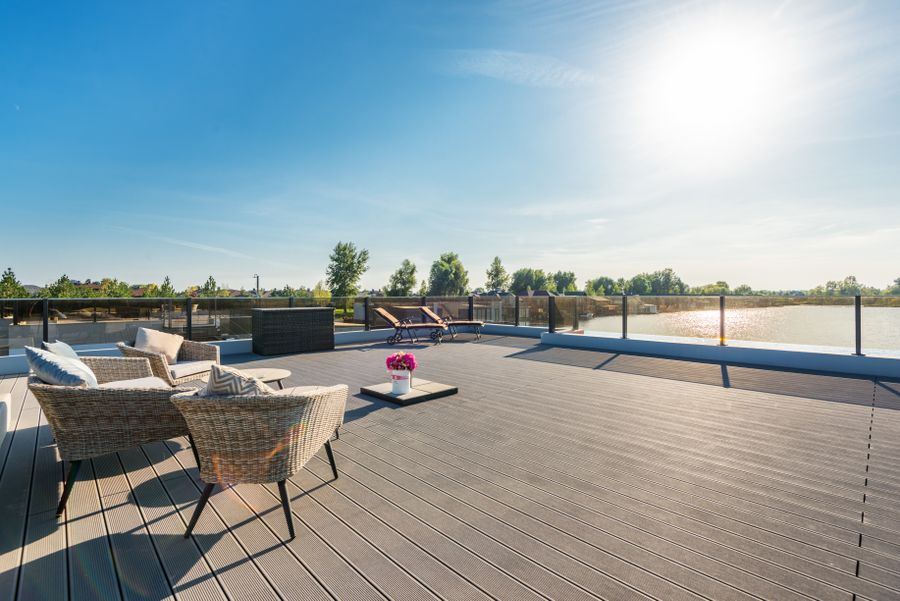
It handles a slope
Posts on footings bridge a drop of 18 inches or more without retaining walls, heavy excavation or a dumpster. On a hillside lot it is often the only sensible way to get a level outdoor space. See the height bands.
It meets the house
Many American homes sit on a raised foundation or have a walkout lower level, so the back door is well above the yard. A deck finishes a step below the threshold, turning a slider into a real link between inside and out. Location and the house connection.
It goes up fast
Lumber fits through a side gate, every home improvement store stocks the parts, and there are no pallets of pavers or tons of base gravel. A simple low deck is genuinely a couple of weekends for a handy homeowner. The build sequence.
The honest catch
It is a structure exposed to the weather. Footings below the frost line, a properly flashed ledger, ground-contact lumber where it counts, airflow underneath and a cleaning each spring are what separate a 25-year deck from a 10-year one. Clearance and airflow.
A deck project, in the order the decisions come up
Six stages. Take them in this order and almost nothing has to be torn out later.
-
Step 1
Decide where it goes and how high
Pick the spot for your climate - sun in the North, shade in the South - and check the standing height against the neighbors’ view. Height decides whether this is a weekend job or a permitted, inspected structure with guards.
Choosing the location → -
Step 2
Size it around the furniture
Set the real table, chairs and grill inside the staked-out area and walk around them. Most decks that feel cramped are simply about 3 feet too small each way.
Size and shape → -
Step 3
Check permits and the HOA before you buy
Most attached decks, and any deck over 30 inches high, need a building permit. Ask about frost depth, setbacks and inspections, get HOA approval in writing, and call 811 before digging footings.
Permits and codes → -
Step 4
Choose the boards, and the frame
Wood or composite for the surface, based on how much upkeep you will honestly do - and the right lumber rating, joist size and spacing, and galvanized or stainless hardware for the structure underneath, which is what really sets the lifespan.
Compare materials → -
Step 5
Build it dry and ventilated
Landscape fabric and gravel under the deck, footings that keep the wood off the soil, ground-contact lumber for anything low or hard to replace, and open airflow on at least two sides. That is the whole secret to a deck that lasts.
Clearance and airflow → -
Step 6
Clean it each spring and fall
A deck cleaner and a stiff brush in spring, leaves cleared out in fall, and a fresh coat of stain or sealer when water stops beading. That is the whole maintenance plan, and skipping it is what turns a deck gray, green and splintery.
The year-round routine →
Work out the quantities before you buy
Boards, joists and screws all come in fixed lengths and box sizes. Two minutes with a calculator saves a second trip to the lumberyard.
Decks: the questions everyone asks first
Quick answers to get you started. Each guide has its own fuller set.
Do I need a permit to build a deck?
Usually, yes. Most US building departments require a permit for any deck attached to the house, any deck more than 30 inches above the ground, and decks over about 200 square feet. The model International Residential Code exempts small, low, freestanding decks, but many towns change or drop that exemption, and zoning setbacks and HOA approval still apply. Call your local building department before buying materials, and call 811 before digging footings.
Is composite decking better than wood?
It is lower maintenance, which isn’t automatically better. Capped composite never needs staining and keeps its look for decades, so it suits busy families, shady yards and anyone who won’t actually re-stain wood. It costs more up front, can get very hot in direct sun, and still needs cleaning. Pressure-treated pine is far cheaper, cedar and redwood look and smell like real wood, and wood can be repaired board by board and re-stained a new color. Choose based on how much upkeep you’ll actually do.
What lumber should I use for deck framing?
Pressure-treated lumber, with the right rating for where it goes. Posts and any framing in contact with the ground, close to it or hard to replace should be rated for ground contact; above-ground rated lumber is meant for parts that dry out quickly and are easy to swap. Use hot-dip galvanized or stainless fasteners and connectors rated for treated lumber, and check the tag on every piece.
How far apart should deck joists be?
For most wood deck boards, joists at 16 inches on center is standard, usually 2 × 8 or 2 × 10 depending on the span. Many composite and PVC boards call for 16 inches or less, and diagonal decking generally needs 12 inches. The board maker’s installation guide sets the limit, so check it before framing, and make sure every board end lands on a joist.
How much clearance should be under a deck?
Leave enough space for air to move freely and for the wood to dry out - and the closer the framing is to the soil, the more important it is to use lumber rated for ground contact. Keep at least two sides open or use a slatted skirt rather than solid boarding, lay landscape fabric and gravel underneath to cut weeds and moisture, and make sure the ground slopes away from the house. Stale, damp air is the main reason decks rot from underneath.
Why is my deck slippery, and how do I fix it?
It is almost always a film of mildew, algae or moss, not the boards themselves. It grows wherever the surface stays damp - shade, poor airflow, or leaves left to sit. Clean the deck with a deck cleaner and a stiff brush in spring and again in fall, sweep leaves off promptly, keep the gaps between boards clear, and add grip strips or a textured coating on the stairs.
How long does a deck last?
With good building and regular care, a pressure-treated pine deck typically lasts around 15-25 years, cedar and redwood about 15-20, capped composite and PVC 25 years or more, and dense tropical hardwoods even longer. In practice the frame often wears out before the surface, which is why footings, flashing, ground-contact lumber and airflow underneath matter more than the boards you choose.
Is a deck cheaper than a patio?
On flat, firm ground, a basic pressure-treated deck and a basic concrete or paver patio often cost about the same per square foot, while composite and raised decks cost more. On a sloping yard a deck usually wins because it avoids retaining walls and excavation. Over 20 years, a wood deck’s cleaning, staining and eventual board replacement narrow or reverse any savings.
Planning one, building one, or rescuing one?
If the deck is still an idea, start with planning - height and permits change everything else. If the lumber is ordered, read the construction guide and pay close attention to footings, the ledger and airflow. If your house came with a deck that has gone gray, green or soft, go straight to cleaning and maintenance.
