
Windmill Palm
Trachycarpus fortunei
The go-to cold-hardy palm: fan leaves on a hairy trunk. Zones 7-10, and it survives brief dips to about 5°F once established. For zone 6, look at the native needle palm instead.
If you garden in South Florida, Hawaii or along the Southern California coast, you can grow the real thing outdoors all year. Everywhere else, the jungle look is still within reach: cold-hardy palms, hardy bananas, cannas and a few native big-leaf plants give a Midwest or New England yard a lush, exotic feel from late spring until frost. Here's how to pick plants for your zone, layer them and get them through winter.
Cold hardiness depends on your USDA zone, microclimate and how wet your winter is. Check each plant against your zone and protect tender ones before your first fall frost.

A tropical garden is about leaves first: paddle-shaped, fan-shaped and hand-shaped foliage, packed in layers so the yard feels enclosed and green. In zones 9b-11 (South Florida, the Gulf Coast's warmest pockets, Hawaii and coastal Southern California) you can plant genuine tropicals in the ground. In zones 5-9a you build the same look from cold-hardy exotics and natives, and treat true tropicals as summer guests in pots. Unlike a dry Mediterranean garden, it wants rich, moist soil and is happy in part shade. Not sure of your zone? Find your growing zone.
Bananas, palms, elephant ears and cannas do the heavy lifting. Flowers are a bonus, not the point.
Plants are stacked from canopy to groundcover so beds feel full and almost no soil shows.
A backbone of plants that survive your winter carries the garden; tender plants are the extras.
North of zone 9 the look peaks from midsummer to the first fall frost, when heat-loving plants hit full size.
In hot-summer states, afternoon shade keeps big leaves from scorching. A shady lot is an asset here.
A dark-stained fence or deck makes the greens glow and gives the planting a finished look.
Lush and leaf-led. Layered exotic foliage for a jungle feel, year-round in zones 9b-11.
You are hereSun-loving and drought-tolerant - gravel, silver foliage and herbs. Suits dry-summer California and the Southwest.
Romantic and informal, with dense, flower-filled borders of perennials and climbers.
Relaxed, shade-loving planting under a tree canopy, often built from native woodland plants.
Clean lines and bold, architectural plants - tropical foliage suits it beautifully.
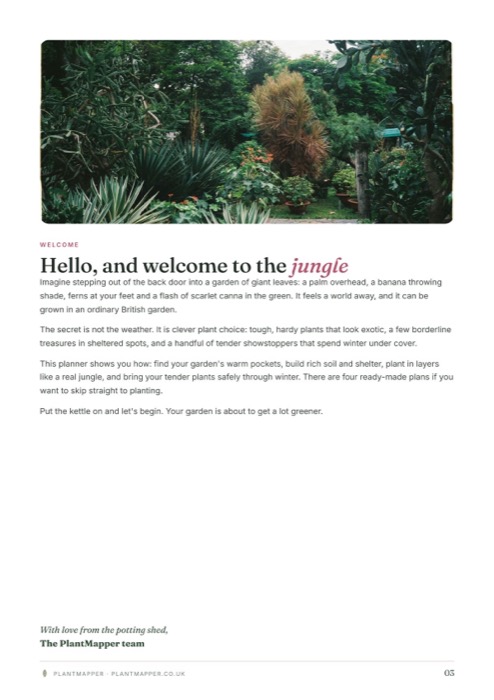
Some inspiration before you plan: bold leaves, bright flowers and the dense, layered foliage that makes a yard feel like a jungle.


These are the workhorses of the jungle look in American yards. Check each zone range against your own: anything rated colder than your zone can stay in the ground all year, anything warmer needs protection, lifting or a pot. In zones 9b-11 you can also add true tropicals such as bird of paradise, heliconia, gingers and tender palms. To filter more plants by soil, light and space, use the Plant Finder.
Trachycarpus fortunei
The go-to cold-hardy palm: fan leaves on a hairy trunk. Zones 7-10, and it survives brief dips to about 5°F once established. For zone 6, look at the native needle palm instead.
Musa basjoo
Huge paddle leaves and astonishing summer growth. The top dies back at frost, but the roots come back each spring in zones 6-10 under a thick mulch, and often in zone 5 with heavy protection.
Dicksonia antarctica
The Australian tree fern only really thrives in zones 9-11 with mild summers: coastal California and sheltered Pacific Northwest gardens. It sulks in Southeast heat. Elsewhere, ostrich fern gives a similar feel.
Fatsia japonica
Glossy, hand-shaped evergreen leaves for shade, hardy in zones 7b-10. A favorite in Southern and Pacific Northwest yards; in zone 7 give it a sheltered spot out of winter wind.
Canna indica & hybrids
Paddle leaves in green, bronze and stripes, with hot-colored flowers that hummingbirds visit. Leave in the ground in zones 8-11; north of that, dig the rhizomes after frost and store them in a cool basement or garage.
Tetrapanax papyrifer
Enormous lobed leaves, sometimes 3 ft across. Roughly zones 7-10, regrowing from the roots after a hard freeze. It suckers aggressively, so give it room or a root barrier.
Hedychium
Lush upright foliage and scented late-summer flower spikes. Many hedychiums are hardy in zones 7-10 with a mulch. Do not plant kahili ginger or white ginger in Hawaii, where both are serious invasives.
Phormium
Sword-like evergreen leaves in greens, bronzes and stripes. Happiest in zones 8-11 with mild summers, especially coastal California; it dislikes humid Southeast heat. Grow it as a summer pot plant farther north.
Fargesia
Evergreen screening that stays put. Fargesia clumps are cold hardy (roughly zones 5-9) but prefer cool summers and afternoon shade; in the hot South, choose heat-loving clumping Bambusa types instead.
Invasive lists change and differ by state, so check your state's invasive plant list before you buy, especially in Florida, Hawaii and along the Gulf Coast, where tropical escapes spread fastest.
The wild look is actually planned. Work in layers, from tall leafy plants down to groundcover, and plant close enough that leaves touch. Use a little of each layer below and even a first-year bed in zone 6 can look convincingly tropical by August.
Palms, bananas and, in zones 9b-11, tree ferns or tender palms give height and a sense of enclosure.
Elephant ears, tetrapanax, fatsia or a native pawpaw supply the giant leaves the look depends on.
Cannas, gingers and rose mallow fill the middle with color, texture and upright shape.
Ferns, hostas (if deer allow) and caladiums knit the bed together and hide bare stems.
Dahlias, begonias, coleus and canna flowers add hot color, and hummingbirds will find them.
Crossvine, coral honeysuckle or, in frost-free zones, mandevilla cover fences and draw the eye up.
A 3-inch layer of shredded bark or pine straw keeps roots cool and moist through hot summers.
Plant close so leaves overlap. Gaps and bare mulch break the jungle illusion fast.
As an Amazon Associate, PlantMapper may earn from qualifying purchases. Prices and availability are set by Amazon.

Shade suits the jungle look, and in the hot South and Southwest it is almost essential: big leaves scorch in full afternoon sun. If shade is your main challenge, our Shady Garden guide goes wider. These plants turn a dim corner into a cool, leafy retreat.
Tree ferns in mild coastal zones; elsewhere, native ostrich and cinnamon ferns give the same lush, layered fronds.
Glossy evergreen leaves that brighten dark corners in zones 7b-10. Deer usually leave it alone.
Big ribbed leaves in blues and greens, but deer love them. In deer country, swap in ferns or caladiums.
Painted, heart-shaped leaves for summer shade. Perennial in zones 9-11; grow as annuals or lift the tubers elsewhere.
A tropical garden that lasts has a backbone of plants that survive your winter, with tender exotics treated as guests. How much protection you need depends entirely on your zone, so start there. Then protect or lift the borderline plants before your first fall frost, and the jungle comes back bigger every year.
South Florida, Hawaii, coastal Southern California and the warmest Gulf and Texas pockets: plant true tropicals in the ground and cover them on the rare cold night.
Much of the Gulf Coast, Texas and the Pacific Northwest coast: hardy palms, fatsia, cannas and gingers stay in the ground; tender tropicals go in pots.
Mid-Atlantic, the Upper South and the lower Midwest: hardy bananas, needle palms and native big-leaf plants carry the bed; mulch heavily and lift cannas.
Upper Midwest, Northern Plains, New England and the mountains: grow the look with summer bulbs, pots and natives, and overwinter tropicals indoors.
After the first frost, pile 6-12 in of dry shredded leaves or straw over the root zone of bananas, gingers and borderline plants.
In zones 6-7, cut bananas to a foot or two and mulch hard. To keep tall stems, cage them in chicken wire stuffed with dry leaves, topped with a rain cover.
In zones 8-10, throw frost cloth over tender plants on the few nights below freezing, and water the soil beforehand.
Move tender container plants into a garage, basement or sunroom before frost. Dormant bananas and cannas need little light.
Pots are how most Americans north of zone 9 grow real tropicals. Put a bird of paradise, mandevilla or tender palm on the patio, deck or balcony for summer, then roll it into the house or garage before frost. The container helper in the tools below works out how much potting mix you'll need.
Large leaves need a big root run, and bigger pots dry out more slowly in a Texas or Georgia July.
Use a quality potting mix, never garden soil, and add some compost so it holds moisture without staying soggy.
In summer heat, potted tropicals may need water daily and a liquid fertilizer every week or two.
Put heavy pots on rolling plant caddies so moving them indoors before frost is a five-minute job.

Three quick helpers for planning a jungle bed, in feet and inches. For bigger jobs, the PlantMapper garden calculators cover gravel, soil, sod and more.
Estimate how many foliage plants will fill a bed.
Work out how much bark mulch a tropical bed needs.
Estimate the potting mix needed to fill a pot.
As an Amazon Associate, PlantMapper may earn from qualifying purchases. Prices and availability are set by Amazon.
One simple trick does more for a tropical yard than almost any plant: a dark backdrop. Staining a privacy fence charcoal or near-black, and choosing a dark deck stain or composite, makes every green leaf glow and gives the whole space a calm, designed look.
Bright greens look far more vivid against black than against a weathered gray or orange cedar fence.
Dark boundaries visually recede, so the garden feels larger, deeper and more restful.
One dark color on the fence, deck and pots ties everything together, and the leaves become the stars.
Give the planting a sheltered spot and a couple of hot summers, and the leaves knit together into the dense, layered canopy that defines the style.

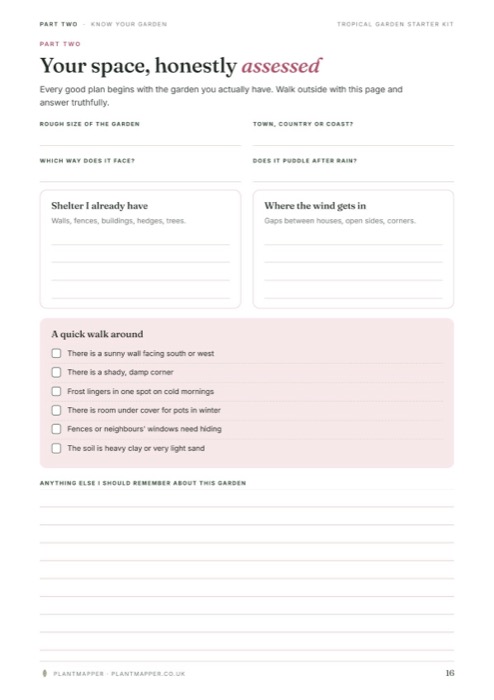
Everything on this page is free: the zone advice, plant lists, layering formula and tools. The Tropical Garden Starter Kit is an optional printable workbook that pulls it together so you can plan a layered jungle bed on paper. It was written for the original edition of PlantMapper, so use this page to swap in plants for your zone, alongside our free garden calculators and Plant Finder.
Workspace pages to capture your jungle vision, core aesthetic choices and design intentions before you buy a single plant.
Overhead grids for sketching three-tier, canopy-rich beds on paper, one layer of foliage at a time.
Planning pages built around the tropical formula: a big-leaf core, three tiers of height and sheltered, humid corners.
Tropical plant lists, a color palette, mood boards and planting combinations for every layer (check each plant against your zone).
A seasonal roadmap plus feeding, watering and winter-protection trackers to keep the garden thriving.
Bulk soil and bark volume formulas, procurement and budget sheets, and a calm troubleshooting guide for when something stalls.
An instant digital download in US Letter and A4. Print it at home as often as you like and plan a fresh jungle bed every year. It sits alongside our Cottage, Mediterranean and Shady garden kits.
Download the Starter Kit on Etsy (UK edition)A printable workbook for your own yard. Always check a plant's USDA zone and your state's invasive list before buying.
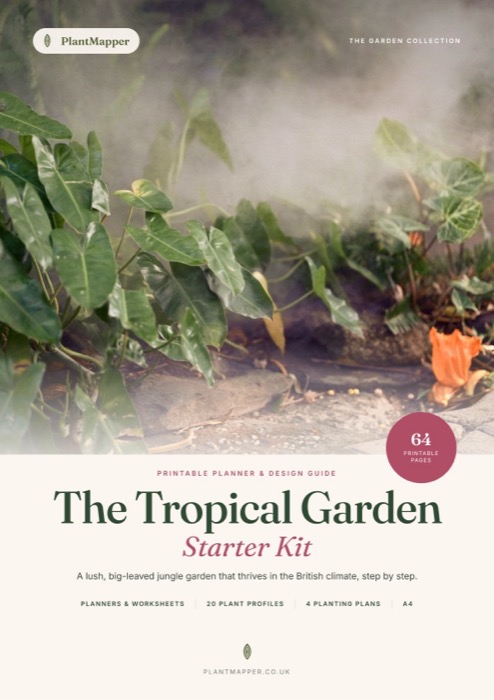 64-page printable planner · US Letter & A4
These are the slip-ups that trip up most first-time tropical gardeners, from Florida to Minnesota.
A bed of plants rated two zones too warm is gone after the first hard freeze. Build a hardy backbone first, then add the divas.
Gaps and bare mulch break the jungle illusion. Plant close so leaves overlap and touch.
Big leaves lose a lot of water in summer heat. Without moist soil and mulch, growth stalls and leaves scorch.
An early cold snap can arrive weeks before your average first frost. Have mulch and frost cloth ready.
Running bamboo spreads into neighbors' yards and woods. Choose clumping types, or contain runners with a deep barrier.
Brazilian pepper, elephant ear, schefflera and lantana are sold in places where they invade. Check your state list first.
Wind and full Southern sun shred and scorch big leaves. Shelter and afternoon shade keep them looking good.
Skipping the dark fence or deck leaves the planting working far harder than it needs to.
Some links on this page are affiliate links. If you buy through them, PlantMapper may earn a small commission at no extra cost to you. It never affects which products we suggest.
All advice is general guidance for gardens across the US. Hardiness and results vary with your zone, microclimate, soil and rainfall, so confirm each plant's zone and invasive status in your state before planting.
Some tropical plants, including elephant ears, caladiums and sago palm, are toxic if eaten or irritate skin. Check each plant before growing it where children or pets play, and wear gloves when handling.
Only in the warmest zones, roughly 9b to 11: South Florida, Hawaii, coastal Southern California and a few frost-free pockets along the Gulf Coast and in South Texas. There, bird of paradise, heliconia, gingers and tender palms can live in the ground all year. In zones 5 to 9a you can create the same look with cold-hardy plants and keep true tropicals in pots that come indoors for winter.
The hardy banana (Musa basjoo) comes back from its roots in zones 6 to 10 under a thick mulch. The needle palm is hardy to about zone 6b and the windmill palm to zone 7. Add clumping bamboo, rice paper plant in zone 7, and native big-leaf plants such as pawpaw, bigleaf magnolia, rose mallow and ostrich fern. Cannas and elephant ears can be dug after frost and stored indoors.
In zones 6 and 7, let the first frost blacken the leaves, cut the stem down to a foot or two, and pile 6 to 12 inches of dry shredded leaves or straw over the crown. To keep a tall stem, cage it in chicken wire stuffed with dry leaves and top it with a rain cover. In colder zones, grow bananas in pots and move them to a garage or basement, where they can rest dormant until spring.
Brazilian pepper is a major invasive in Florida, Texas and Hawaii. Elephant ear (Colocasia esculenta), schefflera, Mexican petunia and lantana are invasive in Florida, kahili ginger and white ginger are serious problems in Hawaii, and pampas grass is invasive in California. Running bamboo also escapes into neighboring yards and woods. Lists vary by state, so check your state's invasive plant list before buying.
Yes, and in hot-summer states afternoon shade actually helps, because big leaves scorch in strong sun. Fatsia japonica, ferns, caladiums, elephant ears and hostas all do well in part shade with rich, moist soil and a mulch. In deer country, favor ferns, fatsia and caladiums over hostas, which deer love.
In zones 9b to 11 it looks good all year. Farther north, the look builds from early summer and peaks from about midsummer until the first fall frost, when bananas, cannas and gingers reach full size in the heat. Evergreen palms, fatsia and clumping bamboo hold some structure through winter while tender plants rest.