Decking Materials: Pressure-Treated, Cedar, Composite, PVC and Ipe
Walk into any lumberyard or home improvement store and the choice looks simple: cheap wood or expensive plastic. It isn't. Pressure-treated pine, cedar and redwood, capped composite, PVC and tropical hardwoods each suit a different budget, climate and attitude to upkeep. This guide covers what each one is really like to own in an American backyard, plus the questions most people only ask afterwards: which lumber rating goes where, how hot and slippery each board gets, and which screws won't stain or snap.
General guidance for American homeowners. Lumber ratings, board specifications and installation rules vary by manufacturer and by local code - always read the installation guide and warranty for the product you buy, and check with your building department. Part of the PlantMapper Decking section.
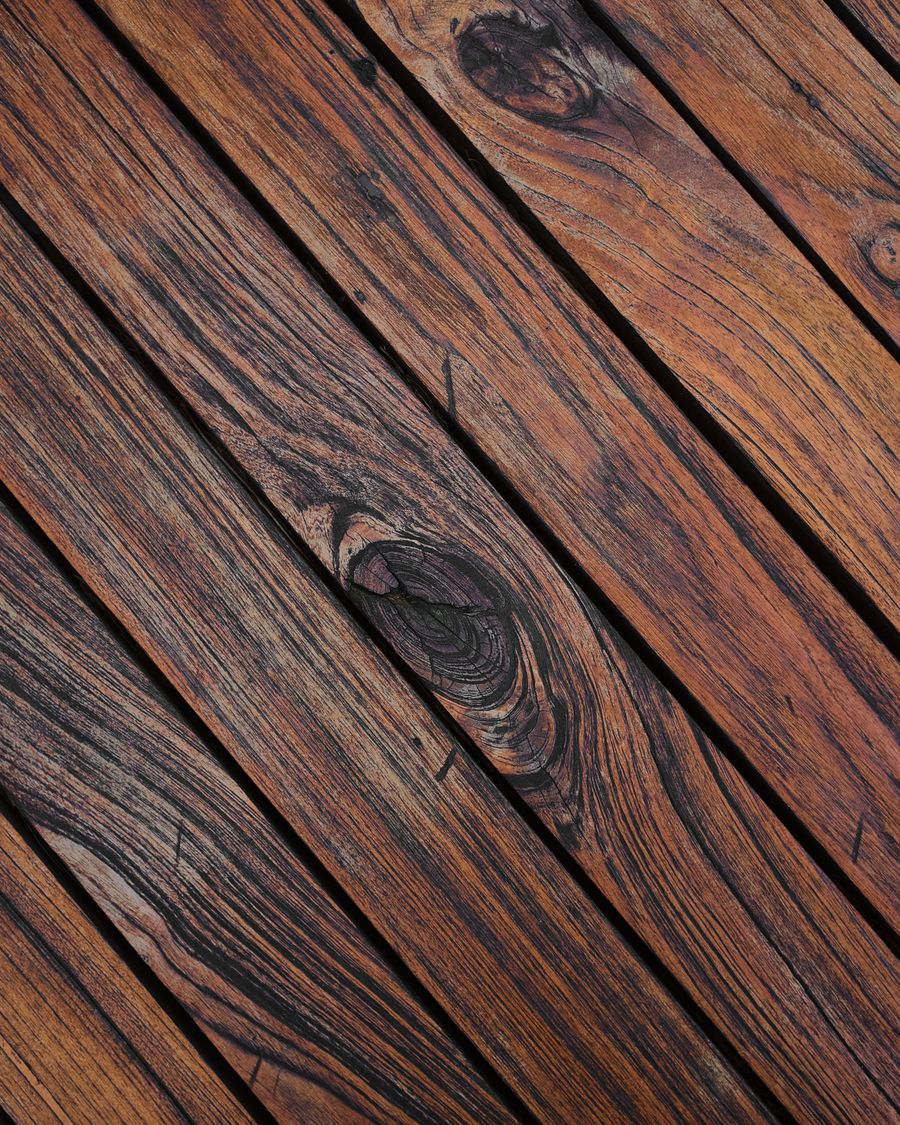
Every deck board weathers - the only questions are how, and how fast · photograph via Pexels
The real question
Not “which board is best” but “which board suits this yard”
Deck boards are sold on two promises: wood is natural and affordable, composite is maintenance-free. The first is fair. The second isn't - composite is low-maintenance, which is not the same thing, and it still needs cleaning.
What really decides the right board is your climate (blazing sun, humid shade, snow or salt air), how much upkeep you will honestly do, how long you plan to stay in the house, and the cost over fifteen years rather than at the checkout. A shady deck in the humid Southeast owned by someone who will never stain it needs a very different board from a sunny Colorado deck owned by someone who enjoys a weekend project.
Whatever goes on top, the frame underneath is a separate decision and the one that really sets the deck's lifespan - it is covered further down.
Head to head
Wood against composite, honestly
The comparison people actually want, minus the sales pitch from either side.
✓Wood - what it is genuinely good at
Much cheaper up front. Pressure-treated pine decking often costs a third or less of a capped composite board for the same area.
It looks and feels like wood, because it is. Cedar and redwood in particular have a warmth and scent nothing molded can copy.
Repairable. A damaged board is a ten-minute swap from any lumberyard, and the new one weathers in to match.
You can change your mind. Stain it, seal it, let it go gray, or switch to a solid stain in a new color in five years.
Easy to work. Cuts, fastens and adapts with ordinary tools, which matters on a DIY build.
Cooler in strong sun than most dark composite or PVC boards.
!Wood - what you take on
It needs a finish. Cleaning plus a fresh coat of stain or sealer every one to three years, depending on sun and climate.
It moves. Pressure-treated lumber shrinks, swells, cups and checks; expect to re-drive the odd screw.
Splinters and raised grain appear as softwood ages, which matters where kids go barefoot.
Shorter life. Typically 10-20 years for pressure-treated boards; cedar similar; tropical hardwood far longer.
It grows mildew and algae in shade faster than capped composite, and gets slippery with it.
Knots, wane and warping mean you should pick through the pile and expect to reject some boards.
✓Composite - what it is genuinely good at
Very little upkeep. A wash with soap and water a couple of times a year is the whole routine. No staining, ever.
Color-stable. Good capped boards weather slightly in the first months, then hold their color for many years.
No splinters, no rot, no termites, which makes it the usual pick where children play barefoot and in termite country.
Dimensionally stable. It does not cup or check the way pressure-treated pine does.
Long warranties - typically 25 years or more on capped boards, often with a separate fade-and-stain warranty.
Consistent. Every board matches every other board, with no culls in the stack.
!Composite - what you take on
Two to four times the purchase price of pressure-treated pine.
It gets hot. Dark boards in full summer sun, especially in the South and Southwest, can be too hot for bare feet.
Not repairable in the same way. A deep gouge or a grill burn stays; you replace the board and the new one may not match the weathered ones.
It expands and contracts with temperature, so end gaps and fastener spacing must follow the installation guide exactly.
Uncapped early-generation boards stain, fade and grow mold - buy capped, and check exactly what you are being sold.
It still sits on a wood frame in most backyard decks, so the structure has the same lifespan questions as any wood deck.
The cost picture over fifteen years. Pressure-treated pine is far cheaper on day one. Add a cleaner and a coat of stain every couple of years, a few replacement boards and your time, and the gap narrows. Composite often comes out similar or a little cheaper over that period - but only if you really would have maintained the wood. If the honest answer is that the deck would be left alone, composite wins comfortably. If you enjoy a spring project and want real wood, pressure-treated or cedar is not the poor relation it is sometimes made out to be.
In detail
Five deck boards, properly compared
What each one is, where it works, and what owning it is really like.
Pressure-treated pine
Lowest cost
Southern yellow pine (or other softwoods in the West) forced full of preservative, and by a wide margin the most common deck board in America. Usually sold as 5/4 x 6 radius-edge decking or 2 x 6 in 8- to 20-foot lengths. It is cheap, stocked everywhere and perfectly good if you accept it as a material you look after rather than one you install and forget.
Looks likeGreen-tinted or brown-stained when new, weathering to silver-gray if left unfinished
Best forBudget decks, large areas, anyone who may want to change the color later
LifeRoughly 10-20 years for the boards, longer if kept clean, dry and finished
UpkeepClean every spring, re-stain or re-seal every 1-3 years
Watch out forCupping, checking and splinters as it ages; pick through the stack and reject crooked or wet boards
Ipe and tropical hardwoods
Highest cost
Ipe, cumaru, garapa, tigerwood and other dense tropical species. Heavy, extremely hard and very durable, they will often outlast the pressure-treated frame beneath them, and ipe is notably resistant to fire and insects. The most beautiful decking there is, and the most expensive to buy and install.
Looks likeRich brown, red or honey tones, silvering evenly if left unfinished
Best forSmaller feature decks, high-end projects, anywhere the deck is the main event
Life25-50 years, often longer
UpkeepOil every year or two to keep the color, or let it silver and simply wash it
Watch out forVery hard to work - pre-drill every hole. Ask for FSC-certified, legally sourced lumber
Capped composite
Higher cost
A core of wood fiber and plastic wrapped in a bonded polymer shell, or cap. The cap is what matters: it resists stains, fading and mold, and it separates a board that still looks good in year twelve from one that doesn't. If you buy composite, buy capped - and ideally capped on all four sides.
Looks likeConsistent gray, brown or charcoal tones with a molded grain; convincing from a few feet away
Best forFamilies, shady or humid yards, termite areas, rentals, anyone who will not maintain wood
Life25-30 years or more, usually with a long warranty
UpkeepWash a couple of times a year. No stain or sealer, ever
Watch out forHeat in full sun, and expansion gaps - follow the manufacturer's spacing exactly
Cedar & redwood
Mid-to-high cost
Western red cedar and California redwood are the traditional American deck woods: light, stable, naturally rot- and insect-resistant heartwood with a lovely color and smell. They are softer than pressure-treated pine, so they dent and scuff more easily, and only the darker heartwood grades carry the natural durability. Prices vary a lot by region - more reasonable in the West, pricier back East.
Looks likeWarm red-brown to amber tones that silver to soft gray if left unfinished
Best forNatural-looking decks, the West Coast, railings and trim on any deck
Life15-25 years for heartwood boards with regular care
UpkeepClean and re-seal with a penetrating oil or semi-transparent stain every 1-3 years
Watch out forSapwood grades with no natural durability, and soft surfaces that show dog claws and furniture marks
PVC decking
Higher cost
Boards made entirely of cellular PVC, with no wood fiber at all. They are lighter than composite, will not absorb water, and resist mold and staining well, which makes them popular around pools, docks and in humid coastal areas. They expand and contract with heat even more than composite, so the installation rules matter.
Looks likeGray, brown and wood-tone colors with an embossed grain; feels lighter and more hollow than wood
Best forPool decks, docks, damp shady sites, low decks with little airflow
Life25 years or more, with long warranties
UpkeepWash with soap and water; no finish needed
Watch out forPrice sits at the top of the synthetic range, and some boards get very hot in full sun
The other side of the board
Grooved or smooth?
Most pressure-treated deck boards are smooth with rounded edges, but some imported boards and some composites have a ribbed or grooved face. Many people assume the ribs are there for grip. They aren't, and it matters.
✓Put the smooth face up
It drains and dries faster. Water runs straight off a flat surface instead of sitting in channels.
It stays cleaner. Grooves collect leaves, grit and pollen that you then have to scrub out.
It is easier to sweep, wash and re-stain.
It is more comfortable underfoot, especially barefoot, and kinder to chair legs and stroller wheels.
It is what most manufacturers recommend for the wear face.
!Why ribs and grooves don't help grip
Grooves run along the board, which is usually the direction you walk - so they offer nothing where you actually slip.
They hold water, algae and mildew, and slime is what makes a deck slippery in the first place.
The ridges wear smooth within a couple of seasons of foot traffic.
Real slip resistance comes from a textured composite or PVC surface, grit-faced anti-slip strips or a non-slip deck coating - not from a molded profile.
The side grooves on composite boards are for hidden fasteners, not for traction - they sit at the edges, out of sight.
The safety point
Slip resistance and heat - the two to take seriously
A wet, mildewed deck in a rainy Pacific Northwest winter, or a shady one in a humid Southern spring, is genuinely dangerous, and slipperiness is the most common complaint about decks. The good news is that it is almost entirely preventable, mostly by keeping the surface clean rather than by buying a special board. In the Sun Belt the other risk is heat: dark synthetic boards in full sun can scald bare feet.
What affects how slippery a deck is, roughly in order of importance.
Factor
Effect
What to do about it
Algae, mildew and green film
By far the biggest cause. A clean deck is rarely slippery; a green one always is
Slow drying keeps the surface damp, and damp grows algae
Site the deck in light where you can, trim overhanging branches and keep the underside open to the air
Leaves left to sit
Traps moisture and rots down into an algae bed
Sweep or blow them off regularly through fall
Surface finish
Smooth, clean wood has reasonable grip; smooth wet, slimy wood has almost none
Lay boards smooth face up and keep them clean
Anti-slip strips
Grit-faced strips or treads screwed or glued to the surface. Very effective where used
Worth fitting on stairs and main walkways even if not across the whole deck
Non-slip coatings
A deck stain or coating with fine grit mixed in
Effective and inexpensive; needs renewing along with the rest of the finish
Textured composite and PVC
Good capped boards with a deep embossed texture hold up well when wet
Look for the manufacturer's slip-resistance data rather than the brochure photo
If you do one thing for safety, do the stairs. Stairs are where people fall and where a fall does real damage. Keep the treads clean, fit anti-slip strips if they stay damp, make sure every riser is the same height and the handrail is solid, and add lighting. It costs little, takes an afternoon, and is the best-value safety work on the whole deck.
The first two years
How each material ages
Everything outdoors weathers. Knowing what to expect stops you panicking in year one and being disappointed in year five.
Pressure-treated pine
The most visible change of any deck board, and the fastest.
First few months The preservative's green tint fades. New boards are often too wet to stain - wait until water soaks in rather than beading, often a few weeks to a few months
Year one Some cupping and checking as boards dry to the local humidity. A few screws may need re-driving
Years two to five Left unfinished, it goes silver-gray. Many people like the look and it is sound - graying is a surface effect, not rot
Long term Raised grain and splinters appear on the walking surface, gaps open up and the odd board needs replacing. Regular cleaning and stain slow all of it considerably
Ipe, cedar and redwood
Age slowly and, on the whole, beautifully.
First months Cedar, redwood and dense hardwoods can bleed tannins in early rains, which can stain concrete, pavers or siding below. Rinse and protect anything underneath for the first season
Year one The rich color begins to lighten. A yearly oil or semi-transparent stain holds it; doing nothing leads to silver
Years two to five Weathers to an even silver-gray if unfinished. Ipe barely moves; cedar and redwood stay stable but scuff more easily
Long term Ipe stays sound for decades; cedar and redwood heartwood last well if kept clean. The usual failure is the pressure-treated frame underneath, not the boards
Composite
Changes least, but it does change - the brochures rarely say so.
First year Expect some fading, especially on darker colors and in strong Western and Southern sun. Most of the color change happens now
After that Capped boards then hold their color well for many years. Uncapped boards keep fading and start showing stains
Watch for Surface mold in shady, humid spots - composite is not immune, it just resists better and cleans up more easily
Damage Scratches and heat marks are permanent. Keep grills on a grill mat, fire pits off the surface, and pads under furniture
Underneath
The frame decides how long the deck lasts
Decks rarely fail because the boards wear out. They fail because joists, beams, posts or the ledger rot or work loose - and by the time that shows, the whole deck has to come apart. The frame is not the place to save money.
Use the right lumber rating
Ground contact means ground-contact lumber
Pressure-treated lumber is labeled for where it can be used, under American Wood Protection Association (AWPA) use categories. Lumber labeled for above-ground use is not meant for soil contact - or for joists that are hard to replace or stay damp.
Above-ground (UC3B) suits deck boards and railings that dry out quickly and can be swapped easily
Ground-contact (UC4A or higher) is for posts, and is now widely recommended for joists, beams and ledgers too - anything close to the soil or hard to replace
Treat every cut end with a copper-based end-cut preservative; the inside of the board was never fully treated
Size the joists properly
Span sets the size and spacing
Joists that are too small or too far apart give a bouncy deck, and bounce eventually becomes failure.
Typical residential joists are 2 x 8 or 2 x 10 at 16 in on center for straight-laid wood boards, sized from the span tables in your code or DCA 6
Composite and PVC often need closer spacing - frequently 12 in on center; follow the manufacturer
Tighten spacing further for boards laid diagonally, and add blocking at board joints and picture-frame borders
Keep water off the frame
Joist tape is cheap insurance
The top of a joist is where water sits, around every screw hole. It is the most common place a frame starts to rot.
Butyl or self-adhesive joist tape along every joist top and beam costs little and adds years
Never let the frame sit in standing water or against soil, and keep it at least several inches clear of the ground
Keep the underside ventilated so the frame dries out after rain instead of staying damp
Support it correctly
Posts, footings and connectors
Whatever carries the frame has to be stable, level, below the frost line and out of the wet.
Concrete footings below your local frost depth rather than posts on blocks or bare soil
Galvanized post bases hold the post end off the concrete so it can dry, and tie it down against uplift
Never use above-ground lumber for posts set in soil or concrete - it is the classic five-year failure
The small things that matter
Screws, hangers and fasteners
A few dollars of the wrong fastener can ruin hundreds of dollars of boards, usually within a year, and always visibly. Modern copper-based treatments are corrosive to plain steel, so this matters more than it used to.
✓Get these right
Stainless steel screws for ipe, cedar, redwood and anywhere near the ocean. Type 316 near salt water.
Coated deck screws as a minimum for pressure-treated pine - the box should say they are approved for treated lumber.
Two screws per board at every joist, set about 3/4 in in from the board edge.
Pre-drill hardwood, every time. Ipe will split otherwise, and the screws will snap.
Hidden fastener systems for composite and PVC give a clean surface with no visible screw heads, and set the correct gap automatically.
Hot-dip galvanized (G185) or stainless joist hangers and connectors for the frame - and fill every nail hole with the fasteners the hanger maker specifies.
!Avoid these
Electro-galvanized or plain interior screws. They corrode fast in treated lumber and bleed black streaks down the boards.
Smooth nails on deck boards. They work loose as the wood moves, and a raised nail head on a deck trips people and tears feet.
Reusing old fasteners from a previous deck.
Fastening composite tight with no expansion allowance.
Screwing too close to a board end without pre-drilling - it splits and the split runs.
Mixing metals - stainless screws through galvanized hangers, or aluminum touching treated lumber, can corrode. Match the hardware.
As an Amazon Associate, PlantMapper may earn from qualifying purchases. Prices and availability are set by Amazon. Match any fastener or treatment to the boards you actually bought - follow the manufacturer's installation guide for that product.
Deciding
A short way to the right answer
If you are going round in circles, work through these in order and it usually settles itself.
A quick guide to the likely right material for a given situation.
If this describes your situation…
The likely answer
Budget is the main limit and you will maintain it
Pressure-treated pine, quality boards picked by hand, coated screws and a properly built frame
You will honestly never stain it
Capped composite or PVC. The maintenance saving is the whole reason they exist
Kids go barefoot on it
Capped composite, in a lighter color so it doesn't get too hot
The deck is shady, humid or under trees
Capped composite or PVC, and expect to clean it anyway. Or reconsider a paver patio
You live in the hot, sunny South or Southwest
Light-colored boards or wood, and shade over the seating area
You want real wood with natural durability
Cedar, redwood or ipe - cedar and redwood are easier on the budget out West
You are near the ocean
Any board, but Type 316 stainless fasteners and a well-ventilated frame are non-negotiable
You live in termite country or a wildfire area
Composite, PVC or ipe - and in wildfire zones check what your local code allows on decks
Buying mistakes
Six ways to buy the wrong decking
1. Buying composite and getting uncapped
Uncapped boards are cheaper and still sold, but they stain, fade and grow mold - the exact problems you paid extra to avoid.
The fixAsk directly whether the board is capped, and on how many sides. Check the fade-and-stain warranty in writing.
2. Spending on boards and skimping on the frame
The boards almost never fail first. The frame does, and replacing it means tearing off everything above it.
The fixUse ground-contact lumber for posts, joists and beams, correct joist sizes and spacing, and joist tape.
3. Using the wrong screws
Interior or electro-galvanized screws corrode in treated lumber and bleed black streaks down every board within a year.
The fixStainless for hardwood, cedar and coastal sites; coated deck screws approved for treated lumber everywhere else.
4. Using above-ground lumber where it touches soil
Above-ground lumber set in the ground or buried by mulch and soil rots out, often within a few years, even though the label says pressure-treated.
The fixRead the end tag on every piece: ground-contact for posts and anything near the soil.
5. Ignoring the manufacturer’s expansion gaps on composite
Composite and PVC move noticeably with temperature. Fastened tight, they buckle in the first heat wave.
The fixFollow the stated end and side gaps exactly for the temperature on install day, and use the fastener system made for the board.
6. Staining pressure-treated wood the week it arrives
New pressure-treated lumber is often still wet from treatment, and a stain or sealer applied to wet wood will not soak in or stick.
The fixLet it dry for a few weeks to a few months - sprinkle on some water, and when it soaks in rather than beading, clean the deck and apply the first coat.
Material questions
Decking materials: frequently asked questions
Is composite decking better than wood?
It is lower maintenance, not automatically better. Capped composite needs no staining and looks consistent for 25 years or more, which makes it the right answer for families, shady or humid yards and anyone who will not honestly keep up with wood. Pressure-treated pine is far cheaper to buy, cedar and redwood look and smell like the real thing, wood can be repaired board by board, and it can be re-stained in a new color later. Choose on how much upkeep you will genuinely do.
What is the difference between ground-contact and above-ground pressure-treated lumber?
Ground-contact lumber holds more preservative and is rated for wood that touches the soil, sits close to it, or is hard to replace. Above-ground lumber is meant for parts that dry quickly and are easy to swap, such as deck boards and railings. Use ground-contact for posts, and many builders and guides now recommend it for joists, beams and ledgers too. The rating is printed on the tag stapled to the end of each piece.
How long does a deck last?
Pressure-treated pine boards typically give 10-20 years, cedar and redwood heartwood about 15-25, ipe 25-50, and capped composite or PVC 25-30 or more, usually with a long warranty. In practice the frame is often what limits the deck's life rather than the boards, which is why the lumber underneath deserves as much thought as the surface.
Why is my deck so slippery?
Almost always a film of algae or mildew rather than anything wrong with the boards. It grows wherever the surface stays damp - shade, poor airflow, leaves left to sit, or ribs holding water. Clean it with a deck cleaner and a stiff brush, keep leaves cleared in fall, open up airflow underneath if you can, and fit anti-slip strips on the stairs.
Does composite decking get hot?
Yes, noticeably, and darker colors more so. In strong summer sun, especially in the South and Southwest, a dark composite or PVC deck can be too hot for bare feet in a way wood usually is not. If the deck gets afternoon sun and kids will use it without shoes, choose a lighter color, or plan shade over it.
What screws should I use for decking?
Coated deck screws labeled as approved for treated lumber as a minimum, and stainless steel for ipe, cedar, redwood or any coastal site - type 316 near salt water. Two per board at each joist, about 3/4 in from the edge, and always pre-drill hardwood. Never use interior or electro-galvanized screws: modern copper-based treatments corrode them and the boards streak black.
Can I put composite boards on an existing wood frame?
Often, but check two things first. The frame must be sound throughout, including the ledger and its flashing - there is no sense putting a 25-year board on a frame with five years left. And composite usually needs closer joist spacing than wood, often 12 in on center against 16 in, so the existing frame may need extra joists.
Is ipe decking environmentally responsible?
It can be, if it is certified and legally sourced. Ask for FSC-certified ipe and see the paperwork - uncertified tropical hardwood is a real problem. If you want naturally durable wood with a smaller footprint, domestic cedar and redwood or thermally modified wood are worth comparing, and many composites contain recycled plastic and wood fiber.