Patio Design Ideas That Work in Real American Backyards
Eighteen ideas for tiny city yards and big suburban lots, modern and traditional homes,
outdoor dining and fire pits, raised and sunken patios, planting, gravel, lighting and
privacy. Each comes with the practical details that make it work in a real backyard, not
just in a photo.
Ideas with the practical side attached. Grading, retaining walls and drainage depend on
your site, so see Planning a Patio. Part of the
PlantMapper Patios section.
Built-in seating and a fire pit turn a slab into an outdoor room · photo via Pexels
Where to start
Great patio design comes down to three decisions
Every patio that works has the same three things sorted: it sits in the right spot for
sun and shade, it is big enough for what really happens on it, and it is tied into the rest
of the yard instead of floating on the lawn like a tray. The pavers, furniture, lights and
pots are all decoration on top of those.
So these ideas are not a mood board. Each one says what makes it work and what to watch
for, because a sunken seating area is lovely on sandy, free-draining soil and a permanent
pond on Georgia red clay, and a fire pit a few feet from a wood privacy fence is a very
different thing from one in the middle of a gravel circle.
If your patio is still an idea, begin with Planning a Patio,
because position and size matter more than style. If the design is set and you are picking
surfaces, Patio Materials compares pavers, stone and concrete
properly.
A shortcut
Start with the yard you actually have
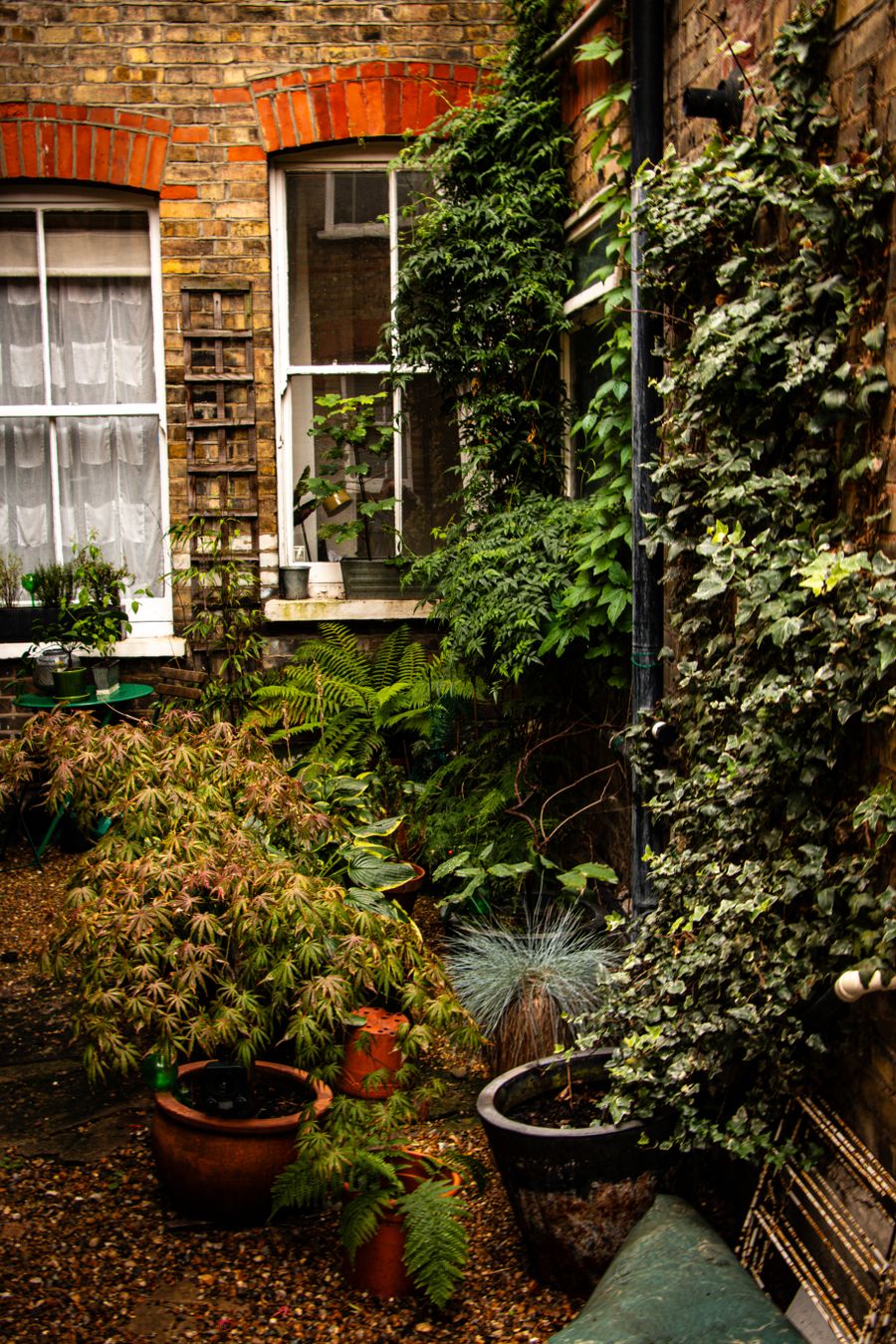
Small courtyard or townhouse yard
The patio is the yard
Do pave generously, use large light-colored pavers, and put the plants on walls, fences and in containers
Avoid busy patterns, dark surfaces and a skinny strip of sod that will never thrive
In a small yard the instinct is to keep a scrap of lawn. It rarely thrives, it is a pain
to mow and it makes the space feel smaller. Paving the whole area and gardening upward and
in containers almost always works better.
Use large, light-colored pavers in a simple pattern; fewer joints reads bigger
Run the paving right to the fence instead of leaving an awkward strip
Plant upward with vines, espaliered shrubs and a small multi-stem tree for canopy
One or two big containers beat six small ones every time
2. Patios for large yards
Two spaces, not one huge one
A vast slab of concrete looks like a parking lot. Big yards usually work better with a
generous patio by the house and a separate, smaller destination farther out.
Connect them with a walkway in the same or a complementary material
Break up big areas with planting pockets, a change in paver direction or a contrasting border band
Give the second spot a reason to exist: evening sun, a view or a fire pit
3. Modern patios
Restraint is the whole trick
Modern designs rely on simplicity: large-format pavers or smooth concrete, tight joints,
one main material, strong lines, and plants used for texture rather than color.
Large-format porcelain, sawn stone or smooth poured concrete in one tone
Keep joints narrow and perfectly even; the eye has nothing else to look at
Repeat a few plants many times rather than many plants once
Outdoor dining fails on little things: a wobbly table, a chair leg slipping off the edge,
a trip from the kitchen with steps and a corner, a grill too far from the table.
Use your flattest surface under the table; rough flagstone makes glasses wobble
Allow about 3 ft behind every chair
Shelter one side with a wall, hedge or raised bed
Plan for shade: an umbrella base, a pergola or a tree, especially on a west-facing patio
6. Built-in and casual seating
Saves space and hides storage
Built-in benches along a wall or around a raised bed take up far less room than loose
furniture, never blow over in a storm and can hide storage underneath.
About 18 in is a comfortable seat height; 16 to 20 in deep for perching, more for lounging
Cap a low seat wall with a wide capstone and it doubles as seating
Keep cushions in a deck box nearby, or they never get used
7. Fire pit and fire bowl areas
Wonderful, with sensible clearances
A fire pit stretches the patio season by months. It also needs real thought about
safety, smoke, local rules and what the heat does to the surface underneath.
Check local fire codes and burn bans; many set a minimum distance from structures
Keep well clear of fences, sheds, overhanging branches and the house
Direct heat damages pavers and concrete; use a raised bowl, a fire pit pad or a gravel circle
Think about the neighbors and smoke drift before you pick the spot
Never use a fire pit under a pergola, shade sail or any covered structure
8. Raised patios
A view, and a structural job
Raising a patio on a sloping lot gives you a level surface and a better view. It also
brings in retaining walls, drainage and sometimes permits.
Retaining walls over about 2 ft should be designed, not guessed at, and taller walls often need a permit
Drainage behind the wall is not optional; see raised patios
Check local rules; a raised patio with a drop may need a guardrail, just like a deck
Think about the neighbors’ privacy as well as your own
9. Sunken seating areas
Instant shelter and enclosure
Dropping a seating area two or three steps below the yard feels like a room and blocks
wind beautifully. The one thing it cannot do is drain by gravity.
Drainage must be designed: a drain or channel to a proper outlet or dry well
A poor choice on heavy clay or where the water table is high
Light the steps; a change of level in the dark is a trip hazard
Plant the banks around it so you are looking into foliage at eye level
10. Planting pockets in the paving
The quickest way to soften a new patio
Leaving out a paver here and there, or widening a joint into a planted crevice, breaks up
a large hard area and looks established almost at once.
Put them at the edges and corners, not where chairs and tables go
Use tough, low, fragrant plants such as creeping thyme, sedum and creeping phlox
Dig the pocket deep enough to hold moisture; a shallow scrape bakes dry in summer
Gravel or decomposed granite around and between pavers shrinks the hard area, soaks up
runoff and gives a relaxed Mediterranean feel that suits dry Western yards especially well.
Always use a firm edge set slightly above the gravel
Angular crushed stone stays put underfoot far better than round pea gravel
Set stepping stones into it for a firm route through
In a small courtyard, the containers are the gardenA fire pit adds months to the patio season, with sensible clearancesPlanting the walls is how small spaces gain depth
Putting it together
Matching the patio to a garden style
Each of PlantMapper’s garden style guides has a patio at its heart. Here is how the
approach changes from one to the next.
Porcelain or concrete pavers with polymeric sand joints
Simple shapes, few cuts, no fiddly corners
Evergreen structure, mulched beds, few pots
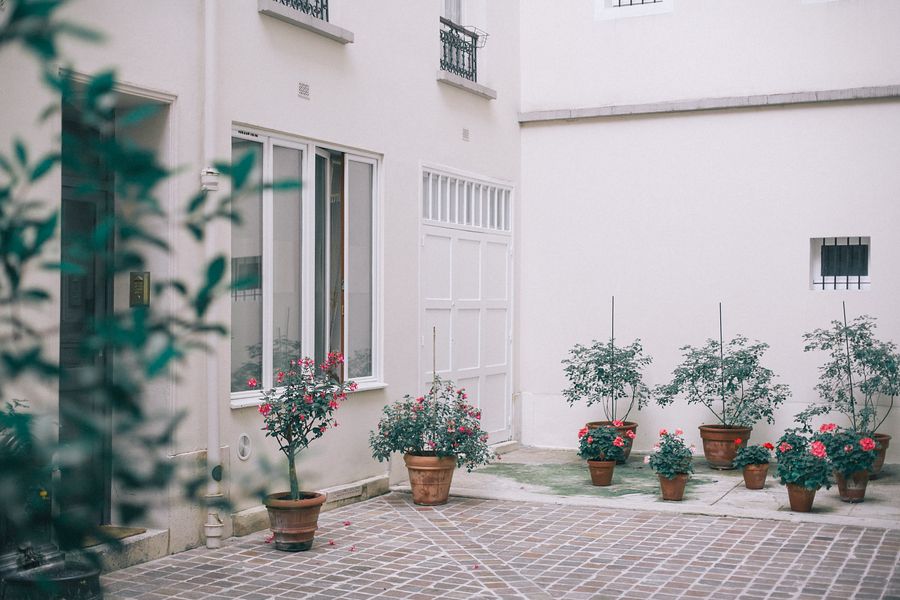
Containers along a wall make a hard edge feel like a flower bedFurniture surrounded by plants always looks better than furniture on an islandWarm, low light does more for a patio than bright light ever will
Finishing touches
The things that make a patio get used
Not the pavers: the small things that turn a hard surface into somewhere people want to sit.
Light
Warm, low and pointed at something. String lights over the table and one or two uplights on a tree or wall are usually plenty.
Shade
An umbrella, a shade sail or a pergola. South- and west-facing patios are too hot to use on summer afternoons in much of the country without something overhead.
Shelter
Something solid behind the seating and something see-through against the prevailing wind. Both make a space feel calmer.
Fragrance
Put fragrant plants within arm’s reach of a chair, not at the back of the yard where nobody smells them.
Water
Even a small fountain or bowl adds sound and reflection, and brings in birds. Work out the volume with the water feature calculator.
Storage
Cushions kept in the house do not get used. A deck box close by is what makes an outdoor room work, especially where summer storms pop up.
As an Amazon Associate, PlantMapper may earn from qualifying purchases. Prices and availability are set by Amazon. Any 120V outdoor lighting or electrical work should be installed by a licensed electrician. Check that any outdoor product is rated for outdoor or wet locations before buying.
Design questions
Patio design: frequently asked questions
How do I make a small patio look bigger?
Use large, light-colored pavers in a simple pattern with tight joints, because fewer visible lines read as more space. Run the paving right to the fence instead of leaving awkward strips, grow upward with vines on trellis and wall shrubs, and use two or three big containers instead of a scatter of small ones. Laying pavers on a 45-degree diagonal also draws the eye along the longest line in the space.
Should I keep a little lawn in a very small yard?
Usually not. A small patch of grass in a shady, fenced courtyard tends to be thin, muddy in wet weather and awkward to mow, and it chops up an already small space. Paving the whole area and putting the green into beds, vines and generous containers almost always gives a yard you use more. If you want something soft underfoot, an outdoor rug or a planted gravel area does more than a struggling lawn.
Where should a fire pit go on a patio?
Well away from the house, fences, sheds and overhanging branches, and never under a pergola, awning or shade sail. Check your local fire code and HOA rules first: many set a minimum distance from structures, often somewhere in the 10 to 25 ft range, and burn bans are common in dry seasons, especially in the West. Think about smoke drifting toward your own and the neighbors' windows. Direct heat damages most pavers, so use a raised fire bowl, a purpose-made pad or a gravel circle, and leave room to sit around it out of the smoke.
Is a sunken patio a good idea?
It gives wonderful shelter and a real sense of enclosure, and it is one of the few ways to make a flat yard feel designed. The catch is drainage: a sunken area cannot drain by gravity, so it needs a drain or channel connected to a proper outlet or dry well, and it is a poor idea on heavy clay or where the water table is high. Light the steps, and plant the banks around it so you look into foliage at eye level.
What should I plant around a patio?
Something at every level: low plants that spill over the edge, mid-height perennials and grasses behind them, and a shrub or small tree for structure and screening. Put fragrant plants within reach of the seats, such as lavender, rosemary, mock orange or, in warm zones, gardenia, and add natives like coneflower and bee balm for butterflies and hummingbirds. Avoid trees that drop messy fruit or heavy litter right onto the patio. Plant Finder will narrow it to what suits your zone, light and soil.
How do I get privacy on a patio without a tall fence?
Screen close to where you sit rather than at the property line. A 6 ft trellis or planted screen about 6 ft from your chair blocks far more view than a taller fence at the back of the lot, and it is less likely to run into fence height limits or HOA rules. If the problem is a neighbor's second-story windows, and it often is, the answer is overhead: a pergola, a shade sail or a small multi-stem tree. Open, slatted screens also cope with wind better than solid panels.
Should the patio match the walkways?
Either works, but be deliberate. Using the same pavers makes the patio and walkway read as one connected space, which suits small yards and modern designs. A different material makes the walkway feel like a journey somewhere else, which suits bigger lots with a second destination. What looks unfinished is a near-match: two materials of similar color and size that were obviously meant to match but do not.
How do I stop a new patio looking bare?
Plant right up against it and let things spill over the edge. A generous bed along one or two sides, a couple of large containers and a planting pocket or two in the paving itself will do more in one season than any amount of expensive stone. Resist leaving a tidy strip of mulch all around the patio; the contact between plant and paver is exactly what makes it look settled.
What is the best lighting for a patio?
Warm, low and aimed at something. String lights over the dining table, one or two uplights on a tree or wall, and small lights on every step will beat a bright floodlight easily, because floodlighting flattens a yard and bothers the neighbors. Light every change of level for safety. Lay conduit while the ground is open even if you add nothing for years. A 12V low-voltage system is DIY-friendly, but any new 120V outlet or wiring should be installed by a licensed electrician.
Can I lay a patio at an angle to the house?
Yes, and in a narrow yard a 45-degree layout can genuinely help by drawing the eye across the space rather than down it. Be aware of the cost: every edge paver needs cutting, waste goes up a lot and so does labor. It works best with a single, simple paver size; a random multi-size pattern laid on the diagonal quickly looks busy.
How big should outdoor steps be?
Wider and shallower than indoor stairs. Comfortable outdoor steps have a rise of roughly 4 to 6 inches and a tread of 14 inches or more, and generous width makes them look designed rather than squeezed in. Every step in a flight must be the same height, treads should be textured and shed water forward, and every flight should be lit. Steps attached to a deck or porch must also meet your local building code.
Do I need a pergola or is an umbrella enough?
A patio umbrella is cheap, movable and stores away, which suits a patio used mainly for meals. A pergola is permanent: it gives privacy from above, somewhere for a vine to climb and a frame for string lights, and it changes the feel of the space rather than just shading it. On a small, overlooked patio a pergola often earns its cost; on a big open patio an umbrella or two may be all you need. Check permit and HOA rules before building a pergola.
Grades, retaining walls, drainage and soil vary from yard to yard. Anything involving a change of level or a structure should be checked against the practical guidance in Planning a Patio and, where needed, with a contractor or engineer. Call 811 before you dig.
Raised patios, permits and HOAs
Raised patios are treated differently from ground-level paving and can need permits, guardrails and HOA approval. Retaining walls over roughly 2 ft should be designed by a qualified professional, and taller walls commonly need a permit.
Fire safety
Fire pits need generous clearance from the house, fences, plants and anything overhead, and must never be used under a pergola, awning or shade sail. Follow local fire codes and burn bans. Direct heat damages most pavers and concrete.
Electrical work
Any 120V outdoor lighting, outlets and pumps should be installed by a licensed electrician, with GFCI protection and fixtures rated for wet locations.
Photos
Photos illustrate the ideas described. They are not claimed to show any particular product, brand or design.
Affiliate links
Some links on this page are Amazon affiliate links. PlantMapper may earn a commission from qualifying purchases at no extra cost to you. See our affiliate disclosure.