

Quick answers
- When should I plant blackberries?
- In early spring, as soon as the soil can be worked, in most zones. In mild zones 8-9 you can also plant from late fall through winter. Container-grown plants can go in any time the ground isn’t frozen, if watered.
- How do I prune blackberries?
- For standard (floricane) types, cut canes that have fruited to the ground after harvest, tip new canes in summer and shorten side branches in late winter. Primocane types can simply be mowed to the ground in late winter for one fall crop.
- Which blackberry is best for a small yard?
- A thornless erect variety such as ‘Navaho’ or ‘Ouachita’ needs the least space and support, or try a compact container type such as ‘Baby Cakes’.
- Do blackberries need full sun?
- They fruit best with at least 6-8 hours of sun. They tolerate part shade but give fewer, less sweet berries.
Why grow blackberries?
Blackberries grow wild across much of the country, but cultivated varieties are a different league: larger, sweeter berries, far fewer thorns (often none) and plants that stay where you put them. They crop heavily within a year or two and ask little in return.
Big, sweet berries
Modern varieties produce berries two or three times the size of wild ones, with balanced sweetness and small seeds.
No thorns
Thornless varieties like ‘Triple Crown’, ‘Navaho’ and ‘Ouachita’ make pruning and picking painless.
Heavy crops
A healthy plant can give several quarts a season - enough for fresh eating, cobblers and the freezer.
Quick to fruit
Floricane types crop in their second summer; primocane types such as ‘Prime-Ark Freedom’ fruit on new canes in their first fall.

Blackberries in the Fruit Trees & Bushes collection
Blackberry Bushes
Vigorous, generous canes - modern thornless kinds are easy to train, pick and live with.
You are hereRaspberry Canes
Easy summer- and fall-bearing canes for bowlfuls of berries.
Blueberries
Acid-loving bushes with native roots - easy in containers of acidic potting mix.
Apple Trees
America’s favorite home fruit tree - varieties for cold, heat and everything between.
Grow Your Own
Vegetables, herbs and salad greens to grow alongside your fruit.
Best blackberry varieties: thornless, thorny & trailing
Blackberries are grouped by how they grow: erect (stiff, upright canes), semi-erect (vigorous, arching canes) and trailing (long, flexible canes, mainly grown in the Pacific Northwest). Each can be thorny or thornless, and some are primocane-fruiting. Most thrive in zones 5/6-8/9; thorny erect types are generally the hardiest.
Thornless erect: ‘Navaho’, ‘Ouachita’, ‘Natchez’
University of Arkansas varieties with upright canes, sweet firm berries and modest space needs. ‘Navaho’ is famous for flavor; ‘Ouachita’ and ‘Natchez’ are productive across the South and lower Midwest.
Semi-erect: ‘Triple Crown’ & ‘Chester’
Very productive, thornless and late-ripening. ‘Chester’ is among the most cold-hardy thornless blackberries; ‘Triple Crown’ is prized for flavor. Both need a sturdy trellis.
Primocane: ‘Prime-Ark Freedom’ & ‘Traveler’
These fruit on first-year canes from late summer until frost, as well as on second-year canes in early summer. Freedom is thornless with very large berries. Fall fruit set drops in very hot summers.
Thorny erect: ‘Kiowa’, ‘Illini Hardy’, ‘Darrow’
Thorny but tough. ‘Kiowa’ has huge berries for the South; ‘Illini Hardy’ and ‘Darrow’ are among the best for colder zone 5 gardens.
Trailing: marionberry & boysenberry
Pacific Northwest and California favorites with outstanding flavor. Trailing types are the least cold-hardy (roughly zones 6/7-9) and need wires to train on.
Low-chill picks for Florida
In central and south Florida and along the Gulf, choose low-chill varieties your extension service recommends; many Arkansas varieties need more winter chill than these areas get.
New to blackberries? In most of the country, start with thornless erect ‘Navaho’ or ‘Ouachita’. In zone 5, try ‘Chester’ or ‘Illini Hardy’. For berries in the first year, add a ‘Prime-Ark Freedom’. Find your growing zone by ZIP code.
Trellis & support systems
A simple trellis keeps canes off the ground, makes picking easy and lets air move through the plants. The style depends on the type you grow.
Erect: a simple hedgerow
Erect varieties can stand alone, but a pair of wires on each side of the row at about 3 ft keeps fruit-laden canes from flopping. A T-trellis (crossbars on posts) is a popular home design.
Semi-erect: sturdy wires
‘Triple Crown’ and ‘Chester’ grow long, heavy canes. Use strong posts and two wires at about 3 ft and 5-6 ft, and tie or weave the canes along them.
Trailing: fan or weave
Train new canes along the ground or in a bundle while the old canes fruit, then lift and wind them onto the wires in late winter.
Space for picking
Leave 8-10 ft between rows, or plant along a fence with room to walk behind for picking and pruning.

Put the trellis in first. Sink posts and run wires at planting time. It’s much harder to add support around a tangle of established canes.
Planting blackberries
Blackberries are sold as dormant bare-root plants, root cuttings or potted plants. Plant in early spring in most zones, or late fall through winter in zones 8-9. Buy certified disease-free plants from a nursery rather than taking suckers from an old patch, which can carry viruses and orange rust.
Spacing
Space erect types about 2-3 ft apart, semi-erect types 4-6 ft and trailing types 5-8 ft, in rows 8-10 ft apart.
Planting depth
Plant at the same depth the plant grew in the nursery. Cut back any tall cane on bare-root plants to about 6 in - new canes will come from the roots.
Keep away from wild brambles
Plant at least a few hundred feet from wild blackberries and raspberries if you can; they often carry diseases such as orange rust and viruses.
Water and mulch
Water well, then mulch with 2-3 in of wood chips, straw or pine needles to hold moisture and smother weeds.
Start clean. Certified plants from a reputable nursery cost a little more but avoid years of trouble with virus and orange rust - the two problems you can’t cure once they’re in the patch.
Site & soil requirements
Blackberries are forgiving, but they give the best crops in full sun on deep, well-drained soil. Avoid low, wet ground.
Full sun
Six to eight hours of direct sun for the heaviest crops and sweetest berries. Part shade gives fewer berries but is tolerated.
Good drainage
Wet roots invite root rot. On heavy clay, plant in a raised row 8-12 in high.
Slightly acidic soil
A pH of about 5.5-6.5 is ideal. Work compost into the row before planting and test your soil first.
Crop rotation
Avoid ground where tomatoes, potatoes, peppers or eggplant grew recently - they can carry verticillium wilt.

Growing blackberries across the US
Cultivated blackberries grow in roughly USDA zones 5-9, and there’s a type bred for nearly every region - along with one wild relative the West would rather you didn’t plant.
Northeast & Midwest
Hardiness is the limit. Choose ‘Chester’, ‘Triple Crown’, ‘Illini Hardy’ or ‘Darrow’ in zones 5-6 and mulch the base in winter. Japanese beetles and spotted wing drosophila are the main summer pests; fence against deer.
Southeast & Gulf Coast
Blackberry heartland - the Arkansas thornless varieties (‘Navaho’, ‘Ouachita’, ‘Natchez’) thrive here. Watch for rosette and orange rust, and mulch well in summer heat. Primocane fall crops are often light in the hottest areas.
Southwest & California
Drip irrigation is essential. Plant erect thornless types or boysenberries, give some afternoon shade in desert heat, and expect sunscald in heat waves. Low-chill varieties suit coastal Southern California.
Pacific Northwest
Home of the marionberry and other trailing blackberries. But this is also where Himalayan blackberry has become one of the worst invasive weeds - never plant it, and remove it from your property where you can.
Mountain West & Plains
Cold, dry winters and wind are hard on canes. Grow the hardiest thorny erect types, use windbreaks, and mulch heavily. In zones 4 and colder, raspberries are usually the better bramble.
Native relatives
Native brambles - Allegheny blackberry and dewberries in the East, thimbleberry and salmonberry in the West - feed native bees and birds and are good choices for wildlife plantings.
Check before you plant. Some western states list Himalayan and cutleaf blackberry as noxious weeds. Buy named cultivated varieties from a nursery and check your state’s invasive plant list if you’re unsure.
Watering & feeding
Blackberries are drought-tolerant once established, but steady water from bloom to harvest makes the difference between dry, seedy berries and plump, juicy ones.
An inch a week
Aim for about 1 in of water a week during the growing season, more in hot, dry weather. Drip irrigation keeps fruit and leaves dry.
Feed in spring
Apply a balanced fertilizer or compost in early spring as growth begins. Avoid feeding late in the season, which encourages soft growth that winter can kill.
Mulch the row
A thick organic mulch holds moisture, keeps roots cool in Southern heat and cuts weeding.
Shade in extreme heat
In hot Southern and Southwestern summers, white, sunscalded drupelets are common. Light shade cloth over the row during heat waves helps.
Water matters most at harvest. Berries swell rapidly in the two to three weeks before picking - keep the soil evenly moist then for the best size and flavor.
Pruning blackberries
Blackberry canes live for two years. In the first year a cane (a primocane) grows; in the second (as a floricane) it fruits and dies. Pruning means removing the old canes and managing the new ones - and it’s different for primocane-fruiting types.
Remove fruited canes
On standard floricane types, cut every cane that fruited to the ground right after harvest. They won’t fruit again.
Tip new canes in summer
On erect and semi-erect types, pinch or cut the tips of new canes when they reach about 3-4 ft. They’ll branch, giving more fruiting side shoots.
Shorten laterals in late winter
While plants are dormant, cut side branches back to about 12-18 in, and thin to the strongest five or six canes per plant (or per foot of row).
Primocane types
For one large fall crop, mow or cut all canes to the ground in late winter. For an early-summer crop as well, keep last year’s canes and remove them after they fruit.
Trailing types
After harvest, remove the old fruited canes and train the new ones onto the wires in late winter.
Remove suckers
Dig out suckers that appear outside the row to keep the planting contained.
Old canes out, new canes in. Remember that one rule and the rest is detail: canes that have fruited come out; strong new canes are tied in for next year.
Growing blackberries in containers
Blackberries prefer the ground, but compact thornless varieties grow well in large containers on a deck or patio - useful in small yards or where soil is poor.
Pick a compact variety
Choose a dwarf thornless type such as ‘Baby Cakes’ or an erect thornless variety like ‘Navaho’ or ‘Prime-Ark Freedom’.
Big pot, good mix
Use a container of at least 10-15 gallons with drainage holes, filled with a quality potting mix.
Water and feed often
Containers dry out quickly - water whenever the top inch is dry, daily in heat, and feed lightly every few weeks in the growing season.
Winter protection
Roots in pots are much less hardy than in the ground. In zones 6 and colder, move containers into an unheated garage or sink them in the ground for winter.
Support even in pots. Add a sturdy stake or small trellis to the container so fruiting canes don’t snap or flop.
Common blackberry problems in the US
Blackberries are tough, but a few US pests and diseases are worth knowing. Clean planting stock, good airflow and prompt picking prevent most trouble.
Spotted wing drosophila
This invasive fruit fly is the biggest blackberry pest in many areas, laying eggs in ripening berries. Pick every one to two days, remove overripe and fallen fruit, and refrigerate berries quickly.
Japanese beetles & stink bugs
Japanese beetles chew leaves and ripe berries in the East and Midwest; knock them into soapy water. Stink bugs also feed on fruit.
Cane borers
Rednecked cane borers and raspberry cane borers cause swellings or wilted tips. Cut out affected canes below the damage and destroy them.
Orange rust & rosette
Bright orange pustules under leaves mean orange rust - it’s systemic, so dig out and destroy infected plants. Rosette (double blossom) causes witches’-broom growth in the Southeast; remove infected flower clusters and fruited canes promptly.
Anthracnose & gray mold
Purple-edged spots on canes and moldy fruit in wet weather. Thin canes for airflow, water at the base and remove old canes after harvest.
Birds & deer
Robins, mockingbirds, catbirds and cardinals take ripe berries, and deer browse young canes. Bird netting and fencing are the reliable fixes.
Pick clean and prune promptly. Removing old canes right after harvest and picking every ripe berry are the two habits that keep most blackberry problems in check.
Harvest season & planning
Blackberries ripen over three to six weeks: from late May or June in the South, July and August further north, with primocane types continuing from late summer until frost. They don’t ripen after picking, so wait until they’re fully ready.
Wait for dull black
Berries turn shiny black before they’re fully ripe. Wait until the shine fades slightly and the berry pulls away easily - that’s peak sweetness.
Pick often
Pick every two to three days, more often in hot weather, in the cool of the morning.
Handle gently
Use shallow containers so berries don’t crush each other, and refrigerate right away.
Plan the season
Combine an early variety, a late one like ‘Triple Crown’ or ‘Chester’, and a primocane type to pick from early summer into fall.

Freeze the extras. Spread unwashed berries on a tray, freeze, then bag them. They’re perfect for cobblers, jam and smoothies all winter.
Blackberries - frequently asked questions
The questions American blackberry growers ask most, answered simply.
Are blackberries invasive?
Some are. Himalayan blackberry (Rubus armeniacus) and cutleaf blackberry are serious invasive weeds in the Pacific Northwest and California and are listed as noxious weeds in some western states. Named cultivated varieties are not the same plant, but all blackberries sucker and are spread by birds, so keep plantings contained and check your state’s invasive plant list.
What is the difference between primocane and floricane blackberries?
Floricane types fruit only on second-year canes, in early to midsummer. Primocane types such as ‘Prime-Ark Freedom’ also fruit on first-year canes from late summer until frost, so they can give two crops or one easy fall crop.
What zone do blackberries grow in?
Most cultivated blackberries grow in roughly USDA zones 5-9. Thorny erect types such as ‘Illini Hardy’ and semi-erect ‘Chester’ are among the hardiest; trailing types such as marionberry are less hardy, roughly zones 6/7-9.
How long do blackberry plants live?
Individual canes live two years, but the roots are perennial. A well-kept planting can stay productive for 10 to 15 years or more.
Are blackberries deer resistant?
Not really. Deer browse tender leaves and new canes, especially on thornless varieties. Thorny types are browsed less, but fencing is the reliable answer in deer country.
Why are some of my blackberry drupelets white?
White drupelets are usually sunscald from intense sun and heat, or occasionally stink bug feeding. The berries are safe to eat. Light shade cloth during heat waves can help.
Beginner tips
The habits that turn a few canes into gallons of summer berries.
Buy certified plants
Never transplant wild brambles - and never plant Himalayan blackberry.
Choose thornless
‘Navaho’, ‘Ouachita’ and ‘Triple Crown’ make the job pleasant.
Build the trellis first
Posts and wires at planting time save a tangle later.
Out with the old
Cut fruited canes to the ground after harvest every year.
Pick every couple of days
It keeps spotted wing drosophila and rot down.
Net and fence
Birds and deer are the main thieves.
Helpful garden calculators
Work out the soil, spacing and materials your plants need with our free calculators, so you plan and plant with confidence.
Useful for growing blackberries
Our picksAs an Amazon Associate, PlantMapper may earn from qualifying purchases. Prices and availability are set by Amazon.
The Fruit Trees & Bushes Starter Kit
This blackberry guide is part of our growing Fruit Trees & Bushes collection. Everything you need to choose, plant, train, prune and harvest healthy blackberries is free on this page - the optional printable workbook is the calm next step for planning a whole fruit garden, away from the screen.
Download the Soft Fruit Growing Guide
An instant digital download in A4 and US Letter - print it as often as you like and grow delicious berries and soft fruit at home. Inside you will find the Soft-Fruit Cycle, a strawberry runner-and-renewal system, protection and netting planners, harvest logs and seasonal trackers, all in the calm PlantMapper style. Part of the wider PlantMapper Collection.
Download the Guide on Etsy (UK edition)
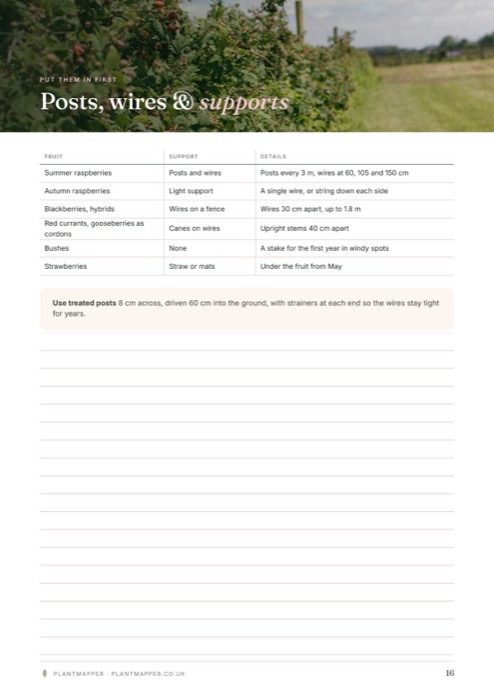
 64-page printable workbook · A4 & US Letter
Disclosures & disclaimers
Affiliate disclosure
Some links on this page are affiliate links. If you buy through them, PlantMapper may earn a small commission at no extra cost to you. It never affects which products we suggest.
Gardening disclaimer
All advice is general guidance for home gardens in the United States. Results vary with your zone, soil and season - check recommended varieties and your state’s invasive plant list with your county extension office before you buy.
Food-safety note
Blackberries are wholesome and delicious eaten straight from the cane - just rinse homegrown fruit before eating and enjoy only ripe, fully black berries. Discard any berries that are damaged or moldy, and follow label directions for any spray you use.