

Quick answers
- When should I plant strawberries?
- In zones 3-7, plant dormant bare-root crowns in early spring, a few weeks before your last frost. In zones 8-10 - Florida, the Gulf Coast and Southern California - plant in fall for a winter and spring crop.
- How do I get bigger strawberries?
- Full sun, steady water at the roots, well-drained soil rich in compost, and young plants. Remove most runners, and replace or renovate beds every few years - older plants give smaller berries.
- Can I grow strawberries in containers?
- Yes. Day-neutral and everbearing types do best. Use potting mix, one plant per 6-8 in pot or three to four in a 12 in pot or 5-gallon container, and water daily in hot weather.
- What do I do with strawberry runners?
- On June-bearers, let some root to fill the row, then thin. On day-neutrals and in containers, snip them off. Pin a few into small pots of potting mix if you want free new plants.
Why grow strawberries?
Homegrown strawberries are a different fruit from the big, firm berries in plastic clamshells. Commercial varieties are bred to ship; garden varieties can be chosen purely for flavor and picked fully ripe. They also give you a crop faster than almost any other fruit and fit into the smallest yard.
Flavor you can’t buy
Varieties like ‘Earliglow’ and ‘Jewel’ are too soft to ship well but taste far better than supermarket berries.
Fits anywhere
Raised beds, in-ground rows, strawberry jars, hanging baskets and deck containers all work - no orchard needed.
Fruit in months
Day-neutral types fruit the same summer they’re planted; in the South, fall-planted strawberries crop the following winter and spring.
Plants that multiply
June-bearing and everbearing plants send out runners that root into new plants, so a bed fills itself in for free.

Strawberries in the Fruit Trees & Bushes collection
Strawberries
The quickest fruit to crop - beds, containers and hanging baskets in almost any zone.
You are hereBlueberries
Acid-loving bushes with native roots - easy in containers of acidic potting mix.
Raspberry Canes
Summer and fall-bearing canes for bowlfuls of berries.
Apple Trees
America’s favorite home fruit tree - varieties for cold, heat and everything between.
Grow Your Own
Vegetables, herbs and salad greens to grow alongside your fruit.
June-bearing, everbearing & day-neutral strawberries
Before choosing a variety, choose a type - it decides when you pick and how you grow them. Many gardeners grow a June-bearer for a big jam-making crop plus a day-neutral for berries all summer.
June-bearing
One big crop over two to three weeks in late spring or early summer (as early as March in Florida, June in the North). The most productive type, best grown in matted rows. Examples: ‘Earliglow’, ‘Honeoye’, ‘Jewel’, ‘Allstar’, ‘Chandler’.
Day-neutral
Fruit continuously from early summer until frost whenever temperatures stay roughly between 35°F and 85°F, pausing in midsummer heat. Ideal for containers and small beds. Examples: ‘Albion’, ‘Seascape’, ‘Tristar’, ‘San Andreas’.
Everbearing
An older type with two or three flushes - spring, late summer and fall. Smaller total crop than June-bearers but a longer season. Examples: ‘Ozark Beauty’, ‘Quinault’, ‘Fort Laramie’.
Alpine & native strawberries
Alpine strawberries (Fragaria vesca) give tiny, intensely flavored berries all season with no runners. Native wild strawberry (Fragaria virginiana) makes a tough groundcover with small, sweet fruit loved by birds.
Not sure which? For the biggest single harvest, grow June-bearers. For a steady handful of berries all summer from a container or small bed, grow day-neutrals. In zones 9-10, choose varieties bred for winter production in Florida or California.
Best strawberry varieties for US gardens
Breeding programs in New York, Maryland, Arkansas, Florida and California have produced varieties for every region. Pick one suited to your climate - and check that it resists the diseases common where you live.
‘Earliglow’
An early June-bearer with outstanding flavor and good disease resistance. A long-time favorite in the Northeast and Mid-Atlantic.
‘Honeoye’ & ‘Jewel’
Cornell-bred June-bearers for the North. ‘Honeoye’ is very productive and cold-hardy; ‘Jewel’ gives large, glossy, flavorful berries mid-season.
‘Allstar’
A mid-season June-bearer with large, light-red berries and resistance to several root and leaf diseases - widely adapted across the Midwest and East.
‘Chandler’ & ‘Sweet Charlie’
Grown as fall-planted annuals in the Southeast, Gulf Coast and California. ‘Sweet Charlie’, from the University of Florida, is early and very sweet.
‘Albion’ & ‘Seascape’
California day-neutrals with big, firm, sweet berries. Excellent in containers and in cool-summer areas such as the Pacific Northwest and coastal California.
‘Ozark Beauty’ & ‘Quinault’
Classic everbearers, hardy and adaptable. Good choices for hanging baskets and for gardeners who want spring and fall crops.
Ask locally. Strawberry performance varies more from region to region than almost any other fruit. Your state extension service publishes a list of recommended varieties - start there, and find your growing zone by ZIP code if you’re not sure of it.
Growing in beds, containers & hanging baskets
Strawberries are shallow-rooted and compact, so they adapt to almost any growing method. Match the method to your type: June-bearers like room to spread; day-neutrals and everbearers are happy in containers.
Matted rows
The traditional way to grow June-bearers: plants 18-24 in apart in rows about 3-4 ft apart, letting runners fill in a mat roughly 18-24 in wide.
Hill system & raised beds
Day-neutrals and Southern annual plantings are grown in hills: plants about 12 in apart in double rows, runners removed. Raised beds warm early and drain well - ideal on clay.
Pots, jars & baskets
Use a quality potting mix. One plant per 6-8 in pot, three or four per 12 in pot or 5-gallon container, or a strawberry jar with a plant in every pocket.
Overwinter containers
In zones 3-6, container plants can freeze solid. Move pots into an unheated garage or bury them in the ground and mulch with straw over winter.

Containers dry out fast. In summer heat, a hanging basket may need water once or twice a day. Self-watering containers or a drip line make container strawberries far easier.
Planting strawberries
Strawberries are usually sold as dormant bare-root crowns (bundles of 10 or 25) or as potted plants. Timing depends on where you live: spring planting in zones 3-7, and fall planting (roughly September to November) in zones 8-10, where plants grow through the mild winter and fruit in late winter and spring.
Crown at soil level
Set each plant so the middle of the crown is exactly at the soil surface. Too deep and it rots; too shallow and the roots dry out.
Spread the roots
Fan bare roots out in a hole deep enough to take them without bending, and trim very long roots to about 5 in. Firm the soil and water well.
Pinch the first flowers
On June-bearers, remove the flowers in the first year so plants build strong runners and crowns. On day-neutrals, remove flowers for about the first six weeks, then let them fruit.
Rotate the site
Don’t plant where tomatoes, potatoes, peppers, eggplant or strawberries grew in the last three or four years - they share verticillium wilt and other soil diseases.
Plant on a cloudy day and water right away. Bare-root crowns dry out quickly. Soak the roots for an hour before planting, keep them covered while you work, and water the bed thoroughly as soon as they’re in.
Site & soil requirements
Strawberries need full sun, good drainage and slightly acidic soil. Get these right and the rest is easy.
Full sun
At least 6 hours of sun, 8 or more for the best crops. In the low desert and Deep South, some afternoon shade in late spring helps.
Well-drained soil
Strawberries hate wet feet - it causes root rots such as red stele. Plant in raised beds or rows on heavy clay.
pH 5.5-6.5
Slightly acidic soil rich in organic matter is ideal. Test your soil and work in compost before planting.
Weed-free start
Perennial weeds are hard to remove from a matted row. Clear the bed thoroughly the season before, and mulch to keep weeds down.

Growing strawberries across the US
Garden strawberries are perennial in roughly USDA zones 3-8 and grown as fall-planted annuals in the warmest parts of zones 9-10 - so timing changes completely from North to South.
Northeast & Midwest
Plant June-bearers like ‘Earliglow’, ‘Honeoye’ and ‘Jewel’ in early spring in matted rows. Mulch with straw for winter, cover blossoms on frosty nights, and fence against deer and rabbits.
Southeast & Gulf Coast
Plant ‘Chandler’, ‘Sweet Charlie’ or other Southern varieties in fall on raised beds, often with plastic mulch. Harvest in late winter and spring before heat and humidity bring disease, then pull the plants.
Florida
Florida is a major winter strawberry state. Plant in October and November, harvest from about December into March, and choose University of Florida varieties bred for short days and mild winters.
Southwest & California
Coastal California grows strawberries nearly year-round; inland and desert gardens plant in fall and pick in spring before the heat. Drip irrigation and some afternoon shade help; alkaline water and soil may need acidifying.
Pacific Northwest
Cool summers suit day-neutrals like ‘Albion’ and ‘Seascape’ and local June-bearers. Wet springs bring gray mold, so use raised beds, wide spacing and straw mulch.
Mountain West & Plains
Short seasons and hard winters favor hardy June-bearers and everbearers like ‘Fort Laramie’. Use heavy winter straw mulch, windbreaks and frost cloth for late frosts; hail netting helps in some areas.
Timing is the big regional difference. Spring planting in the North, fall planting in the South. Check your average frost dates and follow your state extension service’s strawberry calendar.
Watering & feeding
Shallow roots make strawberries sensitive to drought, especially while fruiting. Aim for about an inch of water a week from rain or irrigation, more in heat and in sandy soil.
Water at the roots
Use drip tape or a soaker hose rather than sprinklers. Wet leaves and berries encourage gray mold and leaf diseases.
Mulch the plants
Straw or pine-needle mulch keeps berries clean, holds moisture and stops soil splashing onto the fruit. Black plastic is common in Southern annual plantings.
Feed after harvest
June-bearers are fertilized mainly after harvest, during renovation, when they set next year’s flower buds. Day-neutrals benefit from light feeding every few weeks through the season.
Go easy on nitrogen
Too much nitrogen in spring gives soft, leafy plants and more gray mold. Follow your soil test.
Consistent water, bigger berries. The two weeks before and during harvest are the most critical. A simple timer on a drip line keeps berries swelling even when you’re away.
Runners, renovation & winter care
Strawberry beds need a little yearly care to keep cropping. The two big jobs are managing runners and, for June-bearers, renovating the bed after harvest. In cold zones, winter mulch matters too.
Manage runners
In matted rows, let runners root to fill the row, then remove extras so plants are 6-8 in apart. On day-neutrals and in containers, cut runners off to keep energy in the fruit.
Make free plants
Pin a healthy runner into a small pot of potting mix, cut it free once rooted in a few weeks, and you have a new plant.
Renovate June-bearers
Right after harvest, mow or cut the leaves to about 1 in above the crowns, narrow the rows to 12-18 in, thin the plants, fertilize and water. It keeps a bed productive for several years.
Winter mulch in cold zones
In zones 3-6, cover the plants with 2-4 in of clean straw once they’re dormant after several hard frosts. Pull it back between rows in spring when new leaves start to yellow beneath it.
Replace old plants
Most beds decline after three or four seasons. Start a fresh bed in a new spot with certified disease-free plants.
Southern annuals
In Florida and along the Gulf Coast, strawberries are usually treated as annuals: plant in fall, harvest in winter and spring, and remove plants once summer heat arrives.
Renovation is the secret to an old bed. Most June-bearing beds fade because they become overcrowded. Ten minutes of renovation right after harvest keeps them cropping heavily for years.
Common strawberry problems
Strawberries are easy, but birds, critters and a few diseases want a share. Most problems are prevented by netting, mulch, good drainage and picking promptly.
Birds & critters
American robins, catbirds and mockingbirds take ripe berries; squirrels, chipmunks and rabbits help themselves too, and deer graze the leaves. Cover beds with bird netting on hoops before the berries color, and fence if deer visit.
Slugs & sap beetles
Slugs chew holes in ripe berries in damp weather; small sap (“picnic”) beetles burrow into overripe fruit. Pick often, remove damaged berries and use slug traps.
Tarnished plant bug & clipper
Tarnished plant bugs cause small, seedy, misshapen (“catfaced”) berries; the strawberry clipper weevil snips flower buds in spring. Keep nearby weeds mowed and check your extension guide if damage is heavy.
Spotted wing drosophila & mites
Late-season and day-neutral berries can attract spotted wing drosophila - pick ripe fruit daily. Spider mites bronze leaves in hot, dry weather; spray them off with water.
Gray mold & leaf spot
Gray mold (botrytis) turns berries fuzzy in wet weather. Space plants for airflow, water at the roots, mulch, and remove moldy fruit. Resistant varieties help with leaf spot and anthracnose in the Southeast.
Root rots & verticillium
Wilting, stunted plants in wet or replanted soil usually mean root disease. Plant in raised beds, buy certified plants, and rotate away from tomato-family crops.
Net and mulch. A low hoop tunnel of bird netting over a straw-mulched bed solves the two biggest strawberry problems - birds and dirty, rotting fruit - in one go.
Harvest season & planning
Strawberries ripen about four to five weeks after bloom. In Florida, harvest runs from about December to March; in the Mid-South, April and May; in the North, June. Day-neutrals then crop on and off until frost.
Pick fully red
Strawberries don’t ripen further once picked. Harvest when the whole berry is red, glossy and fragrant.
Pick every other day
In peak season, pick every one to two days in the cool of the morning, before birds and beetles find them.
Pinch, don’t pull
Snap the stem just above the berry, leaving the green cap on. Berries keep better with the cap attached.
Plan a long season
Grow early, mid and late June-bearers plus a few day-neutrals, and you can pick for months instead of weeks.

Keep it simple with a glut. Refrigerate unwashed berries and eat within a few days, freeze whole hulled berries on a tray, or make freezer jam - and follow tested recipes from the National Center for Home Food Preservation for canned jam.
Strawberries - frequently asked questions
The questions American strawberry growers ask most, answered simply.
What’s the difference between June-bearing, everbearing and day-neutral strawberries?
June-bearers give one large crop over a few weeks in late spring or early summer. Everbearers give two or three smaller flushes. Day-neutrals fruit steadily from early summer to frost whenever temperatures are moderate, pausing in midsummer heat.
When do you plant strawberries in the South?
In zones 8-10, including Florida, the Gulf Coast and much of Texas and Southern California, plant in fall - usually September to November - and harvest from late winter through spring. Plants are often treated as annuals and replaced each fall.
How do I protect strawberry plants in winter?
In zones 3-6, cover the bed with 2-4 in of clean straw once plants are dormant after several hard frosts. Remove most of it in early spring as growth starts, and keep some handy to cover blossoms on frosty nights.
How many strawberry plants do I need?
A common rule of thumb is about 10 to 25 plants per person for fresh eating, more if you want to make jam or freeze berries. Day-neutrals give less at any one time but crop for longer.
Are strawberries deer resistant?
No. Deer browse strawberry leaves and fruit, and rabbits, squirrels and chipmunks eat the berries. Fence the bed or grow strawberries in containers on a deck if wildlife is a problem.
Why are my strawberries small?
Old or overcrowded plants, too little water while fruiting, too much shade or poor pollination. Renovate or replace the bed, keep it watered, and make sure it gets full sun.
Beginner tips
The habits that turn a few plants into bowls of sweet berries.
Plant for your zone
Spring planting in the North, fall planting in the South and Southern California.
Crown at soil level
Not deeper, not higher - it’s the most common planting mistake.
Full sun, good drainage
Raised beds solve most site problems.
Mulch with straw
It keeps berries clean and, in cold zones, protects plants over winter.
Net before red
Cover the bed before the first berries color.
Renew the bed
Renovate June-bearers after harvest and replant every few years.
Helpful garden calculators
Work out the soil, spacing and materials your plants need with our free calculators, so you plan and plant with confidence.
Useful for growing strawberries
Our picksAs an Amazon Associate, PlantMapper may earn from qualifying purchases. Prices and availability are set by Amazon.
The Fruit Trees & Bushes Starter Kit
This strawberry guide is part of our growing Fruit Trees & Bushes collection. Everything you need to choose, plant, feed and harvest healthy strawberries is free on this page - the optional printable workbook is the calm next step for planning a whole fruit garden, away from the screen.
Download the Soft Fruit Growing Guide
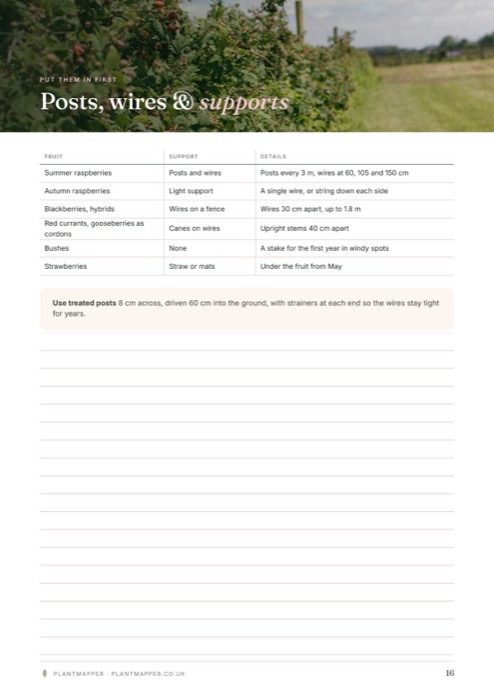
An instant digital download in A4 and US Letter - print it as often as you like and grow delicious berries and soft fruit at home. Inside you will find the Soft-Fruit Cycle, a strawberry runner-and-renewal system, protection and netting planners, harvest logs and seasonal trackers, all in the calm PlantMapper style. Part of the wider PlantMapper Collection.
Download the Guide on Etsy (UK edition)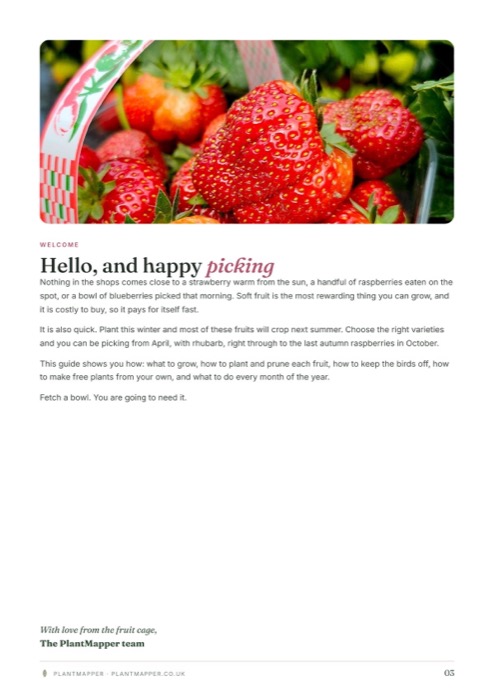
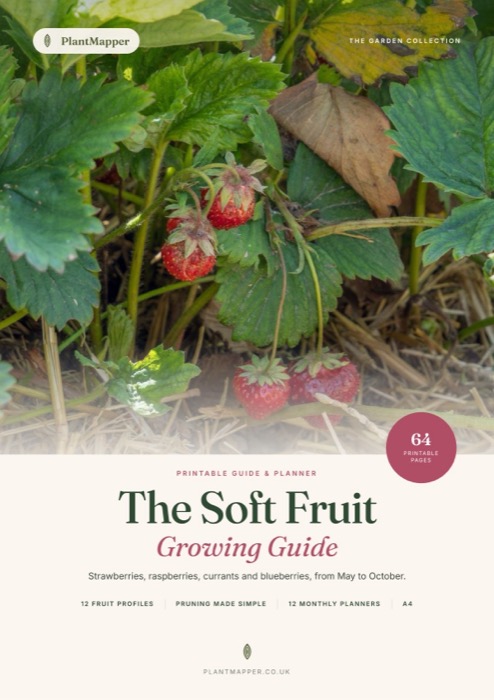 64-page printable workbook · A4 & US Letter
Disclosures & disclaimers
Affiliate disclosure
Some links on this page are affiliate links. If you buy through them, PlantMapper may earn a small commission at no extra cost to you. It never affects which products we suggest.
Gardening disclaimer
All advice is general guidance for home gardens in the United States. Results vary with your zone, soil and season - check recommended varieties with a local nursery or your county extension office before you buy.
Food-safety note
Strawberries are wholesome and delicious eaten straight from the plant - just rinse homegrown fruit before eating and enjoy only ripe, fully red berries. Discard any berries that are damaged or moldy, and follow label directions for any spray you use.